BERA is a membership association and learned society committed to advancing research quality, building research capacity and fostering research engagement. BERA aims to inform the development of policy and practice by promoting the best quality evidence produced by educational research.
Since our inception in 1974, BERA has expanded into an internationally renowned association with UK and non-UK based members. We strive to be inclusive of the diversity of educational research and scholarship and welcomes members from a wide range of disciplinary backgrounds, theoretical orientations, methodological approaches, sectoral interests and institutional affiliations. We encourage the development of productive relationships with other associations within and beyond the UK. Aspiring to be the home of all educational researchers in the UK, BERA provides opportunities for everyone active in this field to contribute through its portfolio of distinguished publications, its world-class conference and other events, and its active peer community, organised around 30 Special Interest Groups. We also recognise excellence in educational research through our range of awards. In addition to our member-focused activity, we aim to inform the development of policy and practice by promoting the best quality evidence produced by educational research. As an organisation we are committed to principles of openness, integrity and transparency and seek to uphold ethical values in all our activities and processes.
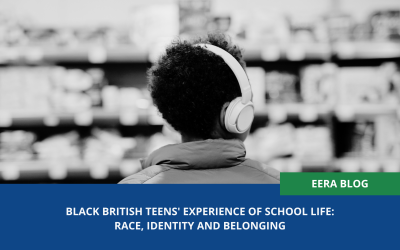
Black British teens’ experience of school life: race, identity and belonging
Interviews with 37 Black teenagers in northern England reveal family and cultural pride, alongside racism and a Eurocentric curriculum—and highlight the importance of inclusive, anti-racist education.
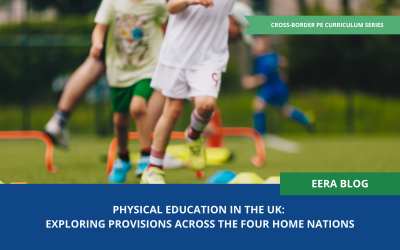
Physical Education in the UK: Exploring provisions across the four home nations
This blog, the first in the EERA-funded seminar series on Physical Education Curriculum Learning across European Borders, explores PE curricula across the UK’s four home nations — Scotland, England, Wales and Northern Ireland.
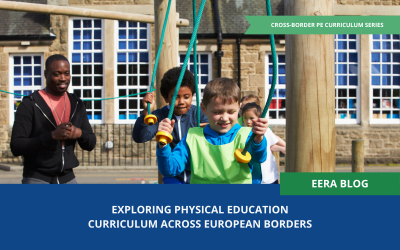
Introducing a new series: Exploring Physical Education curriculum across European borders
Physical education has long been criticised for being narrow and exclusionary — but what happens when researchers and teachers from across Europe come together to question it? A new EERA-funded seminar series is doing just that, creating a space for cross-border dialogue to critically examine PE curricula and co-create more inclusive approaches to the subject.
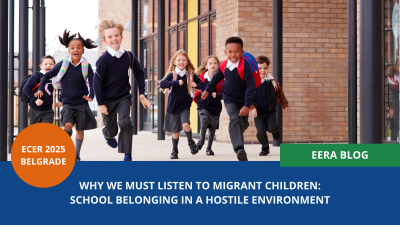
Why we must listen to migrant children: School belonging in a hostile environment
Across Europe, migration is increasingly politicised, creating challenging environments for migrants and their families. Thi Bogossian’s ethnographic research in a diverse English primary school reveals how education can act as an “oasis” of belonging for migrant children amid exclusionary politics.
Challenging the rise of transactional language in educational policy
Education reform deserves language that reflects its complexity. When policy borrows the vocabulary of markets and business, we risk reducing teaching to a transaction rather than a deeply human, transformative process.
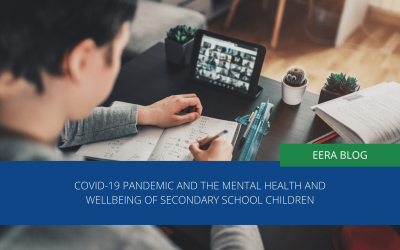
COVID-19 pandemic and the mental health and well-being of secondary school children
Research into the impact of the COVID-19 pandemic on the mental health and wellbeing of school children in England suggests that a holistic response is needed.
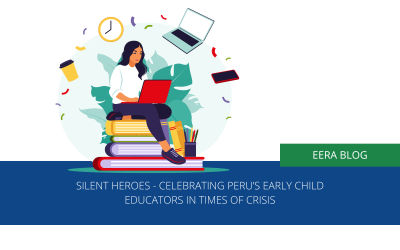
Silent heroes – Celebrating Peru’s Early Childhood Educators in times of crisis
During the COVID-19 lockdown in Peru, the development of positive interactions of teachers with parents was critical, as was the fostering of supportive relationships with peers
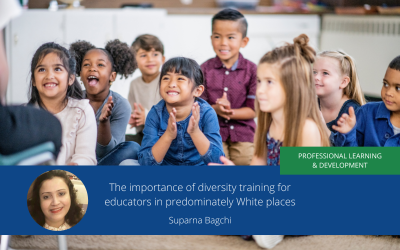
The importance of diversity training for educators in predominately white places
There is often a misconception that only schools with high ethnic minority populations or those situated in multicultural places need multicultural awareness. These topics are equally important in predominantly White places in Britain, and school curriculum and atmosphere need to offer race-sensitive multicultural reflection, while practitioners need training and preparedness to equip them with relevant knowledge, skills, and confidence.
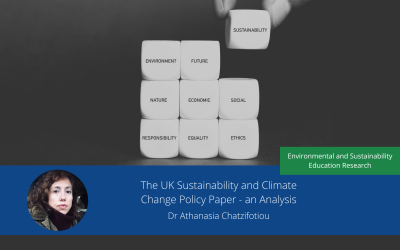
The UK Sustainability and Climate Change policy paper – An analysis
In April 2022, the UK Department for Education (DfE) published a policy paper laying out a strategy for the education and children's services systems on the topic of sustainability and climate change. Dr Athanasia Chatzifotiou, Senior Lecturer at the University of...
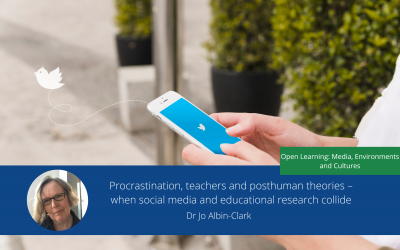
Procrastination, teachers, and posthuman theories – when social media and educational research collide
Social media offers accessible ways for teachers (and researchers) to swiftly operationalise digital doings that provide hopeful, bite-size and accessible storytelling.