What’s missing in ITE? Preparing teachers to address poverty in mathematics education
In Scotland, as in many parts of the world, child poverty presents a significant barrier to educational attainment and well-being. The impact of poverty on academic achievement, including lower attainment in mathematics, is well-documented and framed as the poverty-related attainment gap within education policies in Scotland (Scottish Government, 2023).
This blog post argues that child poverty should be explicitly addressed within ITE programmes, particularly in mathematics education, to help student teachers make clearer connections between issues of social justice and the teaching of mathematics, rather than addressing poverty under the broad terms of inclusion or the poverty-related attainment gap.
Why poverty matters in mathematics education
Mathematics has long been seen as a “gatekeeper” subject. Doing well in mathematics often decides who can progress to higher education and to better job opportunities, and who gets left behind (Douglas & Attewell, 2017; Durrani & Tariq, 2012; Martin et al., 2010). Yet mathematics is too often treated as if it were neutral, separated from inequality. In reality, however, children growing up in poverty are more likely to face lower expectations, be placed in low-ability groups, and receive simplified tasks that limit their chances to succeed (Hoadley, 2007; Jorgensen et al., 2014; Oakes, 1990; Schoenfeld, 2002).
These practices reinforce the idea that only some students are “naturally good” at mathematics, while others are left with fewer opportunities. Because of its central role in shaping opportunities in life, mathematics education is a crucial context to tackle questions of social justice.
This blog post is based on my PhD research, which revealed that student teachers often compartmentalise the idea of social justice and teaching mathematics, treating them as separate concerns. This disconnection presents a significant challenge to preparing student teachers for equitable practice.
The key question is: what within ITE can potentially help to make this connection clearer.
What has been done in an ITE context in Scotland?
The ways we do work should involve providing options and developing flexibility and valuing diversity applying any context. Having said that, I do think the design that we use with the student teachers is a crucial part of improving outcomes for people who live in poverty. It is just we don’t label it that way. We do not say, this is how we are going to tackle poverty, we will do this. Because actually all children can benefit from it.
This reflection comes from an ITE tutor in the research context. As this and other reflections illustrate, in ITE settings child poverty is generally addressed under the broader umbrella of inclusion and rarely directly addresses mathematics teacher education. While this approach indeed reflects a degree of awareness amongst student teachers, it may fail to engage with the lived realities of children growing up in poverty.
What’s missing in ITE?
Valuing diversity in education may require not only offering flexible teaching but also paying closer attention to what that diversity in a classroom actually entails. Poverty, for instance, can shape children’s mathematical learning through the resources and early experiences (Ellis & Sosu, 2015; Greaves et al., 2014; James-Brabham et al., 2023; Marks et al., 2006) they have access to, as well as the confidence they bring into the classroom. At the same time, children living in poverty often demonstrate resilience, benefit from targeted interventions, and thrive with parental and school support (DePascale et al., 2024; Sheehan & Hadfield, 2024). If these aspects remain unspoken, teachers may find it harder to create socially just practices that respond to culture, recognise strengths, and address limitations.
Nancy Fraser’s (1999) multidimensional conception of social justice (encompassing redistribution, recognition, and representation) offers a useful framework for understanding and addressing issues related to injustices in education. Fraser argues that neither redistribution, understood as the fair allocation of resources and opportunities, nor recognition, understood as the acknowledging and embracing of diverse identities of the learners, is sufficient on its own to address injustice.
Representation, understood as ensuring that all learners have a genuine voice and the ability to participate in the classroom, is equally essential. Ultimately, achieving social justice requires the integration of all three dimensions: redistribution, recognition, and representation.

The idea that all children benefit from inclusive pedagogies aligns with the redistribution principle – according to the tutor cited above, the key mission of ITE programmes is to teach student teachers to provide all children with opportunities to succeed. To do this, they need flexibility in their mathematics teaching practice, and a general idea of valuing diversity. However, this does not always recognise how non-school knowledge (for example, budgeting with limited resources, navigating public transports or household tasks) could be meaningfully connected to classroom mathematics.
Equally, redistribution was under-addressed in this context, discussions of equitable access rarely touched on the material and structural factors that affect how children learn mathematics, such as availability of mathematical manipulatives, after-school programmes, or adequate funding at schools in high-poverty areas.
Social justice requires more than providing fair opportunities for the learners; it involves understanding and embracing differences and empowering students to be active participants of the learning environment while considering carefully what they might need to achieve this. However, this was largely absent within the research context, with children’s participation framed as teacher-directed rather than as opportunities for learner agency in shaping mathematical learning. Without stronger attention to these dimensions, student teachers may leave ITE with a limited understanding of how mathematics education itself can either reproduce or challenge social justice issues linked to poverty.
Final thoughts
This study is based on interviews with ITE tutors and therefore reflects their perspectives on programme design and pedagogical intentions rather than the full complexity of classroom practice. As a result, the everyday realities of teaching may reveal stronger forms of recognition and representation than those captured in this analysis, as well as additional ways in which student teachers engage with children’s lived experiences of poverty.
Acknowledging this limitation is important when interpreting the findings. Nevertheless, the interviews with tutors provide valuable insight into how poverty is currently conceptualised and addressed within ITE, offering an important basis for considering how ITE might be strengthened.
Building on this, to more effectively prepare student teachers, ITE programmes could move beyond broad commitments towards inclusion to instead offer more concrete preparation for working with children in poverty. Central to this shift is the need for ITE to explicitly embed the three pillars of social justice: redistribution of resources, recognition of diverse identities, and representation of student agency. Although ITE programmes already take on a wide responsibility when it comes to diversity – covering areas such as gender, race, immigration, and more – these aspects of diversity often overlap, and by addressing one dimension thoughtfully, we also contribute to the others.
Key Messages
- To effectively prepare student teachers to address poverty in their teaching practice, ITE programmes could move beyond broad commitments to inclusion and offer more concrete preparation for working with children in poverty.
- Valuing diversity in education may require not only offering flexible teaching but also paying closer attention to what that diversity in a classroom actually entails.
- Achieving social justice requires the integration of all three dimensions: redistribution of resources, recognition of diverse identities, and representation of student agency
- Social justice requires more than providing fair opportunities for the learners; it involves understanding and embracing differences and empowering students to be active participants of the learning environment while considering carefully what they might need to achieve this.
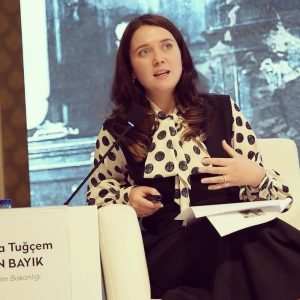
Dr. Nejla Tugcem Sahin Bayik
Directorate of Basic Education at the Ministry of National Education (MoNE) in Türkiye
Dr. Nejla Tugcem Sahin Bayik is an Education Specialist in the Monitoring and Evaluation Department of the Directorate of Basic Education at the Ministry of National Education (MoNE) in Türkiye. She is also a part-time lecturer at TED University. She earned her PhD in Education from the University of Aberdeen and holds an MA Degree in Mathematics Education from University College London. Having lectured at the University of Aberdeen, she has also contributed to various research projects as a researcher in the UK and in Türkiye. Her main research interests are social justice issues in education, inclusion, diversity, and children’s rights.
LinkedIn: https://www.linkedin.com/in/nejla-tugcem-sahin-bayik
Personal Blog: https://tugcemsahinbayik.blogspot.com/
ResearchGate: https://www.researchgate.net/profile/Nejla-Sahin-Bayik
Other blog posts on similar topics:
DePascale, M., Bustamante, A. S., & Dearing, E. (2024). Strengths-Based Approaches to Investigating Early Math Development in Family and Community Context: A Conceptual Framework. AERA Open, 10. https://doi.org/10.1177/23328584241302059
Douglas, D., & Attewell, P. (2017). School Mathematics as Gatekeeper. 58(4), 648–669. https://doi.org/10.1080/00380253.2017.1354733
Durrani, N., & Tariq, V. N. (2012). The role of numeracy skills in graduate employability. Education + Training, 54(5), 419–434. https://doi.org/10.1108/00400911211244704
Ellis, S., & Sosu, E. (2015). Closing poverty-related attainment gaps in Scotland’s schools: What works? From:https://strathprints.strath.ac.uk/54123/15/Ellis_Sosu_IPPI2015_closing_poverty_related_attainment_gaps.pdf
Fraser, N. (1999). Social Justice in the Age of Identity Politics: Redistribution, Recognition, and Participation. In L. Ray & A. Sayer (Eds.), Culture and Economy after the Cultural Turn (pp. 25–52). SAGE Publications Ltd. https://doi.org/10.4135/9781446218112.n2
Fraser, N., & Honneth, A. (2003). Redistribution or Recognition? A Political-Philosophical Exchange. Verso.https://books.google.com.tr/books?id=IJxT6pxjO7YC&lpg=PP1&pg=PP1#v=onepage&q&f=false
Greaves, E., Macmillan, L., & Sibieta, L. (2014). Lessons from London schools for attainment gaps and social mobility. Social Mobility and Child Poverty Commission. From: https://socialmobility.independent-commission.uk/app/uploads/2024/07/London_Schools_-_FINAL.pdf
Hoadley, U. (2007). The reproduction of social class inequalities through mathematics pedagogies in South African primary schools. Journal of Curriculum Studies, 39(6), 679–706. https://doi.org/10.1080/00220270701261169
James-Brabham, E., Loveridge, T., Sella, F., Wakeling, P., Carroll, D. J., & Blakey, E. (2023). How do socioeconomic attainment gaps in early mathematical ability arise? Child Development, 94(6), 1550–1565. https://doi.org/10.1111/cdev.13947
Jorgensen, R., Gates, P., & Roper, V. (2014). Structural exclusion through school mathematics: Using Bourdieu to understand mathematics as a social practice. Educational Studies in Mathematics, 87(2), 221–239. https://doi.org/10.1007/s10649-013-9468-4
Marks, G. N., Cresswell, J., & Ainley, J. (2006). Explaining socioeconomic inequalities in student achievement: The role of home and school factors. Educational Research and Evaluation, 12(2), 105–128. https://doi.org/10.1080/13803610600587040
Martin, D., Gholson, M., Leonard, J., Martin, D. B., Gholson, M. L., & Leonard, J. (2010). Mathematics as gatekeeper: Power and privilege in the production of knowledge. Journal of Urban Mathematics Education, 3(2), 12–24. https://doi.org/10.21423/jume-v3i2a95
Oakes, J. (1990). Multiplying inequalities: The effects of race, social class, and tracking on opportunities to learn mathematics and science. The RAND Corporation. From: https://www.rand.org/content/dam/rand/pubs/reports/2006/R3928.pdf
Schoenfeld, A. H. (2002). Making Mathematics Work for All Children: Issues of Standards, Testing, and Equity. Educational Researcher, 31(1). https://doi.org/10.3102/0013189X031001013
Scottish Government (2023). Pupil attainment: closing the gap – Schools. Retrieved May 15, 2025, from https://www.gov.scot/policies/schools/pupil-attainment/
Sheehan, J., & Hadfield, K. (2024). Overcoming socioeconomic adversity: Academic resilience in mathematics achievement among children and adolescents in Ireland. British Journal of Developmental Psychology, 42(4), 524–545. https://doi.org/10.1111/bjdp.12512