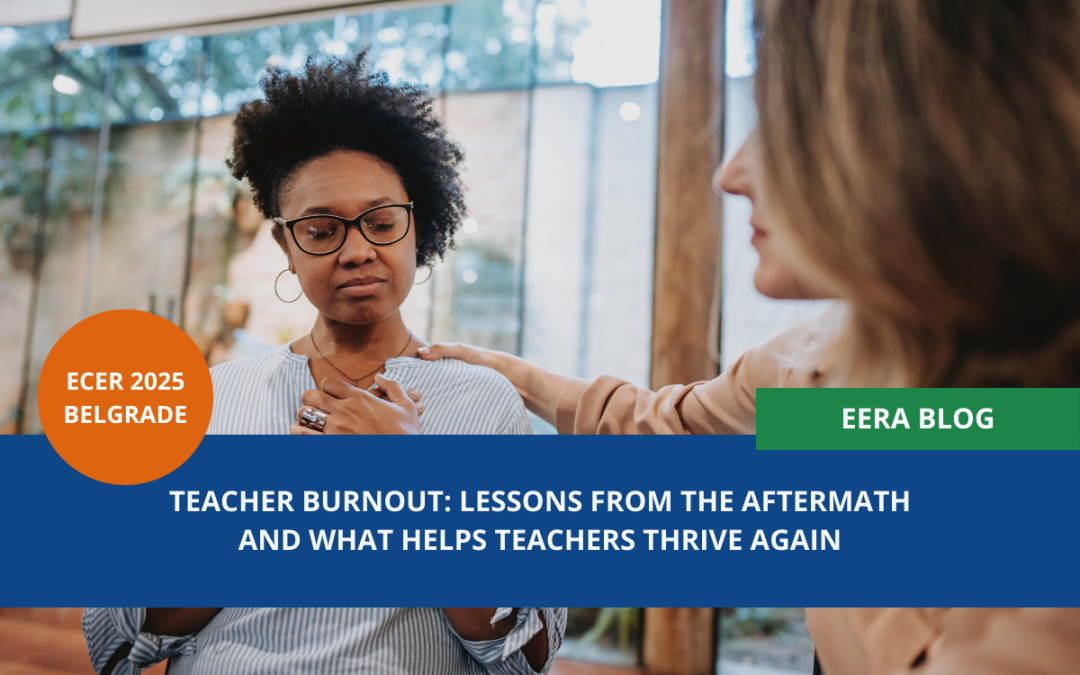
Teacher burnout: Lessons from the aftermath and what helps teachers thrive again

Teacher burnout: Lessons from the aftermath and what helps teachers thrive again

Teaching is one of the most rewarding professions, but also one of the most demanding. Across Europe, nearly half of teachers report experiencing high levels of work-related stress (European Commission, 2021). For some, this stress escalates into teacher burnout, a psychological syndrome marked by exhaustion, emotional detachment, and a reduced sense of personal accomplishment (Schaufeli et al., 2020).

Much of the existing research has focused on the causes of burnout before teachers leave the classroom, and on its consequences once they have dropped out (Ahola et al., 2017). But what happens after burnout, when teachers return to work? Too often, the story ends at the point of absence. Yet the period of reintegration can be just as challenging. Understanding this ‘teacher burnout aftermath’ is essential if schools want not only to support teachers effectively but also to retain them in the profession.

Our study into reintegration after teacher burnout
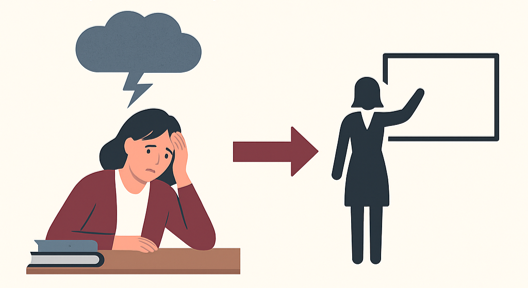
An illustration of a woman under a stormy cloud. She looks worried. An arrow points to a woman in front of a white board, indicating that this image references teacher burnout.

To address this gap, our study explored the experiences of ten teachers who returned to the classroom after burnout. Using semi-structured interviews, we investigated the challenges they faced and the factors that helped them reintegrate successfully. Although the teachers’ experiences varied, several recurring themes emerged.

Barriers teachers encounter

Many participants described workload as the most pressing obstacle to recovery. Administrative and bureaucratic tasks consumed precious energy that could otherwise have been invested in teaching. In some cases, schools placed teachers straight back into full schedules, leaving little room to rebuild their confidence.

Relationships also proved decisive. Strained interactions with colleagues or a lack of understanding from school leaders created additional stress. Some teachers reported feeling they had to “prove” themselves all over again, rather than being welcomed back with empathy. This sense of scrutiny often made the return heavier than expected.

Supportive factors that made a difference

Despite these barriers, teachers also pointed to a range of supportive factors that facilitated their reintegration after teacher burnout.

Positive collaboration with colleagues and school leaders created a sense of safety and belonging. Teachers highlighted the importance of professional support, such as therapy, counselling, or coaching, to help them process their experiences. As one participant explained, counselling helped her set clearer boundaries and avoid slipping back into old patterns.

For many, a genuine passion for teaching was a crucial source of motivation: the classroom itself gave them energy and meaning, even if it sometimes carried the risk of overcommitment. Finally, self-care practices such as adjusting workloads, saying “no” more often, or prioritising rest were described as essential in maintaining balance.

Together, these elements created the conditions for teachers to regain stability and gradually rebuild confidence in the classroom.

A complex balance

One of the most striking findings was the dual role of certain factors. Passion for teaching, for instance, could be both a protective resource and a risk. While it inspired teachers to return, it also tempted some to take on too much too soon, undermining recovery.

This highlights the complexity of teacher burnout aftermath: resources and risks are not separate, but deeply intertwined. A factor that enables reintegration in one context can easily become constraining in another. Successful support, therefore, requires continuous adjustment and awareness, rather than one-off measures.

Personal context matters
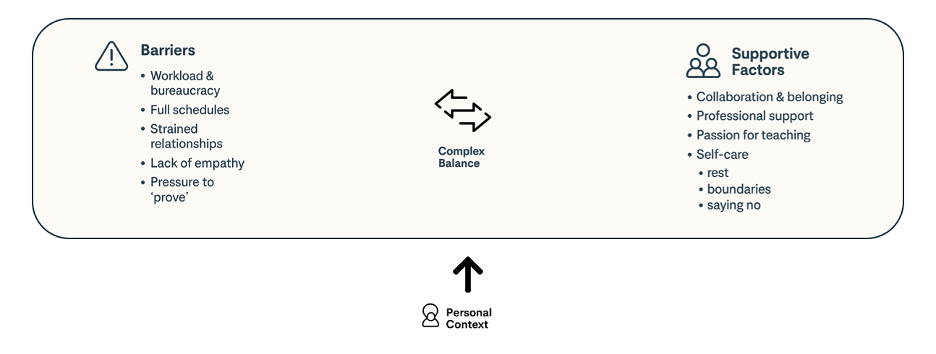
The barriers and supportive factors of teacher burnout. Barriers include workload and bureaucracy, full schedules, strained relationships, lack of empathy, and pressure to 'prove'. Supportive factors include collaboration and belonging, professional support, passion for teaching, and self-care – including rest, boundaries, and saying no. A set of arrows is between the columns of Barriers and Supportive Factors, pointing in both directions, to denote the complex balance between these.

The study also revealed the decisive role of personal circumstances. Teachers with supportive families or flexible private responsibilities generally found reintegration smoother. Those facing additional stressors, such as caring duties or financial pressures, often experienced a heavier burden.

This underlines that reintegration after burnout is not a one-size-fits-all process but highly context-dependent. Any support strategy must take account of both the professional and personal dimensions of teachers’ lives.

What schools can do

Our findings point to the critical role of school leadership in enabling successful reintegration. Support cannot rely on individual goodwill alone; it requires both organisation-wide frameworks and tailored measures.

At the organisational level, schools should:

  • Ensure a realistic workload for returning teachers.
  • Provide accessible professional support such as counselling.
  • Develop clear reintegration guidelines across the institution, so teachers know what to expect.

At the individual level, reintegration must move beyond a one-size-fits-all approach. Effective measures include:

  • Phased returns, where responsibilities are built up gradually.
  • Flexible scheduling and the reduction of non-core tasks.
  • Access to psychological support.

According to the teachers we spoke to, these personalised adjustments often made the difference between a sustainable return and a renewed risk of burnout.

Moving forward

Reintegration after burnout should not be seen as a private matter for the teacher to “manage better”.

It is a shared responsibility between the individual, the school, and the wider education system.

Addressing both structural and personal dimensions of the burnout aftermath is essential to protect teachers’ well-being and ensure their long-term retention in the profession.
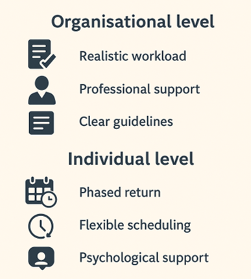
A graphic showing the support needed on an organisational level vs individual level for a reintegration after teacher burnout. On an organisational level: Realistic workload, professional support, and clear guidelines. On an individual level: phased return, flexible scheduling, and psychological support.

Conclusion

Teacher burnout does not end when a teacher leaves the classroom; in many ways, the story begins there. Returning to work presents its own set of challenges, requiring careful attention, supportive structures, and flexibility. By acknowledging the complexity of the “burnout aftermath” and implementing tailored strategies, schools can help teachers return stronger, healthier, and ready to thrive.

During the ECER conference in Belgrade, we had the chance to connect with fellow researchers and discuss the pressing challenges of teacher burnout. In particular, we explored the gaps in both research and practical strategies for supporting teachers as they return to work after burnout. Hearing their perspectives was incredibly enlightening and highlighted a shared commitment to promoting teacher well-being across diverse educational contexts

Key Messages

  • Returning to the classroom after burnout is just as challenging as the burnout itself; it’s a critical but often overlooked phase.
  • Workload, strained relationships, and lack of leadership support are major barriers to reintegration.
  • Supportive colleagues, counselling, and self-care practices help teachers to return.
  • Passion for teaching is both a motivator and a risk, highlighting the complexity of recovery.
  • Successful reintegration requires tailored, school-wide strategies that address both personal and professional contexts.

Aron Decuyper

Aron Decuyper

Department of Educational Studies, Ghent University, Belgium

Aron Decuyper is a doctoral researcher at the Department of Educational Studies, Ghent University (Belgium). In his PhD, he focuses on effective teaching behaviour in the context of team teaching. Furthermore, he conducts research on teacher educators and teacher well-being

Laura Thomas

Laura Thomas

Department of Educational Studies, Ghent University, Belgium

Laura Thomas is a postdoctoral researcher at the Department of Educational Studies, Ghent University (Belgium). Her research focuses on social networks and teacher wellbeing, spanning student teachers, early career teachers, and experienced teachers.

Maxime Moens

Maxime Moens

Department of Educational Studies, Ghent University, Belgium

Maxime Moens is a doctoral researcher at the Department of Educational Studies, Ghent University (Belgium). Her research focuses on school wellbeing policies, with a particular emphasis on teacher wellbeing.

Melissa Tuytens

Melissa Tuytens

Department of Educational Studies, Ghent University, Belgium

Melissa Tuytens is a professor at the Department of Educational Studies, Ghent University (Belgium). Her research and teaching focuses on policy, leadership, and people management in education.

Ruben Vanderlinde

Ruben Vanderlinde

Department of Educational Studies, Ghent University, Belgium

Ruben Vanderlinde is a professor at the Department of Educational Studies, Ghent University (Belgium). He focuses on educational innovation, teacher training and professionalisation and the integration of Information and Communication Technologies in education.

Other blog posts on similar topics:

References and Further Reading

European Commission/EACEA/Eurydice (2021). Teachers in Europe: Careers, Development and Well-being. Eurydice report. Luxembourg: Publications Office of the European Union. https://eurydice.eacea.ec.europa.eu/sites/default/files/teachers_in_europe_2020_chapter_1.pdf

Schaufeli, W., Desart, S., & De Witte, H. (2020). The Burnout Assessment Tool (BAT) – Development, validity and reliability. International Journal of Environmental Research and Public Health, 17(24), 9495. https://doi.org/10.3390/ijerph17249495

Ahola, K., Toppinen-Tanner, S., & Seppänen, J. (2017). Interventions to alleviate burnout symptoms and to support return to work among employees with burnout: Systematic review and meta-analysis. Burnout Research, 4, 1–11. https://doi.org/10.1016/j.burn.2017.02.001
Equity in Education during COVID-19 and the Danger of “Microwave Equity”

Equity in Education during COVID-19 and the Danger of “Microwave Equity”

The last two years have been quite challenging for the world and for educators. First, the COVID-19 pandemic shut down the world for a while, and many learning institutions were closed as a result of the pandemic.[1] At the same time, the increasing strength of the anti-racism movement from the United States and across the world has highlighted the importance of equity, inclusion, and equality in education in such a time as this. The COVID-19 pandemic and subsequent school closure globally led to 1.6 billion children[2]missing out on education, which has further amplified the inequalities inherent in many education systems. In many regions around the world, for example, in Europe, groups affected by the COVID-19 pandemic on education may include students of minority migrant background, new language learners, disabled students, and Lesbian, Gay, Bisexual, Transgender, Queer, and others (LGBTQ+) students. My PhD research study on developing culturally inclusive teaching and learning environments in Ireland, funded by the Irish Research Council postgraduate scholarship and Galway Doctoral Research scholarship programmes, has caused me to reflect deeply on the concepts of equity, inclusion, and equality in education. Furthermore, my research and work with student-teachers, teachers, parents of minority migrant backgrounds, in Ireland and beyond, has further revealed the importance of an understanding that is all the more urgent in the context of the inequalities that will exasperate equitable and quality education for all learners in the era of COVID-19.

What is the difference between equality and equity?

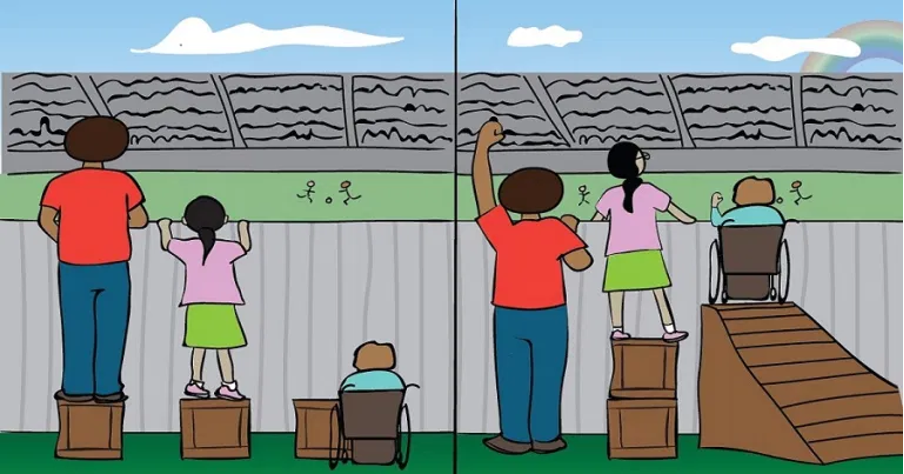
The image to the left is a graphical representation of equality, while the image to the right represents equity 
Image credit: Maryam Abdul-Kareem


It is quite challenging to unpack the concepts of equality and equity in education, particularly the differences between these two concepts. It is critical for teachers to know the differences between these two concepts to ensure equitable learning for all students, especially in a time of crisis.

In the left image, everyone is provided with equal support to watch the football game. In the right image, everyone is equipped with differential supports that allow equitable access to the game.

It should be noted that understanding the differences between equity and equality is not straightforward. It is layered with many complexities. Therefore, the above image provides a basic representation of the differences between equity and equality.

In summary, equity is based on needs, that is, responding to students’ individual or specific needs in our classrooms to ensure quality teaching and learning. In contrast, equality is based on fairness, which means being fair to all, without acknowledging the additional challenges faced by some.

UN Sustainability Goals and

the importance of equity and inclusion in education

Many education systems around the world are concerned with the issues of equity and inclusion in policy and practice. However, more work needs to be done in developing and implementing equity and inclusion policies and practices in education, particularly in the current COVID-19 crisis. Equity can be explained as providing students with personalised support that overcomes potential hurdles such as poverty and minoritised cultural backgrounds.[3]While inclusion in education implies that all students, irrespective of their socio-economic backgrounds or disabilities, are accepted and fully catered to in mainstream school environments. In other words, ‘inclusion is about all students belonging’ in a classroom.[4] The concepts of equity and inclusion in education are not new. Global educational goals have long sought to advance the principles of equity and inclusion in education systems internationally. For example, the United Nations Sustainable Development Goal (SDG) 4 requires countries worldwide to “Ensure inclusive and equitable quality education and promote lifelong learning opportunities for all” by 2030. The SDGs were passed in 2015 by United Nations member states as a holistic approach to ensure that countries around the world achieve equitable and sustainable development in different sectors of society by 2030. [5] However, recent reports by the United Nations Educational, Scientific and Cultural Organization (UNESCO) tasked with tracking the world’s progress in achieving SDG 4 presented that it is unlikely for the world to meet the targets of SDG 4 by 2030.[6]Unfortunately, the current humanitarian emergency of COVID-19 has further validated the reality of the findings of this new report on the impact of the pandemic in achieving the SDGs[7]

The role of teachers in addressing equity and inclusion in their classrooms

Moving forward, teachers can begin to address equity and inclusion in education with support from other educational stakeholders to ensure equitable learning for all students and developing peer accountability systems. Secondly, teachers can build better working relationships with students and their guardians/parents. Third, they can commit to continuous professional development programmes. Finally, teachers can promote equity and inclusion in their classrooms during this COVID-19 pandemic and beyond by constantly checking ‘whether what they are doing enables or empowers the students to help improve them.’[8]

Avoiding the quick fix of ‘Microwave Equity’

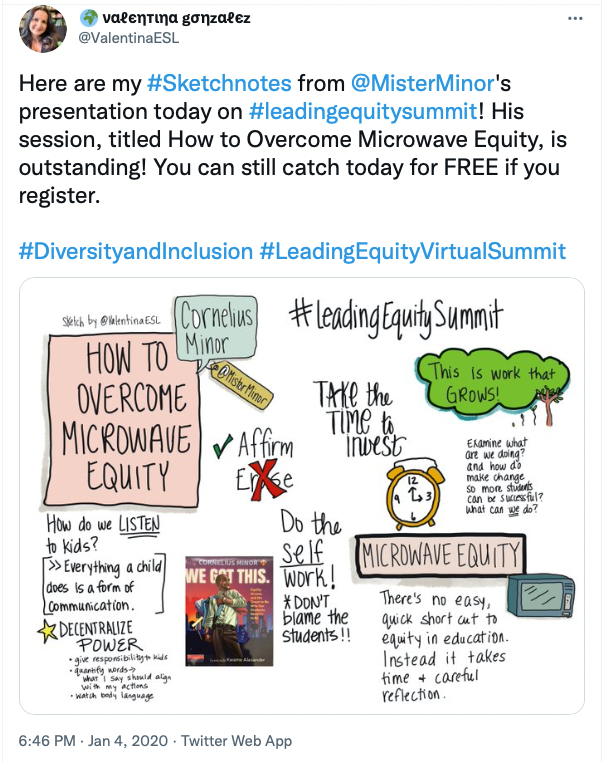
Cornelius Minor, a US-based educator, coined the term ‘Microwave Equity,’ which means teachers and educators attempting to achieve equity quickly or overnight. Instead, he warns, the work on equity in education takes time and patience. In his book, We Got This, Minor argued that to be equitable and inclusive, teachers need to intentionally listen to kids in achieving equity in the classroom, decentralise power by empowering students’ voices, and do the self-work without blaming students.

The push to introduce more equity in education is badly needed, but it comes at a time when teachers are already facing significant challenges and additional responsibilities due to the COVID-19 pandemic.

Equity and the challenges of the COVID-19 pandemic

Teachers are crucial to achieving equity and inclusion in education, and the current crisis has further affected teaching and learning. The pandemic has denied millions of learners access to equitable and quality education.[9] Teachers, to a large extent, are critical stakeholders in helping to manage the crisis. However, the COVID-19 pandemic has further changed the nature of teachers’ work, e.g., many teachers were expected to switch to online teaching quickly. The burden of additional responsibilities placed on teachers in a crisis is not new. Research has shown that all humanitarian emergencies have affected teachers’ work. For example, in post-conflict Liberia, teachers’ responsibilities included serving as second parents, humanitarians, role models, parents, counsellors, guardians, unifiers, and psychologists to help students affected with Post-traumatic Stress Disorder (PTSD). [10] From the case of Liberia and in similar contexts, teachers can be adequately supported and performance improved when education stakeholders possess a deep understanding of the factors that limit their capacity to function effectively.[11] Therefore, placing the responsibility for achieving equity and inclusion solely on teachers is problematic. Educational stakeholders and the entire education system must be involved to make equitable and quality learning for all students a reality, even in the current era of the COVID-19 pandemic. For example, school leaders in the United Kingdom took proactive steps and initiatives to provide support for teachers and promote sustainable good practices during the global pandemic. The research study finds that school leaders developed effective and pragmatic approaches to engage other stakeholders such as parents, pupils and policymakers, allowing learning to continue during the pandemic.[12] It is hoped that more attention will be given to having discussions on what equity and inclusion in education really mean in different contexts and levels of education. For example, regional educational research associations such as European Educational Research Association (EERA)  can engage existing platforms such as the European Conference on Educational Research (ECER) conferences, within their network for educational researchers to continue to engage in discussion and research on issues of equity and inclusion in European education systems and globally. This knowledge and understanding will undoubtedly help concerned educational stakeholders working on equity and inclusion in education to address the challenges of ensuring an even playing field for all learners.

Other blog posts on similar topics:

Seun B. Adebayo

Seun B. Adebayo

PhD Researcher, Research Supervisor, Teaching Assistant, NUI Galway

Seun B. Adebayo is currently a PhD Researcher, Research Supervisor and Teaching Assistant at the School of Education, National University of Ireland Galway, Ireland (NUI Galway). His PhD study explores developing culturally inclusive teaching and learning environments in Irish schools.

Aside from his research study, Seun organises workshops on culturally responsive pedagogies for student-teachers at NUI Galway.

His research interests include education policy, teacher education and professional development, culturally responsive pedagogy, equity and inclusion in education, progressive education reforms, practitioner/action research, education in conflict/post-conflict contexts, and quality education.

Seun has extensive work and research experiences with Aflatoun International, UNESCO HQ., UNESCO Office in Monrovia (Liberia), the European Research Council Executive Agency of the European Commission, the UNICEF Office of Research-Innocenti, VSO International, Inter-agency Network for Education in Emergencies (INEE), Education Development Trust and UNDP in New York.

ResearchGate: https://www.researchgate.net/profile/Seun-Adebayo

Twitter: https://twitter.com/Royalseun

Google Scholar: https://scholar.google.co.uk/citations?user=anOwtUQAAAAJ&hl=en

References and Further Reading

[1] UNESCO (2021). Education: From disruption to recovery. https://en.unesco.org/covid19/educationresponse 

[2] Global Education Evidence Advisory Panel (2022). Prioritizing learning during COVID-19. https://documents1.worldbank.org/curated/en/114361643124941686/pdf/Recommendations-of-the-Global-Education-Evidence-Advisory-Panel.pdf 

[3] Waterford (2020). Why Understanding Equity vs Equality in Schools Can Help You Create an Inclusive Classroom. https://www.waterford.org/education/equity-vs-equality-in-education 

[4] Giardina (2019). What does an inclusive classroom look like? https://inclusiveschools.org/what-does-an-inclusive-classroom-look-like/ 

[5] https://sdg4education2030.org/the-goal 

[6] UNESCO (2020). Inclusion and education: ALL MEANS ALL. Global Education Monitoring Report. https://unesdoc.unesco.org/in/documentViewer.xhtml?v=2.1.196&id=p::usmarcdef_0000373718&file=/in/rest/annotationSVC/DownloadWatermarkedAttachment/attach_import_d3682741-8fe5-4012-98c6-66d2bb13b7f0%3F_%3D373718eng.pdf&locale=en&multi=true&ark=/ark:/48223/pf0000373718/PDF/373718eng.pdf#p29 

[7] Shulla, K. (2021). The COVID-19 pandemic and the achievement of the SDGs. https://link.springer.com/article/10.1007/s43621-021-00026-x 

[8] Adebayo and Chinhanu (2020).  Ubuntu in Education: Towards equitable teaching and learning for all in the era of SDG 4. NORRAG. https://www.norrag.org/ubuntu-in-education-towards-equitable-teaching-and-learning-for-all-in-the-era-of-sdg-4-by-chiedza-a-chinhanu-and-seun-b-adebayo/ 

[9] Moss and Bradley (2021). Education in a Post-COVID World: Creating more Resilient Education Systems. https://blog.eera-ecer.de/resilient-education/ 

[10] Adebayo S.B. (2019). Emerging perspectives of teacher agency in a post-conflict setting: The case of Liberia. Teaching and Teacher Education. https://www.sciencedirect.com/science/article/pii/S0742051X18300143?via%3Dihub 

[11]Tao, S. (2013). Why are teachers absent? Utilising the Capability Approach and Critical Realism to explain teacher performance in Tanzania. International Journal of Educational Development, 33 (1): 2-14 https://www.researchgate.net/publication/257243592_Why_are_teachers_absent_Utilising_the_Capability_Approach_and_Critical_Realism_to_explain_teacher_performance_in_Tanzania 

[12]Beauchamp, G., Hulme, M., Clarke, L., Hamilton, L., & Harvey, J. A. (2021). ‘People miss people’: A study of school leadership and management in the four nations of the United Kingdom in the early stage of the COVID-19 pandemic. Educational Management Administration & Leadership49(3), 375-392. https://journals.sagepub.com/doi/full/10.1177/1741143220987841