Children’s rights and the importance of research into school disciplinary practices

Children’s rights and the importance of research into school disciplinary practices

Childhood experiences, both at home and in school, play a fundamental role in shaping an individual’s life trajectory. Educational experts emphasize that parents and teachers significantly influence children’s well-being, with teachers playing a particularly crucial role in shaping young minds. Since children spend a substantial amount of time in schools and afterschool learning centers, understanding the dynamics within these environments is essential. Studying teachers’ behavior management strategies offers an opportunity to foster safe, nurturing, and positive learning environments for students.

According to UNICEF (2023), nearly one billion children globally, aged 2-17, experience some form of violence, including within schools. This violence encompasses both physical and emotional abuse inflicted by teachers and school staff (Scharpf et al., 2022).  Therefore, violence against children in schools is a pressing concern, as it negatively impacts children’s well-being worldwide (Durrant & Ensom, 2012; WHO, 2020). Addressing this issue requires urgent attention from policymakers, as well as the implementation of effective intervention strategies (End Violence Against Children, 2021).

The link between child maltreatment and violent discipline methods

What does it mean to discipline?

The term “discipline” often carries negative connotations. Derived from the Latin words discipulus (pupil) and disciplina (teaching), discipline refers to the imparting of knowledge or skills, often within the context of adherence to a specific code of conduct. In a typical classroom setting, students are expected to pay attention, follow the teacher’s instructions, complete their homework, and respect their peers, among other things.

Wilson (1982) argued that discipline and punishment are not synonymous. Similarly, Friedman and Friedman (1977) also clearly distinguished between corporal punishment and discipline. However, these terms are often mistaken or  misunderstood as being the same.

Child discipline is a crucial aspect of teaching and is universally recognized as essential for teaching self-control and acceptable behavior (Gershoff, 2017). Schools are similarly expected to shape the behavior of children. However, inflicting pain through physical and psychological punishments is not an acceptable form of discipline. Such practices not only violate children’s rights but also cause significant harm to their growth and development (UNICEF, 2010). While debates surrounding the use of physical and psychological disciplinary practices continue, there is a growing need for actionable policies that can be effectively implemented in schools worldwide.

Numerous studies indicate that “violent disciplinary” practices are the most common form of violence against children, perpetrated by both caregivers and teachers (Krug et al., 2002). In some cases, these practices escalate into child abuse, highlighting the connection between disciplinary methods and violence. As a result, violent child discipline is recognized as a form of child maltreatment, which not only affects the child’s well-being but also carries long-term socio-economic consequences for society (Meadows et al., 2011). Thus, child discipline practices are a critical component of any education system and are also aligned with the Sustainable Development Goals (SDG): Quality Education (SDG:4) and Peace, Justice, and Strong Institutions (SDG:16).

Psychological punishment – why it deserves attention

While the discussion surrounding disciplinary practices often focuses on physical punishment, psychological and verbal punishment has garnered less attention in academic literature (Ferrara et al., 2019). Although this form of discipline is pervasive, it remains underreported, unrecognized, and consequently less researched in various contexts (Bellis et al., 2023; Theoklitou et al., 2012).

Examples of harsh verbal punishment or psychologically aggressive discipline include screaming, yelling, swearing at a child, or labeling them as “stupid,” “deaf,” or “lazy.” These behaviors are intended to inflict emotional distress, either actively or passively. While such actions may sometimes be unintentional, they are typically employed in an attempt to correct or manage a child’s misbehavior. The long-term emotional and psychological consequences of these practices are far-reaching, yet they remain underexplored in many studies (Wang & Kenny, 2014; Witt et al., 2017). Child verbal abuse is even more overlooked in the school context (Bellis et al., 2023; Slep et al., 2022). It is crucial to recognize that these practices also violate children’s human rights, as defined by the UNCRC, and need focus and attention from researchers and policymakers.

Consequences of violent school disciplinary practices

The effects of violent disciplinary practices are profound and far-reaching, impacting children’s growth, development, and well-being (Abbasi et al., 2015; Durrant, 2005; Greydanus et al., 2003). Research consistently shows that children who experience violence or humiliation are more likely to develop negative character traits, engage in antisocial behaviors, and struggle academically  (Straus, 1994). The detrimental effects of such practices extend beyond childhood, manifesting in long-term consequences such as alcohol and substance abuse, low self-esteem, impaired cognitive abilities, poor self-regulation, and increased aggression (Gershoff, 2002).

Children who are frequently subjected to school violence are more vulnerable to bullying. In some tragic cases, children who endure humiliation and shaming from violent school disciplinary practices have been pushed to suicide, driven by the physical and psychological pain inflicted on them. Additionally, violence is often learned and passed down across generations, perpetuating a cycle of abuse (Holden et al., 2014; Straus & Field, 2003).

Key insights from literature

Through a literature review conducted as part of my Ph.D. research project, which included an international comparative analysis of violence against children with a focus on child discipline practices in schools, several key insights about violence against children in schools emerged:

Children’s voices are missing
There has been minimal attention given to understanding how children, as victims, perceive disciplinary practices in schools, and the extent to which violent punishment continues to be employed (Plan International, 2006). While physical abuse has declined in some regions, emotional abuse has increased and is often normalized as an alternative form of discipline (Dube et al., 2023).


Teacher awareness and legal compliance
Although teachers have largely moved away from corporal punishment due to legal bans, this may not be a result of increased awareness of the long-term adverse effects of corporal punishment), but rather it is more associated with the fear of legal consequences (Gershoff, 2017, Krug et al., 2002).

The role of environment in learning
Decades of research have shown that children learn from their environment, influenced by factors such as family, school, and society (Bandura & Walters, 1963; Bandura, 2005; Baumrind, 1966). Teachers, after parents, play a critical role in shaping children’s lives. Therefore, involving all these stakeholders—parents, teachers, and children—in research studies concerning child discipline is essential for a holistic understanding and the formulation of effective policies (Hegde in Beckel et al., 2024).


Need for rigorous research
Despite the severe effects of violent disciplinary practices, there is still insufficient empirical research on the methods used in school contexts (Pinheiro, 2006). Additionally, there remains a lack of open dialogue between teachers, parents, and students, and a need for more methodologically sound research (WHO, 2020). The sensitive nature of this topic continues to make it a taboo subject, further hindering comprehensive study.

Prohibiting and eliminating corporal punishment is a human rights imperative; from a human rights perspective, the suggestion that children from non-European cultures should be afforded less protection than their European counterparts is of course entirely unacceptable. No culture owns corporal punishment but all have a responsibility to disown it. 

End Violence Against Children

Working Paper, End Corporal Punishment, 2021

Reflections and Conclusion

As we reflect on this issue, several critical questions arise:

  • Are we doing enough to protect children’s rights in schools?
  • How effective has the abolition of corporal punishment been?
  • What efforts are being made to implement and enforce policies that protect children from violence at school level?
  • Are we doing enough towards evidence-based policy interventions that protect children by providing alternative classroom behavior management strategies, and a safe learning atmosphere?

To conclude, the use of corporal punishment and other violent disciplinary methods, including psychological abuse and aggressive verbal discipline, constitutes a violation of children’s rights. International human rights law emphasizes that children have a right to legal protection against corporal punishment in all contexts of their lives. Despite the widespread legal bans on corporal punishment, violence against children continues globally, regardless of a country’s development status (End Violence Against Children, 2021; UNCRC, 2006).

Protecting children from violence is a global responsibility, and more must be done to ensure that children’s rights are upheld in schools.

Key Messages

  • We need to do more to prevent violence against children in schools
  • There is a need to focus more on psychological punishments and effective implementation of alternative positive disciplinary practices in schools.
  • Providing a safe learning environment and protecting children’s rights in schools should be the priority and collective responsibility of all stakeholders.
  • Research should focus on studying all key stakeholders including children—to gain a holistic understanding of violence against children in the school context, since children are surrounded by various factors.
  • Research should be conducted globally, without being limited by the economic or arbitrary developmental status of countries because violence against children occurs across the world.
Shweta Hegde

Shweta Hegde

Martin Luther University, Halle-Wittenberg, Germany

Shweta Hegde is a PhD candidate in the Educational Psychology department at Martin Luther University Halle-Wittenberg.

Her research focuses on “Violence Against Children,” specifically examining child disciplinary practices in school and home contexts an international study. With decades of experience in the social sector at both national and international levels, Shweta has a deep commitment to addressing child and women’s issues. She is also a founding member of the non-profit initiative Pragyam Foundation in Bangalore, India. Her passion for education and social justice drives her research and advocacy efforts.

Other blog posts on similar topics:

References and Further Reading

Abbasi, M. A., Saeidi, M., Khademi, G., Hoseini, B. L., & Moghadam, Z. E. (2015). Child maltreatment in the worldwide: A review article. International Journal of Pediatrics, 3(1.1), 353–365.https://www.researchgate.net/publication/269988368_Child_Maltreatment_in_the_Worldwide_A_Review_Article

Bandura, A. (1977). Self-efficacy: Toward a unifying theory of behavioral change.  Psychological Review, 84(2), 191-215. https://psycnet.apa.org/record/1977-25733-001

Bandura, A. (2001). Social cognitive theory: An agentic perspective. Annual Review of Psychology, 52, 1-26. https://doi.org/10.1146/annurev.psych.52.1.1

Bandura, A. (2005). The evolution of social cognitive theory. In K. G. Smith & M. A. Hitt (Eds.), Great minds in management (pp. 9-35). Oxford: Oxford University Press. https://d37djvu3ytnwxt.cloudfront.net/assets/courseware/v1/e57a5dfc0367fe26ee4ff80c9433e74e/asset-v1:USMx+LDT100x+2T2017_2+type@asset+block/Bandura2005.pdf 

Bandura, A., & Walters, R. H. (1963). Social learning and personality development. New York: Holt Rinehart and Winston. https://psycnet.apa.org/record/1963-35030-000

Baumrind, D. (1966). Effects of authoritative parental control on child behavior. Child Development, 37(4), 887-907. https://doi.org/10.2307/1126611

Bellis, M. A., Hughes, K., Cresswell, K., & Ford, K. (2023). Comparing relationships between single types of adverse childhood experiences and health-related outcomes: A combined primary data study of eight cross-sectional surveys in England and Wales. BMJ Open, 13(4), 1–10. https://doi.org/10.1136/bmjopen-2023-072916

Dube, S. R., Li, E. T., Fiorini, G., Lin, C., Singh, N., Khamisa, K., McGowan, J., & Fonagy, P. (2023). Childhood verbal abuse as a child maltreatment subtype: A systematic review of the current evidence. Child Abuse & Neglect, 144,106394. https://doi.org/10.1016/j.chiabu.2023.106394

Durrant, J. E. (2005). Distinguishing physical punishment from physical abuse: Implications for professionals. Envision: The Manitoba Journal of Child Welfare, 4(1), 86-92.

Durrant, J., & Ensom, R. (2012). Physical punishment of children: Lessons from 20 years of research. Canadian Medical Association Journal, 184(12), 1373-1377. https://doi.org/10.1503/cmaj.101314

End Violence Against Children. (2021). Corporal punishment of children: Review of research on its impact and associations. September, 1-35. https://endcorporalpunishment.org/wp-content/uploads/2021/09/Research-effects-full-working-paper-2021.pdf

Ferrara, P., Franceschini, G., Villani, A., & Corsello, G. (2019). Physical, psychological and social impact of school violence on children. Italian Journal of Pediatrics, 45(1), 1-4. https://doi.org/10.1186/s13052-019-0669-z

Gershoff, E. T. (2002). Corporal punishment by parents and associated child behaviors and experiences: A meta-analytic and theoretical review. Psychological Bulletin, 128(4), 539-579. https://doi.org/10.1037/0033-2909.128.4.539

Gershoff, E. T. (2010). More harm than good: A summary of scientific research on the intended and unintended effects of corporal punishment on children. Law and Contemporary Problems, 73(2), 31-56. https://pmc.ncbi.nlm.nih.gov/articles/PMC8386132/

Gershoff, E. T. (2017). School corporal punishment in global perspective: Prevalence, outcomes, and efforts at intervention. Psychology, Health & Medicine, 22, 224-239. https://doi.org/10.1080/13548506.2016.1271955

Greydanus, D. E., Pratt, H. D., Spates, C. R., Blake-Dreher, A. E., Greydanus-Gearhart, M. A., & Patel, D. R. (2003). Corporal punishment in schools: Position paper of the Society for Adolescent Medicine. Journal of Adolescent Health, 32(5), 385–393. https://doi.org/10.1016/S1054-139X(03)00042-9

Hegde, S. (2024). Violence against children: A theoretical perspective. In L. Beckel, T. Maschke & F. Stein (Eds.), BILDUNGSGERECHTIGKEIT: Transformation – Empowerment – Sustainability (pp. 267-279). Residenz Verlag.

Holden, G. W., Brown, A. S., Baldwin, A. S., & Caderao, K. C. (2014). Research findings can change attitudes about corporal punishment. Child Abuse & Neglect, 38(5), 902-908. https://doi.org/10.1016/j.chiabu.2013.10.013

Krug, E. G., Mercy, J. A., Dahlberg, L. L., & Zwi, A. B. (2002). The world report on violence and health. The Lancet, 360(9339), 1083-1088. https://doi.org/10.1016/S0140-6736(02)11133-0

Lansford, J. E., & Deater-Deckard, K. (2012). Childrearing discipline and violence in developing countries. Child Development, 83(1), 62-75. https://doi.org/10.1111/j.1467-8624.2011.01676.x

Meadows, P., Tunstill, J., George, A., Dhudwar, A., & Kurtz, Z. (2011). The costs and consequences of child maltreatment: Literature review for the NSPCC. National Institute of Economic and Social Research.

Morrow, V., & Singh, R. (2014). Corporal punishment in schools in Andhra Pradesh, India: Children’s and parents’ views. Young Lives. ISBN: 978-1-909403-37-6 https://www.younglives.org.uk/sites/www.younglives.org.uk/files/YL-WP123_Morrow-and-Singh_School%20Violence.pdf

Pinheiro, P. S. (2006). World report on violence against children. Geneva: United Nations.

Plan International. (2006). Impact of corporal punishment on school children: A research study. https://www.planindia.org/wp-content/uploads/2019/09/Plan-Repo-Corporal-Punishment-compressed.pdf

Scharpf, F., Kızıltepe, R., Kirika, A., & Hecker, T. (2023). A systematic review of the prevalence and correlates of emotional violence by teachers. Trauma, Violence, & Abuse, 24(4), 2581-2597. https://journals.sagepub.com/doi/abs/10.1177/15248380221102559

Shawar, Y. R., & Shiffman, J. (2021). A global priority: Addressing violence against children. Bulletin of the World Health Organization, 99(6), 414-421. https://doi.org/10.2471/BLT.19.247874

Slep, A. M. S., Glaser, D., & Manly, J. T. (2022). Psychological maltreatment: An operationalized definition and path toward application. Child Abuse & Neglect, 134, 105882. https://doi.org/10.1016/j.chiabu.2022.105882

Straus, M. A., & Kantor, G. K. (1994). Corporal punishment of adolescents by parents: A risk factor in the epidemiology of depression, suicide, alcohol abuse, child abuse, and wife beating. Adolescence, 29(115), 543–561. https://pubmed.ncbi.nlm.nih.gov/7832020/

Straus, M. A., & Field, C. J. (2003). Psychological Aggression by American Parents: National Data on Prevalence, Chronicity, and Severity. Journal of Marriage and Family, 65(4), 795–808. https://doi.org/10.1111/j.1741-3737.2003.00795.x

Theoklitou, D., Kabitsis, N., & Kabitsi, A. (2012). Physical and emotional abuse of primary school children by teachers. Child Abuse & Neglect, 36(1), 64-70. https://doi.org/10.1016/j.chiabu.2011.05.007

United Nations Children’s Fund (2010). Child disciplinary practices at home: evidence from a range of low- and middle-income countries. New York: UNICEF. https://data.unicef.org/resources/child-disciplinary-practices-at-home-evidence-from-a-range-of-low-and-middle-income-countries/

United Nations Children’s Fund. (2017). A familiar face: Violence in the lives of children and adolescents. New York: UNICEF.

United Nations Committee on the Rights of the Child (UNCRC). (2006). General comment No. 8: The right of the child to protection from corporal punishment and other cruel or degrading forms of punishment. Committee on the Rights of the Child, 8(8), 15.

Wang, M. T., & Kenny, S. (2014). Longitudinal links between fathers’ and mothers’ harsh verbal discipline and adolescents’ conduct problems and depressive symptoms. Child Development, 85(3), 908-923. https://doi.org/10.1111/cdev.12143

Witt, A., Brown, R. C., Plener, P. L., et al. (2017). Child maltreatment in Germany: Prevalence rates in the general population. Child & Adolescent Psychiatry & Mental Health, 11, 47. https://doi.org/10.1186/s13034-017-0185-0

World Health Organization. (2020). Global status report on preventing violence against children 2020. WHO. https://www.who.int/publications-detail-redirect/9789240004191

Experiences and benefits from collaborating in the international ethnography network

Experiences and benefits from collaborating in the international ethnography network

EERA is celebrating 30 years in 2024, and as part of our anniversary celebrations, we have invited people who have been at the heart of the association to share their memories and reflections. In a series of blog posts, which will run throughout 2024, we will share those precious memories, from the people who helped foster the global EERA community.

In this blog post, long-term members of the ethnography network, who are currently serving as network convenors reflect on their time with EERA and Network 19.  

Throughout the last 25 years, the ethnography network, formally EERA Network 19, has been an important meeting point for educational ethnographers from all over Europe. As the only network with a dedicated methodological focus, we aim at enabling and linking method and content-related discussions, at creating a space that inspires through experiences of difference, and at facilitating exchange amongst network members. Exchanges generated through our network have resulted in friendships that lasted for decades, alongside many other project-based collaborations, and yielded important impulses for current research in educational ethnography. In the following sections, three long-term network members, currently serving as network convenors, share their stories and insights into what the network means to them.

Challenging common-sense conceptions of educational processes and policies through ethnography

Begoña Vigo

My participation in this network has been through individual papers, symposia, and as a discussant, reviewer, and convenor. The interaction and exchanges with participants from Europe and other countries has made this process one of continuous learning.

It initially reinforced a view of ethnography very close to its original meaning – writing about people and culture – and as a way to generate a detailed approach to the content, processes, and experiences of educational life through close observation, listening, and recording of what happens in specific times and places.

However, my concern was also to open possibilities for thinking differently about people’s lives, actions, and experiences by analysing them in my role as an educational researcher from a critical perspective. My new interest became one of challenging common-sense conceptions of educational processes, policies, and outcomes, and contributing to identifying, unravelling, and transforming/reconstructing the important social mechanisms that may underlie and shape current phenomena in everyday life.

These things have been a major part of my journey over the last twelve years, related to the ideas of Paulo Freire, Antonio Gramsci, and Pattie Lather, among others. They have led me to materialise the meaning of research in education for social justice throughout these years.

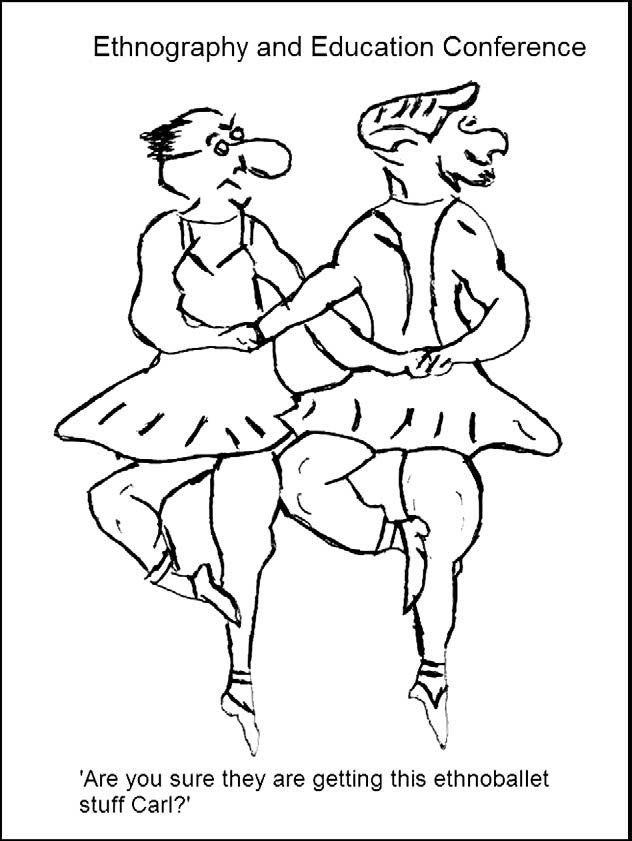
“Are you sure they are getting this ethnoballet stuff, Carl?”

Carl Bagley

In terms of the cartoon and the portrayal of myself with a dance partner, any resemblance to Bob Jeffrey, one of the ethnography network co-founders, is purely coincidental!

What isn’t coincidental is how the network, under the initial guidance of Bob and subsequent friends and colleagues, has provided a platform (and perhaps a dance floor) for ensuring ethnographic debates remain pertinent and alive. Freire (1997) observed that “the historical, political, cultural, and economic conditions of each context present new methodological and tactical requirements, so that it is always necessary to search for their actualisation’’. In such a search, the network and its associated journal, Ethnography and Education, continue to play an important part.

In 2024, two satellite conferences are looking at Re-Writing (Against) Culture and Ethnography and Transformation in Educational Contexts. Like the network, the conferences signal a commitment to engage ethnographically with a rapidly changing social world, still ingrained with inequality and discrimination.

Of course, traditional ethnographic craft remains important, but this cannot preclude critique of how ethnographic data should be generated, analysed, and portrayed. Network 19, in providing a safe space for those who metaphorically, or even quite literally, wish to dance their data, is an important one.

A safe space to recollect how we attend to education

Clemens Wieser

Educational ethnography is an exciting way of thinking about education because it prompts you to hang out in a field over a longer period, observing and listening to what participants say, and attending to impressions, atmospheres, relations, and patterns. Granting yourself time to organise your attention around what is going on is, in my opinion, at the heart of ethnography. These characteristics are cherished and passionately articulated by many in the ethnography network – yet, there is no strong convention for how this attending-to is done (Tummons & Beach, 2020). Pondering this issue, I believe this is with good reason, as ethnography has always recognised researchers as the “main research instrument” (Walford, 2018), making their subjectivity and truth-telling (Ball, 2017) paramount to all ethnographic enterprises.

After 13 years in the network, I am continually fascinated by fellow ethnographers and their various personal styles of attending to what is going on, influenced by their life histories, political or intellectual convictions, and local academic power regimes. ECER provides a relatively safe space for talking about ethnography, and I believe this is due to the international atmosphere at ECER, which suspends local power regimes, enabling us to recollect how and why we are doing educational ethnography.

Summing up: Some reasons for doing ethnography in education

In the last 25 years, EERA Network 19 has provided participants with an opportunity to leave the safe zone of their familiar, local ways of doing ethnographic educational research, while at the same time, providing an open space for discussions with critical friends on a European scale.

At times, ethnography is mistaken to be a methodology that implies unobjective anecdotes and point-of-view stories. What it potentially offers, though, is a set of analytical strategies to comprehend ongoing educational practices, firmly grounded in everyday life and its contexts. Programmatic ideas for educational change and political reforms of educational institutions, but also established pedagogical approaches, show their practical complications, unintended consequences, and challenges under implementation, only in the messy situations of everyday life.

Educational research in Europe can benefit considerably by attending to such messy situations, and the analyses of educational practice with an everyday-life perspective that ethnography provides. Studying educational practice closely and extendedly, while staying reflexive (Yon, 2003), fighting familiarity (Delamont et al., 2010), and broadening the scale of research through meta-ethnography (Beach et al. 2014), is what enables ethnographers to see the familiar with a new perspective, and contribute innovative perspectives to educational research in Europe.

The EERA Office – The view from within the spaceship

Angelika Wegscheider explains what it is like to steer the ‘spaceship’ of the EERA office, the changes she has seen over the years, and the lessons she’s learned from her time with the organisation.

A European Space for Educational Research and Dialogue

Past Secretary General of EERA, Professor Lisbeth Lundahl on the importance of EERA as an open and welcoming space for educational research and discourse.

20 Years a-going – Reflecting on two decades with EERA

Past President, Professor Joe O’Hara takes a walk down memory lane to celebrate EERA’s 30th anniversary, and reflects on the developments and achievements of the organisation.

Twenty years of participating in EERA’s 30 years

In this blog post, Professor Emeritus of Educational Sciences at Utrecht University in the Netherlands, and previous EERA president, Dr Theo Wubbels reflects on his involvement in EERA over the years, and where the organisation’s future lies.

My EERA story – from novice doctoral researcher to ERG Link Convenor

ERG Link Convenor Dr Saneeya Qureshi looks back on her journey, from her first conference, to her professional and personal growth with EERA, and the friendships made along the way.

Establishing Network 27 – and trends in didactics of learning and teaching over the past decades

Professor Emeritus Brian Hudson on the establishment and development of Network 27, and the associated trends in didactics of learning and teaching over the past few decades.

EERA’s unique buzz – and the lessons I’ve learned

Professor Emeritus Terri Seddon explains why the European Conference on Educational Research became her ‘first-choice’ academic conference, and worth the long-haul flights from her home in Melbourne. 

Experiences and benefits from collaborating in the international ethnography network

Four long-term Network 19 members, currently serving as network convenors, share their stories and insights into what the network means to them.

Developing an EERA Network Identity – NW 20 through the years

As part of our 30th anniversary celebration, Professor Raimonda Brunevičiūtė reflects on her EERA journey, and the development of Network 20, Research in Innovative Intercultural Learning Environment.

Growing (with) EERA Network 14

As part of our 30 years of EERA celebrations, Dr Joana Lúcio reflects on her time as Link Convenor of Network 14, and her professional and personal growth.

Pleasure, confusion, and friendship – 30 years of EERA

EERA’s first Secretary General and founding editor of the EERJ, Professor Martin Lawn, looks back at the sometimes rocky road of EERA, the developments into the organisation it is today, and considers where the journey should go next.

Improving the quality of education – EERA Network 11 through the years

To celebrate EERA’s 30th anniversary, Dr Gento takes a look at the activities of Network 11 to improve the quality of education, within EERA and in the wider educational research community.

Serendipity in Action: Being a link convenor for the ERG was a vibrant thread in the vast tapestry of my academic life

For the 30th anniversary celebrations of EERA, Dr Patricia Fidalgo reflects on her time as Link Convenor of the Emerging Researchers’ Group, and the joy this fulfilling role brought her.

A Transformative Journey: Nurturing Emerging Researchers at the European Conference for Educational Research.

In our blog series celebrating 30 years of EERA, Professor Fiona Hallett reflects on the sense of belonging within a supportive community of scholars.

Begoña Vigo

Begoña Vigo

Associate Professor in Education, University of Zaragoza

Begoña Vigo’s research focuses on inclusive education, rural schools, teacher education, social justice and ethnography from a critical perspective.

Carl Bagley

Carl Bagley

Professor of Educational Sociology, Queen’s University Belfast

Carl Bagley has published extensively in the areas of critical policy ethnography and critical arts-based research in Education (CABRE). He is currently exploring white racism in a working-class rural community, and in CABRE the establishment of an emancipatory ethical framework. 

Clemens Wieser

Clemens Wieser

Associate Professor in General Education, Aarhus University

Clemens Wieser’s research focuses on adult learning, expertise, tacit knowing, and pedagogical practice. His ethnographic research relies on a multi-sited approach, using video ethnography, narrative interviews, and video diaries. He has conducted fieldwork in Austria, Germany, and Denmark. 

Gisela Unterweger

Gisela Unterweger

Head of the Research Centre Childhood in Education and Society, Zurich University of Teacher Education

I conduct ethnographic research in the field of childhood studies in schools and kindergartens. My focus is on doing difference, subjectivation as a pupil under conditions of inequality, as well as post-humanist and network-theoretical approaches to everyday kindergarten life.

References and Further Reading

Bagley, C. (2009). Shifting boundaries in ethnographic methodology. Ethnography and Education, 4(3),251-254.

Ball, S. J. (2017). Foucault as Educator. Springer.

Beach, Dennis, Carl Bagley, Anita Eriksson, und Catarina Player-Koro. 2014. „Changing teacher education in Sweden: Using meta-ethnographic analysis to understand and describe policy making and educational changes“. Teaching and Teacher Education 44 (November): 160–67. https://doi.org/10.1016/j.tate.2014.08.011.

Delamont, Sara, Paul Atkinson, und Lesley Pugsley. 2010. „The concept smacks of magic: Fighting familiarity today“. Teaching and Teacher Education, Anthropological Perspectives on Learning and Teaching: Legitimate Peripheral Participation Revisited, 26 (1): 3–10. https://doi.org/10.1016/j.tate.2009.09.002.

Freire, P. (1997). Mentoring the Mentor: A Critical Dialogue with Paulo Freire. Peter Lang.

Tummons, J., & Beach, D. (2020). Ethnography, materiality, and the principle of symmetry: Problematising anthropocentrism and interactionism in the ethnography of education. Ethnography and Education, 15(3), 286–299.

Walford, G. (2018). Recognizable Continuity: A Defense of Multiple Methods. In D. Beach, C. Bagley, & S. M. da Silva (Eds.), The Wiley Handbook of ethnography of Education (pp. 36–49). Wiley Blackwell.

Yon, Daniel A. 2003. „Highlights and Overview of the History of Educational Ethnography“. Annual Review of Anthropology 32: 411–29. https://doi.org/10.1146/annurev.anthro.32.061002.093449.


Hope and Community – A community of practitioners for social change

Hope and Community – A community of practitioners for social change

Thriving communities of practice necessitate cultivating and adopting a shared repertoire of communal resources, such as stories, tools, and symbols, that encapsulate the collective knowledge of the community. Essentially, the community shares practices – approaches and tools collectively embraced by its members.

In pursuing their interest in their domain, it is important to provide members with the opportunity to engage in joint activities and discussions, help each other, and share information (Wenger-Trayner & Wenger-Trayner, 2015). Through offering and receiving help, we gain awareness of the richness of the community and build an expectation that we can contribute to others and that others reciprocate in some way. As Wenger (2000, p. 241) notes, “Identity needs a place where a person can experience knowing as a form of social competence.”

Could summer schools, workshops, and training sessions be this place for early career researchers to shape their identities as researchers?

To find out, the EERA summer school was organised at the Faculty of Philosophy, University in Belgrade, with the support of UNICEF Serbia. Under the title “Inclusive Approaches To Educational Research,” more than 30 early career researchers from over 20 countries gathered from July 12th to 14th, 2023, to explore and embody progressive and just methodologies in the field of education.

Inspired by the World as Classroom (bell hooks, 1994), we swayed from classrooms at the Faculty of Philosophy and the Institute for Philosophy and Social Theory, along the Sava Quay, through the socialist heritage of New Belgrade blocks, to the school courtyard in Ledineneighbourhood on the outskirts of Belgrade.

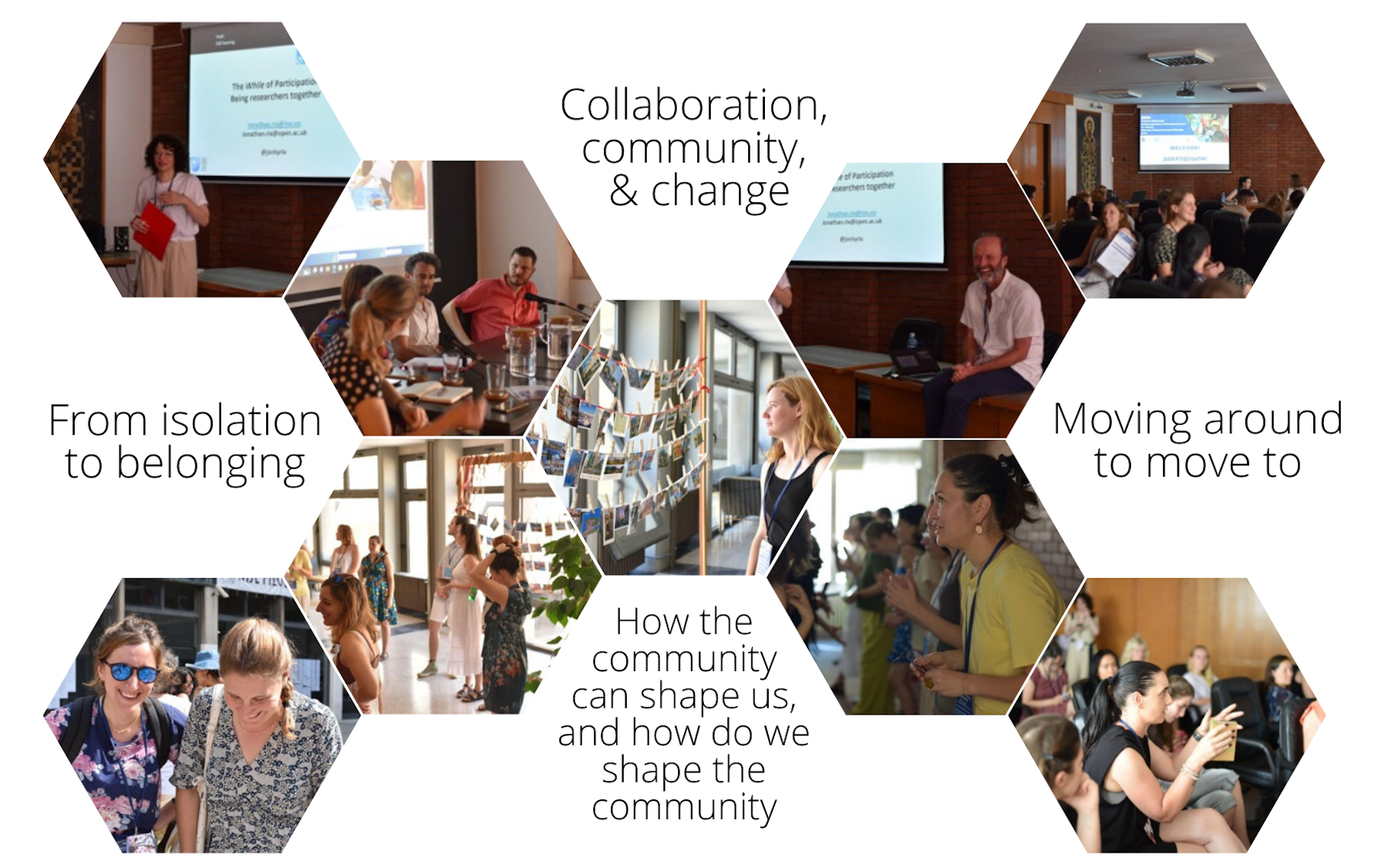
Our goal was not only to raise pivotal questions that shape our understanding of research but also to foster a close-knit community of early career researchers. We’re all passionate about finding answers that can make educational research more inclusive. As Tijana aptly describes, it guided us from isolation to a sense of belonging.

From ‘isolation’ to ‘belonging’

The EERA Summer School brought together a young group of researchers from diverse educational backgrounds. Despite the differences in our research topics, we all shared some common challenges, from finding the appropriate literature, writing, and conducting research to publishing. During our workshops, we agreed that creating a support group of peer young researchers in the field of education would help us overcome the various challenges, just as the Summer School provided us with the space to discuss them and share valuable advice. Moving from the position of an isolated researcher to a community of like-minded people helps us broaden our perspective and spark new ideas.

Tijana Gasi

University of Belgrade, Serbia

Using dialogue, walks, presentations, discussions, mental mapping, reflective logs, artistic expressions, and many other techniques, participants formed a community of learners, together with the organising team of tutors, lecturers, and volunteers. There was a heatwave this summer in Belgrade, but there was also a genuine need among us to merge academic with reallife knowledge from the ground and from the local communities. Together we asked:

 What constitutes meaningful research? How can we create research methodologies that align with our shared values? What is the relationship between change and hope? Where do we find spaces of freedom, and where are the sources of marginalisation?

For many of us, participating in a summer school was something completely new, so we were even more surprised by how quickly we became an accepting and supportive community:

“As for me, I haven’t experienced such a strong sense of belonging to engaged and thoughtful people for years. Our shared engagement for the process of inclusion in education and society led to an almost tangible synergy manifested in mutual inspiration, cooperation, and enthusiasm we kept and took back home. The EERA Summer School provided me with a Socratic sense of how little I know about participatory research and how much I still have to learn. I felt the need to recognize and appreciate the diversity, perspective, and competence of children or minority groups at our concern. And I was confronted with some new ethical issues; now I feel committed to address them honestly whenever they arise.” 

Jana Pleskotová

Jan Evangelista Purkyně University in Ústí nad Labem, Czech Republic

The keynote speakers inspired our discussions, developing our critical awareness of our participation in the summer school, as well as the participation of others in research, education settings and local communities. We experienced how participatory, caring workshop spaces can facilitate transdisciplinary collaboration and hopeful horizons for research.

Collaboration, community, and change

…through discussions, keynote presentations, and workshops, I learned about new research methods and began to consider how I could incorporate them into my study. Often, our approach to the world and to research is prescribed; we repeat the same patterns that are present in our nearest environment. As researchers, we need to learn new ways to be present in the world; we should try to do things differently, to evolve. This kind of opportunity helps us find partners who have the skills we lack so that we can become agents of change in our own communities.

Gamze Uçak Ersizer

Boğaziçi University, Turkey

A patchwork of experiences

In the realm of education, the term “professional learning community” has frequently been employed to denote any conceivable alliance of individuals sharing a common interest in education with a specific focus on the learning process rather than mere practice, as noted by DuFour (2004). However, the question that arises is: How do we truly transform into a community? Addressing this question involves drawing upon Wegner’s (1998) notion of learning as a social and situated process, predominantly derived from our engagements in various communities of practice.

Putting theory into practice

Part of our programme involved visiting local neighbourhoods. In one, New Belgrade blocks, our guide described the dynamic histories of the local area, and brought their research about critical utopianism to life, by intertwining personal memories with the architectural landscape. We visited the apartment blocks, designed to look like sails amongst the urban sea of Belgrade. We discussed transformations of these spaces, from shared spaces inherited during socialism (terraces, laundry rooms, spaces for leisure and relaxation), to illegal privatisations during the 1990s aimed at shrinking common good, to reconquesting it, and reimagining it today.  

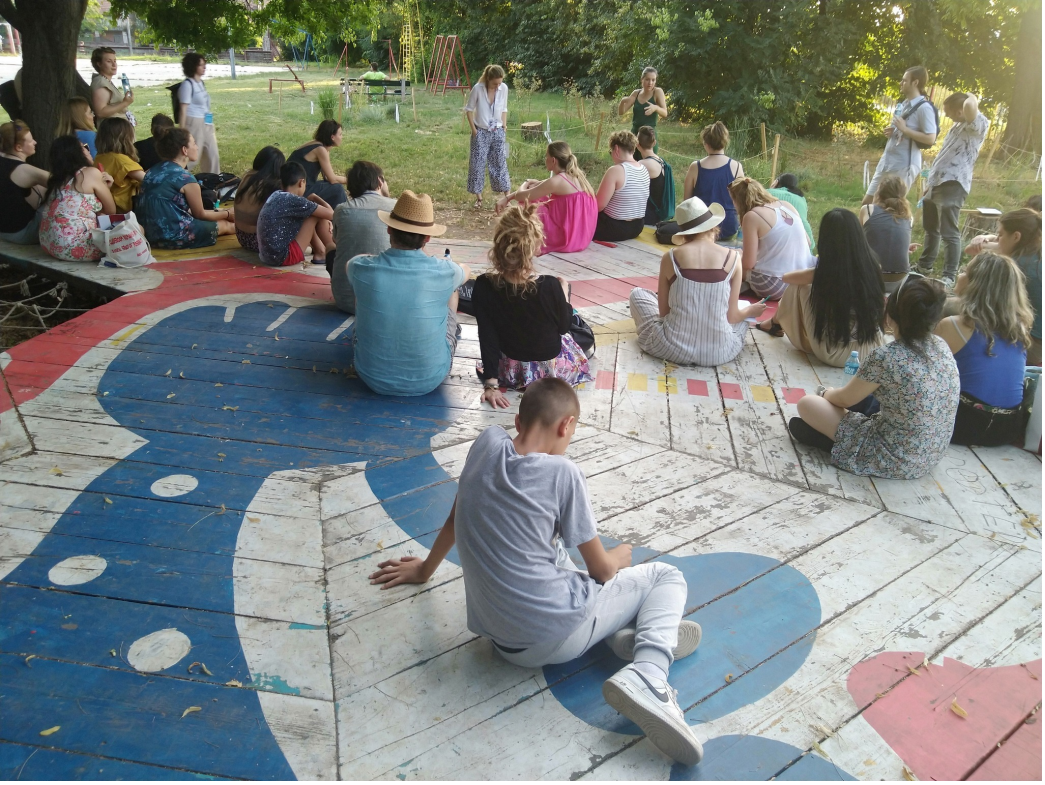
The other visit was to the local community Ledine, where the collective Škograd/Schoolcity has been working since 2016. Part of their efforts have involved trying to overturn the segregation trend taking hold in the local primary school, where there is harsh marginalisation of Roma and other minorities, and mitigating the effects of poverty, under-education and violence.

Moving around to move to

Walking through Belgrade’s scorching streets led to a profound reflection on the “community of learners” and the “community of practice.” The former involved sharing ideas and experiences, often failing to translate them into action in our contexts. The latter, “community of practice,” emphasised hands-on learning and collaboration, celebrating diversity as a strength. It highlighted the power of collaboration to turn inspiration into action, promoting change in our communities.

Bojana Milosavljević

University of Belgrade, Serbia

“It is imperative that we maintain hope even when the harshness of reality may suggest the opposite”.

Paulo Freire (1996)

In Ledine, a neighborhood in Belgrade, the sign on a trash can says, “I dream”.

Ledine, a neighborhood in Belgrade, the sign on a trash bin says, “I dream”

At Škograd, we could see tangible collaborations between researchers, children, and families. The artwork, games, and gardening, alongside the use of spaces, inspired us to question how we can promote inclusive community spaces and build meaningful collaborations with the local communities. As one participant said:

It was a completely new experience to deeply explore how the research is connected with the local community and expresses the hope visually. Witnessing the hope emanating from the pupils’ artworks in the “Imagine a Dream Path” project was truly inspiring. These remarkable pieces vividly demonstrate how the researcher’s involvement has ignited the children’s creativity.

Yupei Wei

University of Edinburgh, Scotland

Engaging in an open dialogue about the research journey, we witnessed and felt the joys and the challenges of participation, and recalibrated around the importance of researching with communities for social justice. This visit was an illuminating opportunity to engage with the local community, to attentively absorb their narratives, and to experience the intimate and respectful collaboration between researchers, children, and families.

I discovered more about different countries and contexts, where ‘Inclusion’ and inclusive practices were influenced by a range of legislation changes, socio-cultural factors, and how they can be implemented in various ways. Despite these differences, the summer school highlighted the ways in which our field of education connects us all. It was clear that we had a strong pursuit for social justice, and an intense curiosity for community-based learning. We came away with a sense of purpose in our field. I felt empowered, inspired and rejuvenated as the time during the summer school connected us as one community of researchers across the world.

Katherine Gulliver

Plymouth Institute of Education, Plymouth University, United Kingdom

Overall, the EERA Summer School was an embodied learning experience that is difficult to summarise. We carry this experiential learning forward in our souls and our actions, nourished by connecting, and empowered to embed participatory and inclusive approaches in our own research practice.

How the community can shape us, and how do we shape the community

Throughout Summer School, the emphasis on values was strong. The shared values of curiosity, collaboration, and respect guided our interactions and discussions. This commitment to values created an environment where learning was not just about acquiring knowledge but also about personal growth and ethical engagement…

The EERA Summer School was not just a one-time event; it was a catalyst for a habit of continuous lifelong learning. The knowledge transfer during those days in Belgrade planted seeds that continue to grow. We left with a renewed commitment to education and a network of colleagues and friends dedicated to making a positive impact. We came as individuals and became a Community of Learners, intending to become a Community of Practitioners for Social Change.

Adna Sokolović

COI Step by Step, Sarajevo, Bosnia and Herzegovina

Conclusion and final reflections

Image: Ledine, neighborhood in Belgrade, “Vlada Obradović Kameni” school courtyard, open classroom codesigned with children

The process of evolving into a community of practice or community of practitioners, as outlined by Wenger (1998), revolves around shared interests of personal or professional significance. Our community, rooted in a collective perspective on education, perceives it as a vital social practice and research in education as a catalyst for transformative change capable of recalibrating power dynamics.

The shared values among us have cultivated a common purpose– the pursuit of social change. Bojana encapsulated this sentiment by stating that the summer school highlighted the power of collaboration to turn inspiration into action – resulting in change in our communities.

Key Messages

  • Often, our approach to the world and to research is predetermined; we often replicate the same patterns found in our immediate surroundings. Therefore, you need to move around to move from.
  • Despite the differences in our research topics, we all encountered common challenges, ranging from finding suitable literature and conducting research to the process of publication.
  • Our community influences us, and in turn, we contribute to shaping the community.
  • We observed firsthand how participatory, supportive workshop environments can foster transdisciplinary collaboration and inspire optimistic research prospects.
  • Researchers and research have the potential to instigate change, or at the very least, offer hope for the possibility of change.

Authors

 *We choose a circular representation of authorship in order to display different, but equally valuable contributions each of us made in writing this blog. Our affiliations are:

Adna Sokolović, COI Step by Step, Sarajevo, Bosnia and Herzegovina

Bojana Milosavljević, University of Belgrade, Serbia

Gamze Uçak Ersizer, Boğaziçi University, Turkey

Jana Pleskotová, Jan Evangelista Purkyně University in Ústí nad Labem, Czech Republic

Jelena Joksimović, Škograd, Serbia; Faculty of Education, Jagodina, University of Kragujevac

Julia Dobson, Institute of Education, University College London, United Kingdom

Katherine Gulliver, Plymouth Institute of Education, Plymouth University, United Kingdom

Tijana Gaši, University of Belgrade, Serbia

Yupei Wei, University of Edinburgh, Scotland

Olja Jovanović, University of Belgrade, Serbia

Other blog posts on similar topics:

References and Further Reading

Add your list of references here. Use [1], [2], [3]… to mark where they are used in the text above.

The importance of diversity training for educators in predominately white places

The importance of diversity training for educators in predominately white places

The state of future education as a discipline will be possibly influenced by the importance it places on a conceptual, curricular, and pedagogical need to shift the emphasis toward transformative classrooms working for positive change through cultural diversity (Banks, 2020). Awareness of issues around race equality, inclusive growth, and community cohesion has heightened following George Floyd’s killing in the USA in 2020, and the Black Lives Matter Movement. This increasing awareness is particularly pertinent in Britain in areas of historically low ethnic diversity which have lately experienced a rise in ethnic minority populations, and where inclusive growth is a challenge.

The Research

My research explores the understanding and experiences of multiculturalism of students, parents and educators in four mainstream primary schools situated in the predominantly White South-West England. I adopted a qualitative case study methodology framed by a sociocultural theoretical framework (Vygotsky, 1978). Data were collected through semi-structured interviews with adult participants, observation of students’ classroom activities, and documentary analysis of classroom and corridor displays.

The interviews had questions around books and topics reflecting multiculturalism. In the height of COVID-19, the classroom and corridor displays were photographed to see whether the school ethos and atmosphere reflect multiculturalism.

Background – Diversity, Curriculum and Education Inspectorate

Although 33.5% of the school population includes ethnically diverse children, out of 6478 children’s books published in Britain in 2019, 10.5% featured characters belonging to Black, Asian and Minority Ethnic communities; of these, only 5% had a main character who belonged to the communities mentioned (Wood, 2019). The education inspectorate, Office for Standards in Education, Children’s Services and Skills or in short, Ofsted (2019:11,12) is vocal about ensuring “inclusive education and training to all”, and extending the Curriculum beyond the academic and technical domains for students’ broader development, and creation of understanding, and appreciation of cultural diversity. However, race equality and community cohesion, which could help in the students’ broader development, do not constitute Ofsted’s school inspection criteria (Rhamie, 2014).  

Findings

My research findings suggest participants’ eagerness for more ethnically diverse content incorporated in teaching and learning. However, schools are considerably dependent on, and somewhat confined by, the knowledge-focused Primary National Curriculum in England for which efforts towards a multicultural reflection are less noticeable. The absence of culturally diverse content in the school Curriculum highlighted by the 1985 Swann Report and the 2007 Ajegbo Report makes England’s primary National Curriculum look like a “Brexit policy three decades before Brexit”  (Moncrieffe et al., 2020:20). The situation emphasizes the need to start afresh. The starting point may be to get thinking and acting while doing Curriculum making (Priestley et al., 2021). This is because Curriculum thinking  is at the heart of education practice today (Poutney and Yang, 2021).

Implications – Curriculum thinking and teacher training

The educators as Curriculum framers play a significant part in Curriculum thinking and delivery where the task design is crucial, and where the educators can place equal importance on the interwoven elements of “how”, “what” and “why” the task is taught (Moncrieffe et al., 2020:16-17). The educators need to build confidence in encouraging difficult conversations around racism, fear, indifference, and ignorance breaking the stereotypical barriers. This would help equip the students with the necessary creative skills so that they learn, grow and foster as responsible citizens in this changing complex world (Deng, 2022) with an apt cognition of a multicultural Britain. But how can they train students without the required training in the specific area?

Lander’s research (2014) showed that trainee educators in predominantly White areas often run the risk of sharing confined perspectives while educating children. I agree with Lander that no matter the geographical location, school educators can be equipped with the necessary culturally responsive initial training, and continuous professional development, with a focus on race-centric and multiculturally responsive education (ibid).   This may aid in the reduction of employees’ unconscious bias for which the CRE (2021)  recommended training and routine skills assistance. This becomes distinctly pertinent to avoid horrific cases of racism in the future like the one in Hackney, London where a Black teenager referred to as Child Q was wrongly suspected of cannabis possession, and strip-searched during her period, risking deep serious consequences for the child (FordRojas, 2022 ).

Having competent culturally responsive educators in 21st century classrooms may have important positive effects like boosted self-esteem, improved academic achievement, and greater engagement and well-being of students from ethnically diverse communities, which, in turn, have implications for fostering nurturing inclusive classrooms and school environments.

Key Messages

  • There is often a misconception that only schools with high ethnic minority populations or those situated in multicultural places need multicultural awareness.
  • Race equality and cultural awareness are essential topics amidst racist incidents in multicultural schools at the heart of London
  • These topics are equally important in predominantly White places in Britain, especially in the aftermath of George Floyd’s murder, the BLM movement, and post-Brexit rises in racist and xenophobic attacks.
  • School curriculum and atmosphere need to offer race sensitive multicultural reflection in these places.
  • Practitioners need training and preparedness to equip them with relevant knowledge, skills, and confidence.
Suparna Bagchi

Suparna Bagchi

Final year doctoral student in Plymouth Institute of Education, University of Plymouth, UK

Suparna Bagchi is a final-year doctoral student at the Plymouth Institute of Education, University of Plymouth. She worked there as a Doctoral Teaching Assistant from 2019 to 2022. Suparna’s doctoral research explores perceptions of multiculturalism in mainstream primary schools in South West England. With a research interest in race, equity and social justice, Suparna is a member of various race equality associations both inside and outside the University.

Suparna is a dignity and respect ambassador and student representative of Equality, Diversity and Inclusion (EDI) at Plymouth University. In 2022, Suparna received EDI Award from Plymouth University coming among the top three students. Suparna is a trained Compassionate Community Ambassador, mentor of the UNO-recognised Virtues Project, a certified Community Champion and trained Hinduism Faith Speaker. Suparna appears regularly on BBC Radio Devon as a guest speaker. Suparna has made academic presentations nationally and internationally.

Twitter handle: https://twitter.com/suparnabagchi2?lang=en-GB

Orcid: https://orcid.org/0000-0002-2498-2892

ResearchGate: https://www.researchgate.net/profile/Suparna-Bagchi

Other blog posts on similar topics:

References and Further Reading

Banks, J. A. (2020). Diversity, transformative knowledge, and civic education: Selected essays. Routledge. https://doi.org/10.4324/9781003018360

Deng, Z. (2022). Powerful knowledge, educational potential and knowledge-rich curriculum: pushing the boundaries. Journal of Curriculum Studies54(5), 599-617. https://doi.org/10.1080/00220272.2022.2089538

FordRojas, J.P. (2022). Child Q report: Met Police culture ‘under scrutiny again’ after case of schoolgirl strip-searched by officers, says policing minister. Sky News. 13 April. https://news.sky.com/story/child-q-report-met-police-culture-under-scrutiny-again-after-case-of-schoolgirl-strip-searched-by-officers-says-policing-minister-12572253

Lander, V. (2014). Initial teacher education: The practice of whiteness. In R. Race. and V. Lander (Eds.), Advancing race and ethnicity in education, (pp. 93-110). Palgrave Macmillan.http://www.palgrave.com/us/book/9781137274755

Moncrieffe, M., Race, R., Harris, R., Chetty, D., Riaz, N., Ayling, P., Arphattananon, T., Nasilbullov, K., Kopylova, N. and Steinburg, S. (2020). Decolonising the curriculum. Research Intelligence142, 9-27. British Educational Research Association. https://www.researchgate.net/publication/340870420_Decolonising_the_Curriculum_-_Transnational_Perspectives_Research_Intelligence_Issue_142Spring_2020

Ofsted. (2019). The education inspection framework. Draft for Consultation–January 2019.

https://www.gov.uk/government/publications/education-inspection-framework-draft-for-consultation

Plymouth Report. (2019). Plymouth: Plymouth City Council.https://www.plymouth.gov.uk/publichealth/factsandfiguresjointstrategicneedsassessment/plymouthreport

Pountney, R. and Yang, W. (2021). International perspectives on the curriculum Implications for teachers & schools. BERA Research Intelligence, 148, pp. 15 https://www.bera.ac.uk/publication/autumn-2021

Priestley, M., Alvunger, D., Philippou, S., and Soini, T. (2021). Curriculum making across European nations. BERA Research Intelligence,148, 16-17. http://hdl.handle.net/1893/33293

Rhamie, J. (2014). Resilience, the black child and the Coalition Government. In .R Race, and V. Lander (Eds.), Advancing Race and Ethnicity in Education (pp. 230-249. Palgrave Macmillan. https://doi.org/1057/9781137274762_15

Sewell, T., Aderin-Pocock, M., Chughtai, A., Fraser, K., Khalid, N., Moyo, D., … and  Shah, S. (2021). Commission on race and ethnic disparities: The report. Commission on Race, Ethnic Disparities. https://assets.publishing.service.gov.uk/government/uploads/system/uploads/attachment_data/file/974507/20210331_-_CRED_Report_-_FINAL_-_Web_Accessible.pdf

Vygotsky, L. S., and Cole, M. (1978). Mind in society: Development of higher psychological processes. Harvard university press.https://doi.org/10.2307/j.ctvjf9vz4

Wood, H. (2019). New CLPE report into kids books warns over simplified depictions of BAME characters. The Bookseller. https://www.thebookseller.com/news/clpe-reveals-increase-bame-representation-urges-against-jasmine-default-1085896

Reimagining Teacher Education Pedagogies and Policies in the Context of Mass Global Migration

Reimagining Teacher Education Pedagogies and Policies in the Context of Mass Global Migration

Diversity across the world is hardly new, but its nature is changing given the growing number of refugee and migrant children, placing increasing stress on schools to meet their learning needs [1] These increases in transnational mobility have teachers struggling to reconsider their everyday practices to accommodate many more newcomers in their classrooms, even while immigrant and refugee students lag behind their nonimmigrant peers academically. [2] [3] [4]

In 2019, the number of international migrants reached 272 million; 33 million of them were children. Among the world’s migrants are nearly 29 million refugees and asylum seekers who have been forcibly displaced from their own countries. An additional 41 million people in 2018 were internally displaced due to conflict and violence, an estimated 17 million of whom were children. [5]

The need for teachers to become more responsive to changing social conditions and student populations is gaining urgency [6][7][3][8] as recent reports [9] emphasize the support of children from low socio-economic, migrant, or “disadvantaged” minority backgrounds. This highlights teacher supply and preparation as an urgent issue affecting immigrant and refugee education globally. [10]

Reimagining Teacher Education Pedagogies and Policies Across Turkey, United States, and Hong Kong

Our purpose in this study was to gain insight into quality teachers for immigrant students. Using social justice as a lens, we focused on teacher educators, whose research and experience center on preparing teachers to teach immigrant students and considered their perspectives on teaching immigrant students for educational equity. To this end, in a multiple case study, we examined teacher educators in Turkey, the United States (US), and Hong Kong (HK), as each context presents a distinct case of immigration.

In Turkey, immigrants have recently consisted largely of refugees displaced by war. The US has, historically, long received immigrants, motivated by push factors such as political conflicts, as well as pull factors such as economic opportunities. HK’s colonial past and subsequent re-integration with greater China has meant minimal “traditional” immigration, but rather ethnic minorities who are non-Chinese residents, imported workers, and migrants from mainland China.

We acknowledge the essentializing nature of these characterizations of immigrant, which simplifies the complexity of the phenomenon as it unfolds in each context. Our intention was not to mask the multilayeredness of immigration generally, or in each of these contexts, but to illuminate the varied ways in which the concept of immigrant manifests internationally, and to forward our cases as three specific examples.

Theoretical Framework

We conceptualized the perspectives of teacher educators for teachers of immigrant students using theoretical frameworks articulated by two scholars of social justice teaching and teacher education. First, we used bell hooks’ notion of teaching to transgress [11] to illuminate teacher practice and preparation that can “enables transgressions” needed to dismantle entrenched educational hegemonies experienced by immigrant youth and “[make] education the practice of freedom” [11]. Second, we used Cochran-Smith’s theory of teacher education for social justice which “is intended to challenge the educational status quo and be transformative” [12] by interrogating the central issues of teacher education: teachers, curriculum, teaching contexts, and outcomes. Our study offers insight into what seems to be emphasized (or absent) in pre- and in-service teacher education to support immigrant learners, both within the confines of each unique context and also through collaborative global dialogue across three cultural boundaries.

Teacher Educators’ Perspectives on Preparing Teachers to Teach Immigrant Students

Through our study, we aimed to gain insight into educating immigrant students and what seems to be emphasized (or absent) in pre- and in-service teacher development and practice to support immigrant learners in these three contexts, based on the perspectives of teacher educators who do the work of preparing teachers to teach immigrant students. In doing so, we asked the following question: “Using social justice as a lens, what insights do teacher educators in Turkey, the US, and HK, offer on preparing teachers to teach immigrant students?”

We framed each context as an individual case and examined the perspectives of practicing teacher educators from the US, Turkey, and HK, given the unique insights professionals from each context can offer for teacher preparation/development for educating immigrant students. Our study included 22 teacher educators from Turkey, the US, and Hong Kong, whose research interests and experiences center on preparing teachers to teach immigrant students.

We present the findings from our preliminary analysis of our interview data under three themes of teacher educators’ identity, their work, and implications for teacher education, policy, and research. 

Findings

Teacher Educators and Who They Are

Our analysis revealed that the topic of educating immigrant children was personal to many teacher educators whom we interviewed. They either had a first-hand experience of being an immigrant child or had generational family histories of immigration. Other teacher educators also mentioned that in addition to their personal histories, their professional and educational histories mattered when engaging persistently in topics of research and teaching related to educating immigrant children.


Teacher Educators and The Work That They Do

The teacher educators intentionally integrated their research on issues around immigrants and immigration and the elements of social justice with their teaching. For example, they discussed including specific pedagogies on how to teach immigrant students in their teacher education courses and bringing their research into teaching to provide evidence from the field. In addition, many teacher educators elaborated on building partnerships and collaboration as key to teaching immigrant students. Some were involved in family-community partnerships and others were in collaboration with colleagues who have direct immigrant backgrounds or are close to immigrant communities because they believed that such collaboration and partnerships can offer important perspectives on how to teach and partner with immigrant students and families.


Teacher Educators and the Work That Needs to be Done

The narratives of the teacher educators across the three national contexts pointed toward what further work needs to be done to ensure education that is equitable and socially just for immigrant students around the globe. The first is a radical reform in teacher education programs; second is learning about and navigating policies that are often against immigrants; third is the need for research that is context specific but also cross-cultural and transnational as one way to respond to the mass global migration. 


Within these themes, we also drew upon bell hooks conception as “education as the practice of freedom,” and used bell hooks’ concepts to illustrate teachers’ enactments. An example of our participant, YM, is here. 

Findings

Example of a Webinar: Pre-service Teachers in Dr. Akin-Sabuncu’s Life Studies Education class at TED University

The theoretical lenses afforded by hooks and Cochran-Smith enabled us to discern connections between teacher educator identities and work, and teacher preparation for educating immigrant students. Our findings showed: 1) the relationship between identity and commitments to teaching marginalized populations as each respondent articulated a clear connection to immigrant students as key to their work, an insight into “which teachers are recruited” for social justice teaching [12]; and 2) inserting “a counter-narrative account” that “insist[s] that everyone’s presence is acknowledged” [11] by building bridges between immigrant communities and families and teacher preparation curricula, and enabling the capacities of immigrant students contained in everyday, ordinary actions to be instructive to new and experienced teachers and researchers.


Our study illuminates the need for teacher educators to design preparation programs that explicitly address immigrant students, enable novice teachers to make professional connections to immigrant communities through personal, authentic experiences, stretch the curriculum beyond the confines of the university to engage local communities and make full use of the rich resources and partners they represent. Through this study, we present a broader, more global view on teaching and teacher education for (im)migrant students, provide a window into the knowledge and skills teacher educators need to emphasize in their preparation, and offer lessons for and across different national settings.


Their narratives across the three jurisdictions highlighted what further work needs to be done to ensure socially just education for immigrant students around the globe. First is radical reform in teacher education programs; second is learning about and navigating policies that are often hostile to immigrants; third is the need for research that is context-specific but also cross-cultural and transnational as one way to respond to mass global migration. 

We are looking forward to sharing our findings at the annual meetings of the ECER-2022 and WERA-2022!


Other blog posts on similar topics:

Dr Sibel Akin-Sabuncu

Dr Sibel Akin-Sabuncu

Assistant Professor of curriculum and instruction at the Faculty of Education at TED University.

Sibel Akin-Sabuncu, Ph.D., is an assistant professor of curriculum and instruction at the Faculty of Education at TED University. She obtained her Ph.D. degree in the Curriculum and Instruction Program at Middle East Technical University. Dr. Akin-Sabuncu was a visiting scholar at Teachers College, Columbia University during her doctoral studies, and is also currently a postdoctoral researcher and a visiting assistant professor at Teachers College, Columbia University. Her research focuses on preservice and in-service teacher education; elementary teacher education; teacher/teacher educator beliefs; teaching and teacher education for social justice/immigrant and refugee students/disadvantaged students; educational equity; critical pedagogy; and culturally responsive pedagogy.

LinkedIn: www.linkedin.com/in/sibel-akin-sabuncu-77034643

Instagram @sibel_akin_sabuncu

Dr Crystal Chen Lee

Dr Crystal Chen Lee

Assistant professor of English language arts and literacy at North Carolina State University in Raleigh, NC

Crystal Chen Lee, Ed.D., is an assistant professor of English language arts and literacy at North Carolina State University in Raleigh, NC. Her research lies at the nexus of literacy, teacher education, community engagement, and marginalized populations. She received her Ed.D. in Curriculum and Teaching from Teachers College, Columbia University. 

Twitter: @CrystalChenLee1

Dr Seung Eun (Sunny) McDevitt

Dr Seung Eun (Sunny) McDevitt

Assistant professor of special education at St. John’s University in Queens, New York, USA.

Seung Eun (Sunny) McDevitt, Ed.D., is an assistant professor of special education at St. John’s University in Queens, New York, USA. Her research interests include diverse teachers and their inclusive practice for marginalized children in early childhood education and care contexts. Prior to entering academia, Dr. McDevitt was an early childhood/special education teacher and a learning specialist in New York City.

Twitter: @SunnyMcDevitt

Dr A Lin Goodwin

Dr A Lin Goodwin

Dean and Professor of the Faculty of Education at the University of Hong Kong

Lin Goodwin (葛文林) is Dean and Professor of the Faculty of Education at the University of Hong Kong. Professor Goodwin’s research focuses on teacher/teacher educator beliefs, identities and development; equitable education and powerful teaching for immigrant and minoritized youth; international analyses and comparisons of teacher education practice and policy.

Twitter: @algoodwin_TC

GENE Awards

EERA is delighted and honoured to be partnering with the Global Educational Network in Europe (GENE) to make significant research funds available to our members to further research in the area of global education.

These research awards are funded by Global Education Network Europe (GENE), the European network of Ministries and Agencies with national responsibility for policymaking, funding, and support in the field of Global Education. For this reason, the subject area for research projects undertaken is that of Global Education.

The purpose of the award is to support quality research around the themes outlined here  – which have been identified as of interest to policymakers. Gathering of existing research, application of existing research from other areas of education to Global Education, follow-up studies, all are perfectly acceptable. It is not expected that the research has to draw policy conclusions – but to make available up-to-date, policy-relevant research from which policymaker can draw their own conclusions.

References and Further Reading

[2] American Psychological Association (APA), Presidential Task Force on Educational Disparities. (2012). Ethnic and racial disparities in education: Psychology’s contributions to understanding and reducing disparities. Retrieved from
http://www.apa.org/ed/resources/racial-disparities.aspx

[12] Cochran-Smith, M. (2010). Toward a theory of teacher education for social justice. In A. Hargreaves (Eds.), Second international handbook of educational change (pp. 445–467). Dordrecht, The Netherlands: Springer. https://www.academia.edu/4346572/Toward_a_Theory_of_Teacher_Education_for_Social_Justice

[9] European Commission. (2013a). Education and training in Europe 2020: Responses from the EU member states. Brussels: Eurydice. https://eacea.ec.europa.eu/national-policies/eurydice/content/education-and-training-europe-2020-responses-eu-member-states_en

[6] European Commission. (2013b). Supporting teacher competence development for better learning outcomes. Retrieved from http://ec.europa.eu/dgs/education_culture/repository/education/policy/school/doc/teachercomp_en.pdf

[11] hooks, b. (1994). Teaching to transgress. New York, NY: Routledge. https://www.routledge.com/Teaching-to-Transgress-Education-as-the-Practice-of-Freedom/hooks/p/book/9780415908085

[7] Organisation for Economic Co-operation and Development (OECD). (2010). Educating teachers for diversity: Meeting the challenge. Retrieved from
http://dx.doi.org/10.1787/9789264079731-en

[3] Organisation for Economic Co-operation and Development (OECD). (2016). Supporting teacher professionalism: Insights from TALIS 2013. Retrieved from
http://dx.doi.org/10.1787/9789264248601-en

[8] Organisation for Economic Co-operation and Development (OECD). (2019). TALIS 2018
results (Volume I): Teachers and school leaders as lifelong learners.
Paris: OECD
Publishing. https://www.oecd.org/education/talis-2018-results-volume-i-1d0bc92a-en.htm

[10] Paine, L., Blòmeke, S., & Aydarova, O. (2016). Teachers and teaching in the context of
globalization. In D. Gitomer & C. Bell, (Eds.), Handbook of research on teaching (pp.
717-786). Washington, DC: AERA. https://www.academia.edu/27448289/Paine_L._Blomeke_S._and_Aydarova_O._2016_._Teachers_and_Teaching_in_the_Context_of_Globalization._AERA_Handbook_of_Research_on_Teaching

[1] Public Policy & Management Institute. (2017). Preparing teachers for diversity: The role of initial teacher education.Brussels: European Commission.

[4] Sugarman, J. (2017). Beyond teaching English: Supporting high school completion by immigrant and refugee students. Washington, DC: Migration Policy Institute. https://www.migrationpolicy.org/research/beyond-teaching-english-supporting-high-school-completion-immigrant-and-refugee-students

[5] UNICEF. (2020). Child migration. Retrieved from https://data.unicef.org/topic/child-migration-and-displacement/migration