Perspectives on intercultural approaches to education and social justice: impressions from an emerging researcher

Perspectives on intercultural approaches to education and social justice: impressions from an emerging researcher

As a Ph.D. student at the beginning of my career, attending the European Conference on Educational Research in Belgrade was a valuable introduction to the global academic community. ECER was an essential opportunity for academics and emerging researchers to discuss topics at the forefront of educational research, alongside the Emerging Researchers’ Conference (ERC) that took place immediately before ECER.

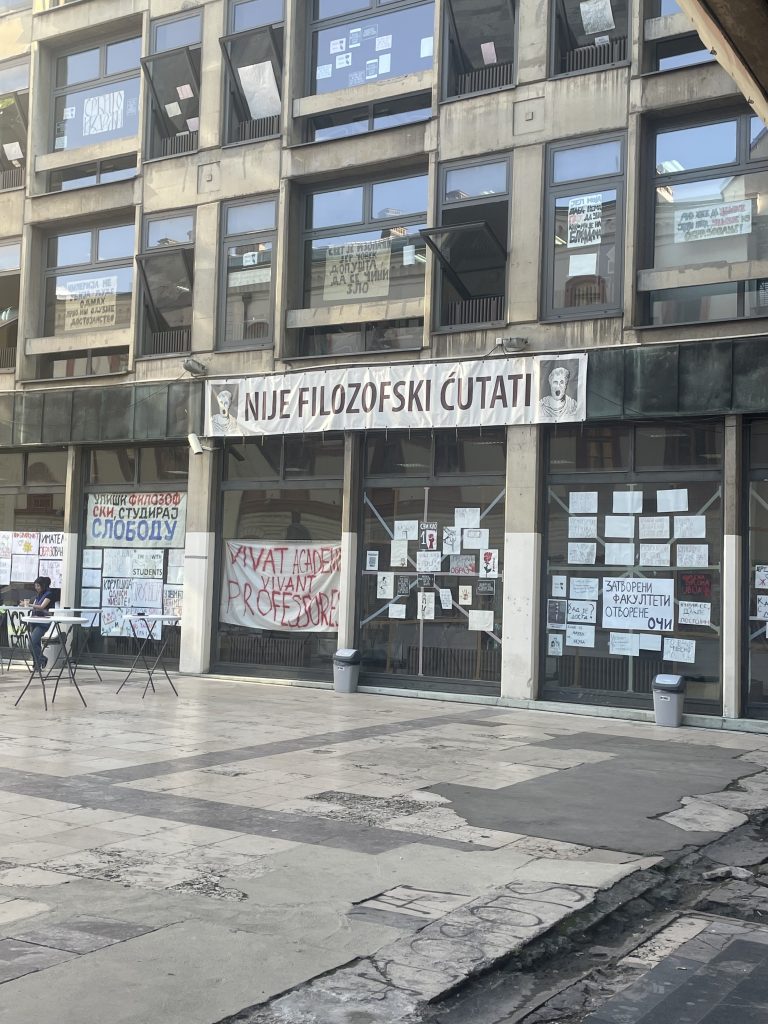
Overall, the annual event hosted 2,619 scholars, with 1,938 papers presented from 75 different countries, representing a genuinely international community and an amazing array of perspectives. This year’s conference took place amid students’ ongoing mobilisations, which have been continuing for many months already and were focused upon demanding transparency, accountability, and respect for fundamental rights whilst utilising a critical and engaged lens.

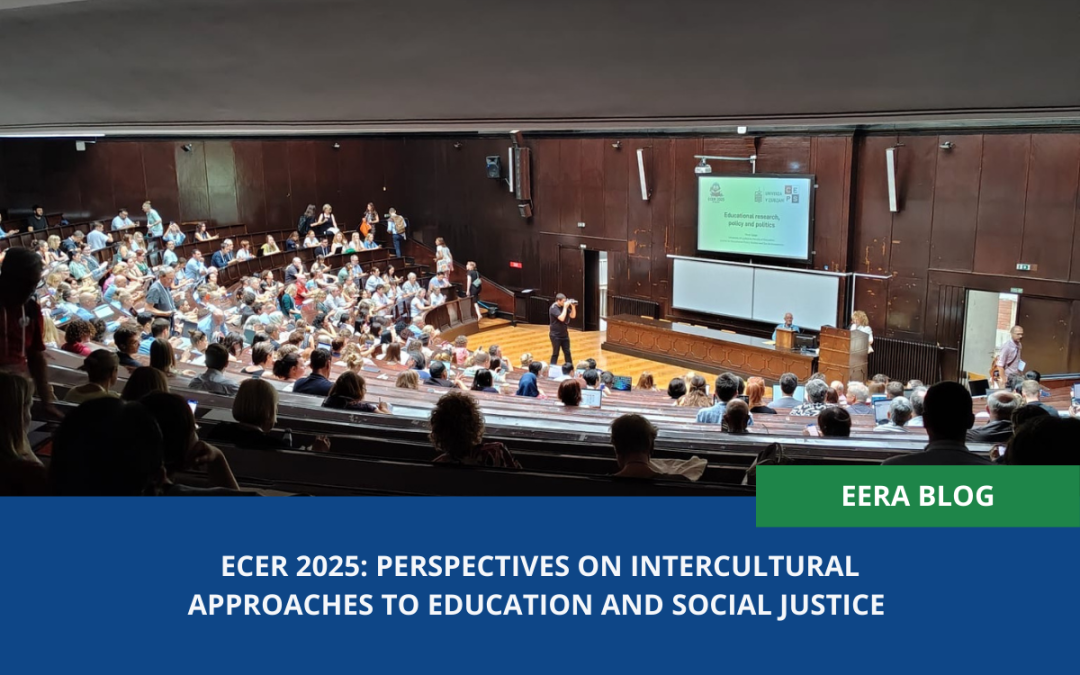
These student demonstrations and occupations hold not only an intrinsic political meaning but also an educational relevance. University public spaces have, indeed, been converted into a platform for dialogue and active and democratic participation. I was particularly caught by the slogan in Serbian language “Nije filozofski ćutati,” which stands for “it is not philosophical to be silent,” a catchphrase also quoted by Prof. Pavel Zgaga during his Keynote Speech on ‘educational research, policy and politics’.

Intercultural perspectives that emerged during ERC and ECER and how they might be useful for my educational researcher path

As a listen-only participant, I had the chance to attend several sessions on relevant topics for my research. The latter focuses on on the schooling experiences and integration processes of young people from migrant backgrounds in Italy.

Pertinent themes that emerged were related to students’ cultural and linguistic diversity, education in marginalized urban contexts, and intercultural early childhood education. Attending presentations on social justice and intercultural education – in which research results from different European contexts were highlighted – has certainly helped me broaden my perspective on various aspects of my research. I also believe it is crucial to attend sessions related to other networks to acquire fundamental notions of educational research, particularly linked to theoretical approaches and methodologies to be used. As such, I have also attended various presentations within networks 04 (Inclusive Education) and 14 (Communities, Families and Schooling in Educational Research).

The sessions I attended were marked by a positive exchange of ideas and opinions, with the purpose of finding strategies that can be implemented in educational and pedagogical practices. A feature that emerged from several presentations is that education also presents a sociopolitical dimension (Akkari & Radhouane, 2022). As part of the so-called ‘second generation of migrants in Italy’, I would even push myself to affirm that there is nothing more antithetical to education than neutrality, especially considering the subaltern position of migrant communities in Europe.

Insights from the ‘Social Justice and Intercultural Education’ Workshop

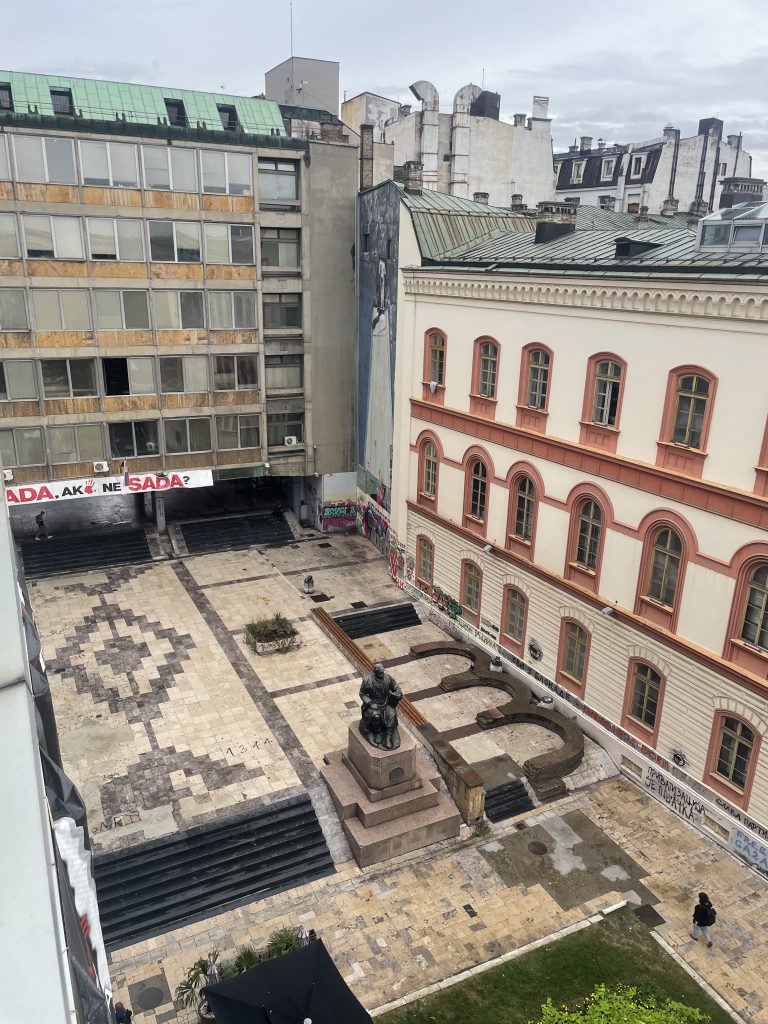
A large building with a statue in the middle of a courtyard

A key activity that has been very supportive for my first experience at an international conference on educational research is represented by the workshop “How to develop a decentralised way of doing research?” led by Professor Lisa Rosen.

A range of strategies for decentering dominant narratives and strengthening marginalised voices were mentioned. This activity, open to professionals at different stages of their careers and particularly to emerging researchers, was aimed at promoting decentralisation from exclusively Eurocentric models, creating socially and interculturally sensitive knowledge and to question our positions and prejudices as researchers.

Discussing the issue seems to me fundamental to avoid reinforcing power relations and tokenism by excluding (even inadvertently) marginalised groups. I believe that the positionality of the researcher in the areas of Social Justice and Intercultural Education could put us, as academic researchers, in a vulnerable position. As suggested during this session, it is appropriate to employ it when an analysis is implemented or an in-depth study is conducted. I would like to mention some key points on the positional statement that caught my attention and may be useful to early-career researchers:

– Be aware that identity, beliefs, and values may influence research work in different ways

– Consider biases, emotional responses, and transparency in your research efforts

– Do not ignore the relevant balances and imbalances of power, as well as the institutions involved and political implications

– Knowledge and analysis of the research context, through a critical approach, holds crucial importance

Reflections for the future

ECER provided me with an extraordinary opportunity to outline the prospects for educational research in the European context, particularly in my specific field of investigation.

My main challenge now is to build on what I have learned, the advice I have received, and the insights gained during the conference to foster dialogue with other emerging researchers and fuel gradual but steady academic growth. In a closing remark, I believe that fostering critical awareness of educational practices, promoting social purpose in research, and strengthening methodological commitment should be central to interculturalism, innovation, and social responsibility.

Key Messages

  • International conferences accelerate early-career development – ECER/ERC offer essential exposure to global educational research perspectives and networking opportunities for emerging scholars.
  • Education is inherently political, not neutral – Educational research must critically engage with power dynamics, especially when working with marginalised and migrant communities.
  • Researcher positionality shapes research quality – Awareness of your own identity, biases, and values is essential to avoid reinforcing power imbalances in intercultural research.
  • Decentre Eurocentric narratives – Decentralised research approaches that amplify marginalised voices create more socially sensitive and robust knowledge.
  • Critical awareness drives meaningful research – Combining methodological rigour with social purpose is central to impactful intercultural and social justice education research.
Charaf El Bouhali

Charaf El Bouhali

Università di Padova

Charaf El Bouhali: PhD student in Pedagogy, Education and Instructional at the University of Padua. His research focuses on the schooling experiences and integration processes of young people from migrant backgrounds in Italy.

Orcid: https://orcid.org/my-orcid?orcid=0009-0001-1663-3019 Linkedin: www.linkedin.com/in/charafel

Other blog posts on similar topics:

References and Further Reading

References and Further Reading

Akkari, A. and Radhouane, M. (2022). Intercultural Approaches to Education: From Theory to Practice, Springer, 2022. https://doi.org/10.1007/978-3-030-70825-2 

Cabiles, Bonita S. (2025). Internalised deficit perspectives: positionality in culturally responsive pedagogical frameworks.Pedagogy, Culture & Society, 33(4), 1129-1146 https://doi.org/10.1080/14681366.2024.2326004 

Conti, L. (2025). Intercultural education: recalibrating meanings, objectives, and practices. Intercultural Education, 36(4), 418–436. 

https://doi.org/10.1080/14675986.2025.2484514 

O’Neil, D. (2025). Complicated shadow: a discussion of positionality within educational research. Oxford Review of Education, 51(4), 579-594. https://doi.org/10.1080/03054985.2024.2351445

Inclusive education – between policy and practice

Inclusive education – between policy and practice

Researchers from the Norwegian University of Science and Technology, (NTNU) presented their INCLUSCHOOLproject, funded by the Research Council of Norway, at ECER 2025. The project’s main objective is to gain new knowledge about inclusion and inclusive practices in schools.

Inclusive education is high on the global agenda and is described by UNESCO (2003) as an ongoing process grounded in the conviction that it is the responsibility of the mainstream school system to educate all children. The UN Sustainable Development Goal on Quality Education (goal no. 4) emphasizes that “Access to inclusive, high-quality education is one of the most important conditions for welfare, health and equality in all societies”.

Although research on inclusive education has intensified in recent decades, the concept continues to be interpreted and implemented in diverse ways (Keles et al., 2024). What inclusive practice actually entails remains unclear(Nilholm, 2021). Accordingly, understanding how inclusion is experienced by those directly affected, particularly students, can offer critical insights into why such gaps persist and how they might be addressed (Chapman and Ainscow, 2021; Messiou, 2024😉

The scope and aims of the INCLUSCHOOL project

By exploring inclusive practices from the bottom up in a super diverse primary school, the INCLUSCHOOL project seeks to contribute new student- and context-sensitive knowledge to the field. The project adopts a user-centered, collaborative approach, in which the students themselves, teachers and other professionals play a key role in shaping both the project design and the research process, step by step. By following their initiative, we explore how they experience, perceive, and practice inclusion in everyday school life.

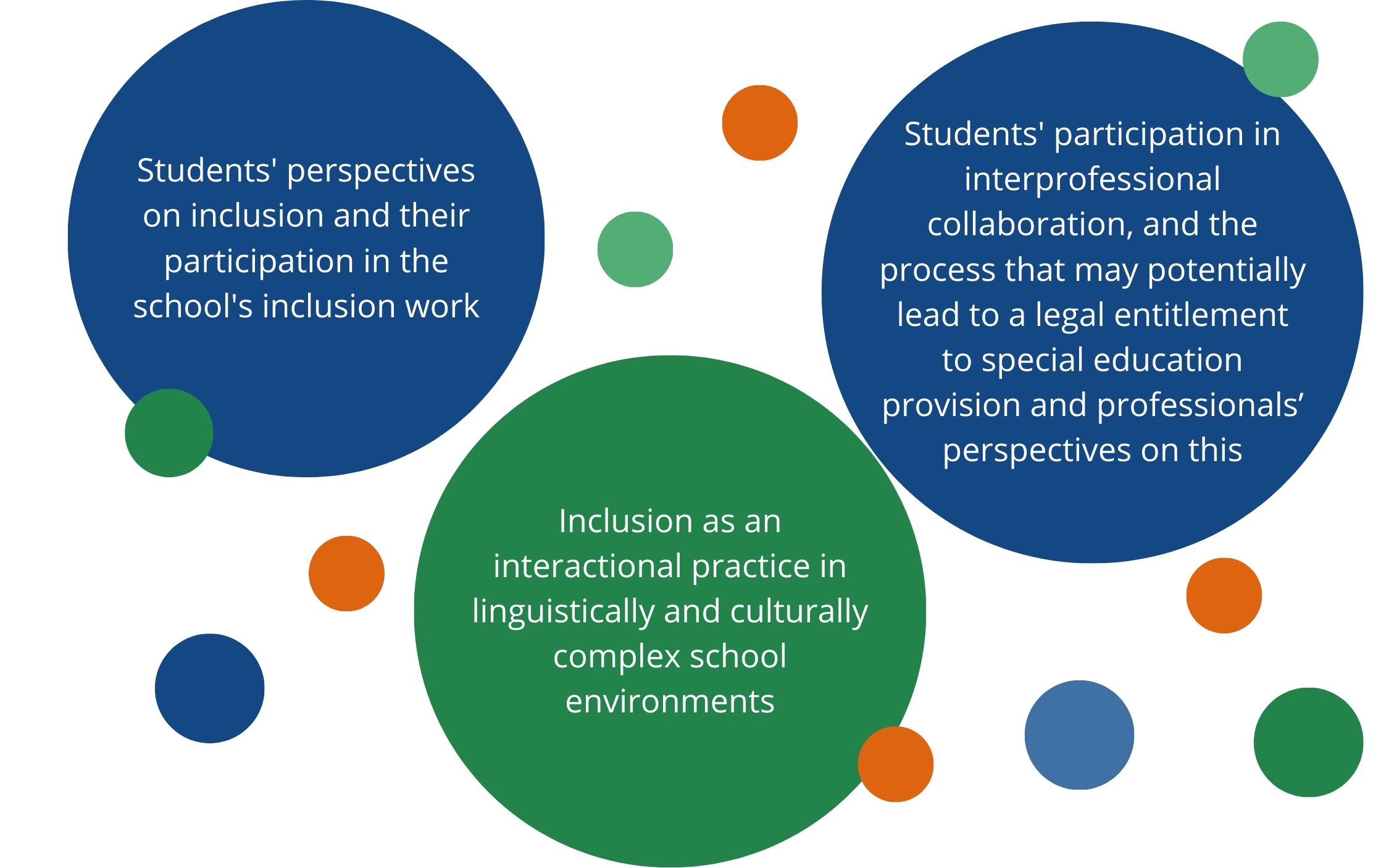
Through three sub-studies, the project will gather knowledge about:

Students' perspectives on inclusion and their participation in the school's inclusion work.

Inclusion as an interactional practice in linguistically and culturally complex school environments.

Students' participation in interprofessional collaboration, and the process that may potentially lead to a legal entitlement to special education provision and professionals’ perspectives on this.

A scoping review on students’ perspectives on inclusion

At this year’s ECER conference, participants learned more about a scoping review carried out as part of the first subproject, which aimed to map existing research on students’ voices on inclusive education.

The scoping review is intended to provide valuable insights into research on inclusive education through the voices of students, contributing to the field globally. It also aims to inspire further research into which students themselves are placed at the center.

Likewise, the study offers meaningful contributions to the INCLUSCHOOL project by raising researchers’ awareness of both the opportunities and the potential challenges involved in student-centered research. In particular, the review of 51 research articles focuses on the samples, research methodologies, and themes explored. The majority of the articles involved diverse student populations in their sample. A wide variety of research methodologies have been used in the articles, with qualitative interviews as the most common one.

The students are able to share their perspectives on many different topics, and the research articles include open-ended questions about students’ school life experiences, their socio-emotional experiences at school, and academic experiences and learning environments. Additionally, some articles included questions about students’ need for resources, access, and adjustments, their self- and other perceptions in diverse learning environments, and their life experiences and prospects of the future.

Presenting our findings from the review

Our takeaways include that student voices on inclusive education are multidimensional and complex. For example, students’ experiences of inclusion do not concern solely social-emotional or academic aspects. When schools remain arenas where the majority of students’ time is occupied by learning, their social inclusion depends on whether they are granted equitable access to shared learning activities in the classroom.

If we interpret the collective ambition of these studies as an effort to understand students inclusion experiences as multidimensional and complex, and to explore what they need to experience inclusion in school, we suggest a holistic approach. This perspective highlights the importance of contextual, processual, and interactional sensitivity in the field of inclusive education. Such an approach may offer new and valuable contributions to the field of inclusive education.

Key Messages

  • The INCLUSCHOOL project in Norway explores inclusion as an ongoing process focused on students’ presence, participation, and achievement.

  • Despite international commitments, progress towards inclusive education remains slow, with certain student groups at risk of exclusion.

  • The project adopts a user-centred, collaborative approach in a super-diverse primary school setting.

  • Preliminary findings from a scoping review highlight the complexity and multidimensional nature of students’ perceptions of inclusion.
Professor Marit Uthus

Professor Marit Uthus

Department of Education and Lifelong Learning, Norwegian University of Science and Technology

Marit Uthus, professor, Department of Education and Lifelong Learning, Norwegian University of Science and Technology. Her research interests fall within the field of special education and educational psychology. Marit is currently leading the INCLUSCHOOL project, which is funded by the Research Council of Norway.

https://www.ntnu.no/ansatte/marit.uthus

https://orcid.org/0000-0003-1263-1486

https://www.researchgate.net/profile/Marit-Uthus

Fenna Verkerk

Fenna Verkerk

Department of Teacher Education, Norwegian University of Science and Technology.

Fenna Verkerk is a PhD candidate at the Department of Teacher Education at NTNU. She is affiliated with the INCLUschool project and her research is about pupils’ voices on inclusion at school. 

https://www.ntnu.edu/employees/fenna.verkerk 

Associate Professor Hanne Kristin Aas

Associate Professor Hanne Kristin Aas

Department of Education and Lifelong Learning, Norwegian University of Science and Technology

Hanne Kristin Aas, associate professor, Department of Education and Lifelong Learning , Norwegian University of Science and Technology. Hanne does research in Educational Theory, Special Education and Teacher Education.

https://www.ntnu.no/ansatte/hanne.k.aas

https://orcid.org/0000-0001-6033-0966

https://www.researchgate.net/profile/Hanne-Aas

Other blog posts on similar topics:

References and Further Reading

Add your list of references here. Use [1], [2], [3]… to mark where they are used in the text above.
What’s missing in ITE? Preparing teachers to address poverty in mathematics education

What’s missing in ITE? Preparing teachers to address poverty in mathematics education

In Scotland, as in many parts of the world, child poverty presents a significant barrier to educational attainment and well-being. The impact of poverty on academic achievement, including lower attainment in mathematics, is well-documented and framed as the poverty-related attainment gap within education policies in Scotland (Scottish Government, 2023).

This blog post argues that child poverty should be explicitly addressed within ITE programmes, particularly in mathematics education, to help student teachers make clearer connections between issues of social justice and the teaching of mathematics, rather than addressing poverty under the broad terms of inclusion or the poverty-related attainment gap.

Why poverty matters in mathematics education

Mathematics has long been seen as a “gatekeeper” subject. Doing well in mathematics often decides who can progress to higher education and to better job opportunities, and who gets left behind (Douglas & Attewell, 2017; Durrani & Tariq, 2012; Martin et al., 2010). Yet mathematics is too often treated as if it were neutral, separated from inequality. In reality, however, children growing up in poverty are more likely to face lower expectations, be placed in low-ability groups, and receive simplified tasks that limit their chances to succeed (Hoadley, 2007; Jorgensen et al., 2014; Oakes, 1990; Schoenfeld, 2002).

These practices reinforce the idea that only some students are “naturally good” at mathematics, while others are left with fewer opportunities. Because of its central role in shaping opportunities in life, mathematics education is a crucial context to tackle questions of social justice.

This blog post is based on my PhD research, which revealed that student teachers often compartmentalise the idea of social justice and teaching mathematics, treating them as separate concerns. This disconnection presents a significant challenge to preparing student teachers for equitable practice.

The key question is: what within ITE can potentially help to make this connection clearer.

What has been done in an ITE context in Scotland?

The ways we do work should involve providing options and developing flexibility and valuing diversity applying any context. Having said that, I do think the design that we use with the student teachers is a crucial part of improving outcomes for people who live in poverty. It is just we don’t label it that way. We do not say, this is how we are going to tackle poverty, we will do this. Because actually all children can benefit from it.

This reflection comes from an ITE tutor in the research context. As this and other reflections illustrate, in ITE settings child poverty is generally addressed under the broader umbrella of inclusion and rarely directly addresses mathematics teacher education. While this approach indeed reflects a degree of awareness amongst student teachers, it may fail to engage with the lived realities of children growing up in poverty.

What’s missing in ITE?

Valuing diversity in education may require not only offering flexible teaching but also paying closer attention to what that diversity in a classroom actually entails. Poverty, for instance, can shape children’s mathematical learning through the resources and early experiences (Ellis & Sosu, 2015; Greaves et al., 2014; James-Brabham et al., 2023; Marks et al., 2006) they have access to, as well as the confidence they bring into the classroom. At the same time, children living in poverty often demonstrate resilience, benefit from targeted interventions, and thrive with parental and school support (DePascale et al., 2024; Sheehan & Hadfield, 2024). If these aspects remain unspoken, teachers may find it harder to create socially just practices that respond to culture, recognise strengths, and address limitations.

Nancy Fraser’s (1999) multidimensional conception of social justice (encompassing redistribution, recognition, and representation) offers a useful framework for understanding and addressing issues related to injustices in education. Fraser argues that neither redistribution, understood as the fair allocation of resources and opportunities, nor recognition, understood as the acknowledging and embracing of diverse identities of the learners, is sufficient on its own to address injustice.

Representation, understood as ensuring that all learners have a genuine voice and the ability to participate in the classroom, is equally essential. Ultimately, achieving social justice requires the integration of all three dimensions: redistribution, recognition, and representation.

The idea that all children benefit from inclusive pedagogies aligns with the redistribution principle – according to the tutor cited above, the key mission of ITE programmes is to teach student teachers to provide all children with opportunities to succeed. To do this, they need flexibility in their mathematics teaching practice, and a general idea of valuing diversity. However, this does not always recognise how non-school knowledge (for example, budgeting with limited resources, navigating public transports or household tasks) could be meaningfully connected to classroom mathematics.

Equally, redistribution was under-addressed in this context, discussions of equitable access rarely touched on the material and structural factors that affect how children learn mathematics, such as availability of mathematical manipulatives, after-school programmes, or adequate funding at schools in high-poverty areas.

Social justice requires more than providing fair opportunities for the learners; it involves understanding and embracing differences and empowering students to be active participants of the learning environment while considering carefully what they might need to achieve this. However, this was largely absent within the research context, with children’s participation framed as teacher-directed rather than as opportunities for learner agency in shaping mathematical learning. Without stronger attention to these dimensions, student teachers may leave ITE with a limited understanding of how mathematics education itself can either reproduce or challenge social justice issues linked to poverty.

Final thoughts

This study is based on interviews with ITE tutors and therefore reflects their perspectives on programme design and pedagogical intentions rather than the full complexity of classroom practice. As a result, the everyday realities of teaching may reveal stronger forms of recognition and representation than those captured in this analysis, as well as additional ways in which student teachers engage with children’s lived experiences of poverty.

Acknowledging this limitation is important when interpreting the findings. Nevertheless, the interviews with tutors provide valuable insight into how poverty is currently conceptualised and addressed within ITE, offering an important basis for considering how ITE might be strengthened.

Building on this, to more effectively prepare student teachers, ITE programmes could move beyond broad commitments towards inclusion to instead offer more concrete preparation for working with children in poverty. Central to this shift is the need for ITE to explicitly embed the three pillars of social justice: redistribution of resources, recognition of diverse identities, and representation of student agency. Although ITE programmes already take on a wide responsibility when it comes to diversity – covering areas such as gender, race, immigration, and more – these aspects of diversity often overlap, and by addressing one dimension thoughtfully, we also contribute to the others.

Key Messages

  • To effectively prepare student teachers to address poverty in their teaching practice, ITE programmes could move beyond broad commitments to inclusion and offer more concrete preparation for working with children in poverty.
  • Valuing diversity in education may require not only offering flexible teaching but also paying closer attention to what that diversity in a classroom actually entails. 
  • Achieving social justice requires the integration of all three dimensions: redistribution of resources, recognition of diverse identities, and representation of student agency
  • Social justice requires more than providing fair opportunities for the learners; it involves understanding and embracing differences and empowering students to be active participants of the learning environment while considering carefully what they might need to achieve this.
Dr. Nejla Tugcem Sahin Bayik

Dr. Nejla Tugcem Sahin Bayik

Directorate of Basic Education at the Ministry of National Education (MoNE) in Türkiye

Dr. Nejla Tugcem Sahin Bayik is an Education Specialist in the Monitoring and Evaluation Department of the Directorate of Basic Education at the Ministry of National Education (MoNE) in Türkiye. She is also a part-time lecturer at TED University. She earned her PhD in Education from the University of Aberdeen and holds an MA Degree in Mathematics Education from University College London. Having lectured at the University of Aberdeen, she has also contributed to various research projects as a researcher in the UK and in Türkiye. Her main research interests are social justice issues in education, inclusion, diversity, and children’s rights.

LinkedIn: https://www.linkedin.com/in/nejla-tugcem-sahin-bayik

Personal Blog: https://tugcemsahinbayik.blogspot.com/

ResearchGate: https://www.researchgate.net/profile/Nejla-Sahin-Bayik

Other blog posts on similar topics:

References and Further Reading

DePascale, M., Bustamante, A. S., & Dearing, E. (2024). Strengths-Based Approaches to Investigating Early Math Development in Family and Community Context: A Conceptual Framework. AERA Open10. https://doi.org/10.1177/23328584241302059

Douglas, D., & Attewell, P. (2017). School Mathematics as Gatekeeper58(4), 648–669. https://doi.org/10.1080/00380253.2017.1354733

Durrani, N., & Tariq, V. N. (2012). The role of numeracy skills in graduate employability. Education + Training54(5), 419–434. https://doi.org/10.1108/00400911211244704

Ellis, S., & Sosu, E. (2015). Closing poverty-related attainment gaps in Scotland’s schools: What works? From:https://strathprints.strath.ac.uk/54123/15/Ellis_Sosu_IPPI2015_closing_poverty_related_attainment_gaps.pdf

Fraser, N. (1999). Social Justice in the Age of Identity Politics: Redistribution, Recognition, and Participation. In L. Ray & A. Sayer (Eds.), Culture and Economy after the Cultural Turn (pp. 25–52). SAGE Publications Ltd. https://doi.org/10.4135/9781446218112.n2

Fraser, N., & Honneth, A. (2003). Redistribution or Recognition? A Political-Philosophical Exchange. Verso.https://books.google.com.tr/books?id=IJxT6pxjO7YC&lpg=PP1&pg=PP1#v=onepage&q&f=false

Greaves, E., Macmillan, L., & Sibieta, L. (2014). Lessons from London schools for attainment gaps and social mobility. Social Mobility and Child Poverty Commission. From: https://socialmobility.independent-commission.uk/app/uploads/2024/07/London_Schools_-_FINAL.pdf

Hoadley, U. (2007). The reproduction of social class inequalities through mathematics pedagogies in South African primary schools. Journal of Curriculum Studies39(6), 679–706. https://doi.org/10.1080/00220270701261169

James-Brabham, E., Loveridge, T., Sella, F., Wakeling, P., Carroll, D. J., & Blakey, E. (2023). How do socioeconomic attainment gaps in early mathematical ability arise? Child Development94(6), 1550–1565. https://doi.org/10.1111/cdev.13947

Jorgensen, R., Gates, P., & Roper, V. (2014). Structural exclusion through school mathematics: Using Bourdieu to understand mathematics as a social practice. Educational Studies in Mathematics87(2), 221–239. https://doi.org/10.1007/s10649-013-9468-4

Marks, G. N., Cresswell, J., & Ainley, J. (2006). Explaining socioeconomic inequalities in student achievement: The role of home and school factors. Educational Research and Evaluation12(2), 105–128. https://doi.org/10.1080/13803610600587040

Martin, D., Gholson, M., Leonard, J., Martin, D. B., Gholson, M. L., & Leonard, J. (2010). Mathematics as gatekeeper: Power and privilege in the production of knowledge. Journal of Urban Mathematics Education3(2), 12–24. https://doi.org/10.21423/jume-v3i2a95

Oakes, J. (1990). Multiplying inequalities: The effects of race, social class, and tracking on opportunities to learn mathematics and science. The RAND Corporation. From: https://www.rand.org/content/dam/rand/pubs/reports/2006/R3928.pdf

Schoenfeld, A. H. (2002). Making Mathematics Work for All Children: Issues of Standards, Testing, and Equity. Educational Researcher31(1). https://doi.org/10.3102/0013189X031001013

Scottish Government (2023). Pupil attainment: closing the gap – Schools. Retrieved May 15, 2025, from https://www.gov.scot/policies/schools/pupil-attainment/

Sheehan, J., & Hadfield, K. (2024). Overcoming socioeconomic adversity: Academic resilience in mathematics achievement among children and adolescents in Ireland. British Journal of Developmental Psychology42(4), 524–545. https://doi.org/10.1111/bjdp.12512

Calling for AI-informed student activism in K-12 schools beyond learnification

Calling for AI-informed student activism in K-12 schools beyond learnification

The global education landscape is witnessing promising strides in the integration of artificial intelligence (AI) into policy frameworks. Across borders, education policymakers, aware of AI’s growing impact on world societies and global economies, are calling for robust, trustworthy measures to understand its digital capabilities more fully. For example, the European Union’s (2024) Artificial Intelligence Act, a regulatory framework, mandates the monitoring of AI systems. The OECD (2025) has made recommendations on generative AI aimed at increasing innovation, fostering international cooperation, and sustaining democracy. The AI Action Summit (2025), hosted in Paris in February 2025, brought together leaders from different countries for AI dialogue on such topics as innovation, trustworthiness, and investment. These and other organizational entities have been underscoring the urgency of grasping AI’s transformative impact on the labor market and international community.

Current education policy and research on AI integration in schools

Education policy and research’s convergence on the frontier of AI integration in schools signals something more than a wave of classroom innovation. At this moment, systemic recalibration is reaching into the infrastructural and legislative foundations of education and across borders. AI implementation demands vision, infrastructure, and, crucially, investment. As nations race to harness AI’s potential in education, major actors have been stepping forward with bold commitments and strategic funding (European Parliamentary, 2024). China’s Ministry of Education (2024) and the White House (2025)—joined by the United Arab Emirates—are presently at the forefront of the global AI-in-schools movement. All such highly influential actors have extended the scope of AI, encompassing primary and middle schools (Amir, 2025). 

AI’s role in education is recognized by such countries, with convergence around not just its potential for economic investment but also democratic investment. Perhaps underlying this thinking is the belief that AI should not be limited to a technocratic, efficiency focus geared around political influence and agendas, instead promulgating a depoliticized version of simulated human-like intelligence (Mullen & Eadens, 2026; Sætra, 2020).

We are reminded of Biesta’s (2020) critical appraisal of education as “learnification”—the concern is that this dominant paradigm (learnification) is overly narrow in its focus on learning as individualistic (sidestepping relationships) and learning as a process (omitting content and the purpose of learning).

Scholars are busy examining AI’s transformative potential in education and associated challenges whilst confronting conventional barriers to being educated (Banoğlu et al., 2025; Mullen & Eadens, 2026; Zhong & Zhao, 2025). This line of inquiry supports the use of AI in public education for guiding students’ interests, passions, and strengths in addition to cultivating their own voice, agency, and leadership, in effect transcending schooling’s traditional “grammar” (Tyack &Tobin, 1994).

Mishra (2025), an expert in technology integration in teaching, cautioned policymakers that when human “needs” are reduced to technological capabilities, risks ensue. Of great concern is that educational goals could be reshaped around machine capability without accounting for students’ and teachers’ genuine needs. This thinking has also been articulated for digital learning and instruction. On an up note, theory-informed models and actionable strategies that contribute to the evolving discourse on AI ethics are available (see Mullen & Eadens, 2026).

What do student leaders think about AI?

While politics are in motion and policies are being formulated, some areas of academia support these initiatives even though critical perspectives may not be included or attention on the student voice. Banoğlu et al. (2025) critiqued the prevailing narrative that overlooks AI’s untapped potential. This international research team from Hong Kong, Canada, and the US reframed AI as a catalyst for democratic renewal in schools. AI-informed student activism was introduced. Generative AI (which creates text/images using large language models) and agentic AI (which can act on behalf of users) were interrogated for their potential to amplify student voices, protect rights, and support well-being, as well as to tackle problems like cyberbullying.

The research draws upon student experiences, specifically of three former K-12 student leaders—then in their early 20s—from the US, Japan, and Türkiye. Their stories provoke thinking about how AI can be an ally. The student leader from Japan emphasized the role of feedback in democratic processes by enhancing feedback mechanisms within K-12 schools, noting, “If we could use AI-enhanced feedback systems, it would help us improve our system continuously” (p.103). The US student leader suggested that AI could reduce mundane tasks that consume time, explaining, “AI actually removes that friction for you and does boring things most of the time” (p. 102).

Healthy debate around point–counterpoint is necessary when it comes to AI’s role in education and the future. Pasi Sahlberg, faculty at the University of Melbourne, alluded to a growing disconnect from authentic human interaction and relationships due to AI (as cited in Rubin, 2025): “Whereas a lot can be learned through digital media, there is a lot that can’t…. One of those things is the power of human relationships, face-to-face.” Sahlberg warned that systems overly focused on content delivery risk missing the heart of education: “Making first-class humans requires a different understanding of what human interaction can do.”

In this spirit, albeit acknowledging AI’s technical capabilities, two student leaders from Türkiye and the US underscored human interaction’s irreplaceable role in student leadership, to quote: “If you have wise friends or wise family members, I …ask them about a topic that involves leadership ethics [or] that involves emotions” (see Banoğlu et al., 2025, p. 100).

As such, scholars (e.g., Banoğlu et al.,2025; Mullen & Eadens, 2026) suggest the AI’s multifaceted potential and natural limitations enrich student voice, agency, autonomy, and leadership. Priority areas are outlined in research. These include empowering learners to develop more autonomously as leaders, dismantling barriers to information access, emphasizing ethical considerations, and promoting cultural sensitivity.

Key implications of AI-informed student activism are:

Empowering Informed Dialogue: AI can foster student engagement in informed dialogue and meaningful decision-making, enhancing their agency and participation in student-led governance. In some countries, K-12 students are not authorized to organize independently or pursue their own agendas without approval, they often do not know how to establish autonomous organizations without the involvement of adult allies. As voiced by a former student leader: “These are high schoolers who are defending their rights and autonomy, and they lack most knowledge to fully gather the tools to build a student organization or fight against … the administration for their own autonomy” (Banoğlu et al., 2025, p. 103).

AI can help bridge the student activism gap by (a) informing young people about their rights and (b) encouraging them to support and build their own organizations. This engagement could enhance agency and participation in student-led governance structures, potentially leading to more democratic and responsive environments in which younger and older learners alike are capable of leading for impact.

Streamlining Communication: AI can facilitate seamless communication among students, enabling large groups to effectively collaborate on projects. Unlike feedback methods that may favor more vocal or dominant voices, AI can be trained to highlight marginalized and minority perspectives, ensuring that diverse ideas—particularly those advocating for child rights and democratic participation—are both recognized and valued. Feedback can be shared en masse, and AI can distill this information into comprehensible reports that reflect a broad range of peers’ ideas, rather than prioritizing the most common or median views.

This inclusive approach to student leadership and consultation promotes an equitable platform where all students are acknowledged, helping to prevent marginalization of less-heard perspectives. Such comprehensive feedback can assist in discerning next steps in leadership activities, fostering a greater sense of community, collaboration, and ownership of learning.

Bridge-Building: AI’s ability to connect learners cannot be understated. By sharing insights about student leadership initiatives, AI can help to level the playing field. Enhanced knowledge capabilities can empower students to rely less on others, fostering autonomy while reducing the risk of vulnerability to disempowerment and isolation.

This democratizing function of AI is highlighted by a former K-12 school leader: “AI could … provide a legal, equitable way [for] young students who don’t have enough experience … who are trying to initiate an organization or who already are in a student body but don’t like how it’s ruled or their relationship with the school; they can use AI … to [help] compensate [for their] lack of knowledge” (Banoğlu et al., 2025, p. 103).

Cultivating Student Leadership: An expectation is for AI to be grounded in ethical principles and approaches to guide its proper use as well as to monitor misuses. To cultivate student leadership, it is vital that a more complete understanding of AI, together with appropriate uses of applications, inform instruction, apprenticeship, and mentorship.

Further research could put AI’s potential for student leadership to the test, observing its integration with youth leadership to discern the extent to which young people might be empowered with the skills, knowledge, and opportunities to take initiative, make decisions, and enact agency in their communities. From this standpoint, AI would be encompassing various youth activities and programs designed to foster cognitive awareness, leadership skills, civic engagement, and personal development.

Charting a path toward AI-informed student activism

Interest groups influence school knowledge, reducing teachers and students alike to curriculum conduits (Mullen, 2022). Viewing AI as a top-down policy initiative for technology integration in schools circumvents the rich learning shaped by student agency and relationships, echoing previous waves of computerization that have generated millions in technology investments, absent learner voices and input. The AI paradigm poses a significant threat to school and student agency, calling for activism from education stakeholders in schools and higher education.

While optimism about AI’s vast transformative potential is warranted, national politics and policies have been known to fall short of effectively involving school actors and more fully supporting them. By fostering trust and encouraging children’s AI-informed activism, steps can be taken to create a more democratic, equitable, and peaceful world. Empowering students to utilize AI to advocate for their rights, development, and well-being promotes educational equity, globally.

This leads us to say what we envision, which is an AI-informed student leadership “frontline” dedicated to child rights, activism, and democratic participation. Given the tide of AI-driven, profit-oriented ventures in public education systems, creative thinking and resistive efforts are needed. Narrowly focused AI initiatives interfere with or even halt equity in schooling, especially for children from low-income homes or rural communities lacking reliable access to computers, internet connectivity, and/or digital tools, especially in remotely delivered online learning contexts. By prioritizing student voices and learning communities and by integrating AI thoughtfully and ethically into schools, ethical technological advancement can support democratic values and a collective humanity.

Quite possibly, every reader of this blog has an important role to play in shaping the digital landscape in ways that are favorable to the healthy development and leadership of future generations of children and youth.

Key Messages

A global AI-in-schools movement is emerging, collectively portraying AI’s role in education as technocratic and depoliticized, echoing the long-critiqued concept of “learnification.”

An empirical study by Banoğlu et al. (2025) critically challenges this dominant narrative, offering a critical counter-narrative, showcasing AI’s potential to democratize education through insights from K-12 student leaders in the U.S., Japan, and Türkiye.

AI can empower students to amplify their agency, safeguard rights, support well-being, and enhance student leadership, fostering democratic renewal in schools.

AI can enable informed dialogue, streamline communication, and bridge gaps, enhancing collaboration, autonomy, and equity in student-led initiatives.

Encouraging AI-informed student activism can create a more democratic, equitable, and peaceful world, ensuring education aligns with genuine student needs.

Dr Köksal Banoğlu

Dr Köksal Banoğlu

Education University of Hong Kong

Köksal Banoğlu, Ph.D., is a Postdoctoral Research Fellow at the Education University of Hong Kong. His research focuses on the intersection of technology leadership, inferential social network analysis and AI-informed student action, exploring how these interconnections strengthen school leadership, organisational learning and student agency. His recent work has appeared in Educational Management Administration & Leadership, Leadership and Policy in Schools, Leading & Managing, Journal of Professional Capital & Community, School Leadership & Management, Journal of School Leadership, and Professional Development in Education. He is the recipient of the 2025 BELMAS Best Blog Runner-up Award. He serves as Chief Editor of Research in Educational Administration & Leadership, and as Assistant Editor of the International Journal of Leadership in Education. He also sits on the editorial boards of Review of Education, Methodological Innovations, and International Studies in Sociology of Education.

ORCID: https://orcid.org/0000-0002-3314-1032

Researchgate: https://www.researchgate.net/profile/Koeksal-Banoglu

Linkedin: https://www.linkedin.com/in/koksalbanoglu


Dr Carol A. Mullen

Dr Carol A. Mullen

Virginia Tech, Virginia, USA

Carol A. Mullen, Ph.D., is a Canadian–American Professor of Educational Leadership and Policy Studies at Virginia Tech, Virginia, USA and a Fulbright Senior Scholar alumnus. She is an internationally acclaimed, award-winning mentoring researcher who uses equity/justice and policy lenses. Her research also examines the impact of creativity in different testing cultures through Fulbright-sponsored scholarships to China and Canada, with related study in Australia. Her authored and edited books include Equity in School Mentoring and Induction (2025), Handbook of Social Justice Interventions in Education (2021, edited), and The SAGE Handbook of Mentoring and Coaching in Education (2012, coedited). She is Editor Emerita of the Mentoring & Tutoring journal (Routledge) and past-president of the International Council of Professors of Educational Leadership (ICPEL), Society of Professors of Education, and University Council for Educational Administration (UCEA).

Dr Mullen has received over 30 awards in leadership, research, and mentorship in the social sciences, specifically educational leadership and administration and related fields. These honors include UCEA’s Master Professor Award and Jay D. Scribner Mentoring Award, in addition to ICPEL’s Living Legend Award and the University of Toronto’s Leaders and Legends Excellence Award. She has published 29 books, over 250 journal articles and chapters in others’ books, and 18 guest-edited special issues. Forthcoming is Improving Your College Courses: A Guide for Engaging In Digital Learning, a book coedited with Dr. Daniel Eadens (Myers Education Press). Formerly, she served as school director, associate dean for the college, and department chair at a previous university.

ORCID: https://orcid.org/0000-0002-4732-338X;

Wikipedia: https://en.wikipedia.org/wiki/Carol_A._Mullen;

Researchgate: https://www.researchgate.net/profile/Carol-Mullen-2 

Other blog posts on similar topics:

References and Further Reading

Amir, K. A. (2025, May 4). Sheikh Mohammed announces AI as mandatory subject in UAE schools. Gulf News. https://gulfnews.com/uae/government/sheikh-mohammed-announces-ai-as-mandatory-subject-in-uae-schools-1.500115349

AI Action Summit.(2025).https://www.elysee.fr/admin/upload/default/0001/17/786758b38da7b4c16f26dc56e51884b3346684aa.pdf

Banoğlu, K., Patrick, J., & Hacıfazlıoğlu, Ö. (2025). Promises of artificial intelligence (AI) in reframing student agency and democratic participation in K-12 Schools: Perspectives from student leaders. Leading & Managing, 31(1), 90-111.

Biesta, G. (2020). Risking ourselves in education: Qualification, socialization, and subjectification revisited. Educational Theory, 70(1), 89-104. https://doi.org/10.1111/edth.12411

China’s Ministry of Education. (2024, December 2). MOE issues guidance on how to teach AI in primary and middle schools. http://en.moe.gov.cn/news/press_releases/202412/t20241210_1166454.html

European Parliament. (2024). AI investment: EU and global indicators. European Parliament Research Service. https://www.europarl.europa.eu/RegData/etudes/ATAG/2024/760392/EPRS_ATA(2024)760392_EN.pdf

European Union. (2024). Artificial Intelligence Act. https://artificialintelligenceact.eu/wp-content/uploads/2024/11/Future-of-Life-InstituteAI-Act-overview-30-May-2024.pdf

Mishra, P. (2025, April 23). Who ordered that? On AI, education, and the illusion of necessity. https://punyamishra.com/2025/04/23/who-ordered-that-on-ai-education-and-the-illusion-of-necessity

Mullen, C. A. (2022). Corporate networks’ grip on the public school sector and education policy. In C. H. Tienken & C. A. Mullen (Eds.), The risky business of education policy (pp. 1-22). Routledge.

Mullen, C. A. (2025). Guest editor of special issue, “Creative Responses to Leadership Challenges and Constraints.” Leading &Managing, 31(1). https://journals.flvc.org/leading-and-managing/issue/view/6509/403

Mullen, C. A., & Eadens, D. W. (Eds.). (2026). Improving your college courses: A guide for engaging in digital learning. Myers Education Press.

Organisation for Economic Co-operation and Development. (2025). OECD Recommendation of the Council on Artificial Intelligence. https://legalinstruments.oecd.org/en/instruments/oecd-legal-0449 

Rubin, C. M. (2025,July 4). Are schools ready for the next shutdown? Forbes. https://www.forbes.com/sites/cathyrubin/2025/07/04/are-schools-ready-for-the-next-shutdown

Sætra, H. K. (2020). A shallow defense of a technocracy of artificial intelligence: Examining the political harms of algorithmic governance in the domain of government. Technology in Society, 62, 101283, 1-10. https://doi.org/10.1016/j.techsoc.2020.101283

Schleicher, A., & Mitchell, S. (2025, June 3,). From PISA to AI: How the OECD is measuring what AI can do. OECD. https://oecd.ai/en/wonk/from-pisa-to-ai-how-the-oecd-is-measuring-what-ai-can-do

Tyack, D., & Tobin, W. (1994). The “grammar” of schooling: Why has it been so hard to change? American Educational Research Journal, 31(3), 453-479. https://doi.org/10.3102/00028312031003453

White House, The. (2025, April 23). Advancing artificial intelligence education for American youth.https://www.whitehouse.gov/presidential-actions/2025/04/advancing-artificial-intelligence-education-for-american-youth

Zhong, R., & Zhao, Y. (2025). Education paradigm shifts in the age of AI: A spatiotemporal analysis of learning. ECNU Review of Education. https://doi.org/10.1177/2096531125131 5204

We Are the Storytellers: Co-Creating Counternarratives with Black Caribbean Boys

We Are the Storytellers: Co-Creating Counternarratives with Black Caribbean Boys

This blog previews the project I will present at ECER 2025, titled ‘Literature as Identity Work: Exploring Self-Discovery Through Texts’. It examines Black Caribbean male students’ experiences with the GCSE English literature curriculum in the UK, positioning literature as a space where identities are negotiated, challenged and reshaped. Through participants’ encounters with canonical texts, the study highlights literature’s dual role as a platform for personal growth, and a mechanism through which cultural exclusion is perpetuated. Rooted in Critical Race Theory (CRT) (Delgado, R. and Stefancic, J., 2023; Gillborn, 2024; Ladson-Billings, 2021) and narrative inquiry (Frank, 2012), the project uses storytelling – both textual and sonic – as a method for disseminating research, amplifying representation and showcasing resistance.

Representation, identity, and the limits of the literature curriculum

Although literature is often hailed as a window or door into other worlds and a mirror reflecting the self (Bishop, 1990), these metaphors take on new significance when curriculum texts fail to reflect the identities, cultures or lived experiences of its readers. For many Black Caribbean male students in England, the GCSE literature curriculum offers few mirrors since the reforms implemented by then Education Secretary, Michael Gove (Institute for Government, 2022; Chandler-Grevatt, 2021) have cemented a syllabus dominated by Eurocentric canonical texts, largely written by White men from the sixteenth to twentieth centuries. Despite their historical and literary value, the stories and contexts frequently fail to reflect the identities, realities and voices of Black Caribbean male students, leaving many to experience the literature curriculum as something to be gazed at from the outside rather than lived from within (Elliott et al., 2021). As one participant observes, “There are other people as good as Shakespeare, with different skin colours but no one knows about them”. Such reflections reveal that, for the participants, literature transcends its status as an academic subject to become an opaque mirror, a battleground and a site for self-definition, resistance and critical identity work.

Heterotopic spaces enable open reflection on race, masculinity and belonging

Viewed through the lenses of CRT and narrative inquiry, the participants’ counter-narratives uncover the personal stakes of curriculum design suggesting that questions of literature and identity are inseparable from questions of method. In this light, my research explores how participants’ engagement with canonical works and selected twentieth- and twenty-first-century texts shapes their navigation of masculinity, race, emotion and belonging.

The study facilitates one-to-one participatory narrative interviews, situated within Foucault’s (1986) conceptualisation of heterotopic spaces — cultural, dialogic environments designed to foster open, identity-affirming reflection. In these spaces, participants are empowered to move beyond the constraints of school-based discussions to critically engage with both the texts and their evolving sense of self.

To support emotional processing and deepen participant engagement, I employ a range of multimodal activities including text rating, visual mapping and character reflection (Kress, 2010; Woolhouse, 2017).

One notable strategy involves employing emojis to enable students’ articulation of their emotional responses to texts and characters.

These methodological tools prove effective because they provide a familiar and accessible medium through which to explore affective interpretation.

Sonic dissemination invites audiences to listen and engage with counter-narratives

Most significantly, the power of this study lies in the dissemination of research data. Rather than summarising student responses in researcher-authored prose, narratives are co-created using the boys’ own words as dialogue. Their speech — unpolished, reflective and often emotionally charged — remains intact. This approach allows for narrative framing without distorting the participants’ words, tone or rhythm. Also, by giving sonic life to the participants’ counter-narratives through AI voice simulation, audiences are invited not only to read the data but to listen – to hear counter-narratives in voices that echo their resonance and resistance.

Through this method of dissemination, audiences encounter young Black men speaking on their own terms, articulating nuanced understandings of masculinity, justice, diasporic belonging and the politics of hope (Freire, 2021). Sonic dissemination preserves the emotional texture of participants’ words, enacts the ethics of co-creation (Cohen, Manion and Morrison, 2017), and disrupts normative expectations of data sharing. It also reimagines dissemination as relational listening, a mode that centres empathy, embodiment and presence.

Serving as a commentary to remind us that voice is not only a methodological tool but also a political act — one that challenges the silences imposed by dominant narratives and affirms lived experience as legitimate knowledge — John, a participant, states: ‘I don’t mind people hearing what I said. I just want them to actually listen”. Consequently, my methodological choices do not merely generate data; they open space for new stories to emerge, stories that resonate within academia but also hold the potential to connect with wider audiences through accessible forms of storytelling and voice.

A co-created composite counter-narrative

In this co-created composite counter-narrative, ‘Unmasking Dr Jekyll and Mr Hyde’, the boys reflect on themes of identity, duality and the pressures of navigating stereotypes, connecting The Strange Case of Dr Jekyll and Mr Hyde to their social reality. Co-created using the participant’s direct quotes from interviews this voiced composite counter-narrative brings their perspectives and experiences to life.

Students’ counter-narratives explore masculinity, identity and belonging

The composite counternarratives co-created through my research illustrate the students’ reflections on masculinity, identity, justice, racism and diasporic belonging, articulated through their negotiations with literature and wider society. The participants construct masculinity as a fluid, often contested identity, shaped by social context, cultural pressure and lived experience.

While several boys reject emotional vulnerability, critiquing characters such as Romeo (Shakespeare, 1993) as “simpish” and “unstable”, others value traits such as loyalty, self-awareness and quiet strength. Tybalt and Mercutio (Shakespeare, 1993) emerge as models of decisiveness and honour, even when their actions are rooted in violence. By contrast, texts such as Boys Don’t Cry (Blackman, 2024) enable a redefinition of masculinity grounded in emotional growth, caregiving and moral accountability.

Crucially, the students do not engage with masculinity in one uniform way; they actively interrogate what it means to be a man across diverse social and literary contexts (Connell, 1995). Through their counter-storytelling, the boys challenge hegemonic masculine norms (Connell, 1995) which positions certain performances of manhood — particularly those marked by dominance, emotional restraint and heterosexuality as ideal. Their counter-narratives (Solórzano and Yosso, 2002) therefore resist static, deficit-laden constructions of Black masculinity, providing instead complex and situated accounts of identity.

In a system that frequently frames Black Caribbean boys as disengaged or underachieving, this work foregrounds their criticality, emotional intelligence, cultural literacy and capacity for reflective resistance. The participants demonstrate cultural awareness, an understanding of their position in society as well as how they navigate and negotiate its demands. They are not disengaged; they are resisting performance of the self that feels untrue.

 At its heart, this project asks educators and researchers to do something very simple but radical: listen. Because when we truly listen to marginalised students, they do more than answer our questions.

They tell us a story.

And sometimes, they rewrite it.

Key Messages

  • The GCSE English literature curriculum, shaped by Govian reforms, offers few mirrors for Black Caribbean boys as it prioritises Eurocentric canonical texts.
  •  The participant’s counter-narratives reveal how literature becomes a site of struggle, identity work, and resistance against deficit views of Black masculinity.
  • Using multimodal and narrative methods, the study creates heterotopic spaces for boys to reflect on masculinity, race, belonging and justice.
  • Data is disseminated through AI-voiced sonic counter-narratives which preserve emotional texture and extend conventional research outputs by introducing new possibilities for sharing and experiencing participant voices. This approach offers a relational and participatory approach to dissemination.
  • The project foregrounds students’ voices as acts of resistance and hope, creating spaces where marginalised young people exercise their agency and transform narrative sites into spaces for reimagining justice, education, identity and belonging.

ECER 2025 – 

As part of my ECER 2025 presentation, I will be sharing the composite counter-narrative “We Weren’t Just Reading: Reflection, Resistance, Becoming”, a co-created narrative built from the boys’ direct quotes voiced during interviews. The story explores how literature functions as a critical space for young Black men to reflect on masculinity, identity, representation and belonging whilst developing critical consciousness about the systems that shape their lives.

Through their reflections on texts such as Boys Don’t Cry, Othello, Romeo and Juliet, Macbeth, and An Inspector Calls, the participants interrogate stereotypes, power and exclusion — questioning whose stories are centred and whose are silenced. Their voices challenge dominant narratives of disinterest and underachievement, foregrounding themes that are central to CRT.  The composite counter-narrative ‘We Weren’t Just Reading: Reflection, Resistance, Becoming’ reveals that the Black Caribbean male students in my research are not merely analysing literature; they, instead, use it as a tool for self-discovery, resistance and critical reflection to create new understandings of identity, power and belonging. 

  • Network: 07. Social Justice and Intercultural Education
  • Contribution ID: 1195
  • Title: Literature as Identity Work: Exploring Self-Discovery Through Texts
  • Session Title: 07 SES 02 A: Engaging Families and Alternative Educational Practices
  • Date & Time: 09 September 2025, 15:15 – 16:45 (CET)
  • Location: Room 001 | Eduka College | Ground Floor

Keisha-Ann Stewart

Keisha-Ann Stewart

Edge Hill University

Keisha-Ann Stewart is a PhD researcher at Edge Hill University. Her doctoral research explores Black Caribbean male students’ experiences of literature texts studied at Key Stage 4, examining how these experiences shape their engagement, interpretation and academic responses within English classrooms in England. With a multidisciplinary background in applied linguistics, literature, publishing studies and education, Keisha-Ann’s academic interests include literacy development, anti-racist education, decolonising the curriculum, teacher education, the ethical use of artificial intelligence in education, and the integration of technology to enhance learning and pedagogy. Her work is grounded in a strong commitment to equity, inclusion and culturally responsive teaching.

ECER Belgrade 2025

Since the first ECER in 1992, the conference has grown into one of the largest annual educational research conferences in Europe. In 2025, the EERA family heads to Serbia for ECER and ERC.

08 - 09 September 2025 - Emerging Researchers' Conference
09 - 12 September 2025 - European Conference on Educational Research

Find out about fees and registration here.

Since the first ECER in 1992, the conference has grown into one of the largest annual educational research conferences in Europe. In 2025, the EERA family heads to Serbia for ECER and ERC.

In Belgrade, the conference theme is Charting the Way Forward: Education, Research, Potentials and Perspectives

No doubt that education has a central role in society, but what it is destined to do is contested politically as well as scientifically. Yet more debate is had concerning the question of the way in which educational research should shape the future of educational practice. The important, but sensitive role educational research occupies in that regard should be the promotion of a better understanding of the contemporary and future world of education, as is expressed in EERA’s aim.

Emerging Researchers' Conference - Belgrade 2025

The Emerging Researchers' Conference (ERC) precedes ECER and is organised by EERA's Emerging Researchers' Group. Emerging researchers are uniquely supported to discuss and debate topical and thought-provoking research projects in relation to the ECER themes, trends and current practices in educational research year after year. The high-quality academic presentations during the ERC are evidence of the significant participation and contributions of emerging researchers to the European educational research community.

By participating in the ERC, emerging researchers have the opportunity to engage with world class educational research and to learn the priorities and developments from notable regional and international researchers and academics. The ERC is purposefully organised to include special activities and workshops that provide emerging researchers varied opportunities for networking, creating global connections and knowledge exchange, sharing the latest groundbreaking insights on topics of their interest. Submissions to the ERC are handed in via the standard submission procedure.

Prepare yourself to be challenged, excited and inspired.

Other blog posts on similar topics:

References

Bishop, R.S. 1990. ‘Mirrors, windows, and sliding glass doors’, Perspectives: Choosing and Using Books for the Classroom, 6(3), pp. ix–xi.
Available at: https://scenicregional.org/wp-content/uploads/2017/08/Mirrors-Windows-and-Sliding-Glass-Doors.pdf (Accessed: 20 August 2025).

Blackman, M. 2024. Boys don’t cry. London: Penguin

Chandler-Grevatt, A. 2021. ‘The wilderness years: An analysis of Gove’s education reforms on teacher assessment literacy’, The Buckingham Journal of Education, 2(2), pp. 149–164.
Available at: https://doi.org/10.5750/tbje.v2i1.1935 (Accessed: 18 August 2025).

Cohen, L., Manion, L. and Morrison, K. 2017. Research methods in education. 8th edn. Abingdon: Routledge.

Connell, R.W. 1995. Masculinities. Berkeley: University of California Press.

Delgado, R. and Stefancic, J. 2023. Critical race theory: An introduction. 4th edn. New York: New York University Press.

Elliott, V., Nelson-Addy, L., Chantiluke, R. and Courtney, M. 2021. Lit in Colour: Diversity in Literature in English Schools. London: Penguin Books UK and The Runnymede Trust.
Available at: https://litincolour.penguin.co.uk/assets/Lit-in-Colour-research-report.pdf (Accessed: 20 August 2025).

Foucault, M. 1986. ‘Of other spaces’, Diacritics, 16(1), pp. 22–27.

Freire, P. 2021. Pedagogy of hope: Reliving pedagogy of the oppressed. Bloomsbury Academic.

Frank, A. 2012. “Practicing Dialogical Narrative Analysis,” in Varieties of Narrative Analysis, pp. 33–52. Available at: https://doi.org/10.4135/9781506335117.n3 (Accessed: 20 August 2025).

Gillborn, D. 2024. White lies: Racism, education and critical race theory. London: Routledge.

Institute for Government. 2022. The Gove reforms a decade on. London: Institute for Government. Available at: https://www.instituteforgovernment.org.uk/sites/default/files/publications/gove-reforms-decade-on.pdf (Accessed: 18 August 2025).

Kress, G. 2010. Multimodality: A social semiotic approach to contemporary communication. London: Routledge.

Ladson-Billings, G. 2021. A scholar’s journey: Critical race theory and education. New York: Teachers College Press.

Shakespeare, W. 1993. The tragedy of Romeo and Juliet. Champaign, Ill.: Project Gutenberg. Available at: http://www.gutenberg.org/etext/1777

(Accessed: August 20, 2025).

Solórzano, D.G. and Yosso, T.J. 2002. ‘Critical race methodology: Counter-storytelling as an analytical framework for education research’, Qualitative Inquiry, 8(1), pp. 23–44.
Available at: https://journals.sagepub.com/doi/full/10.1177/107780040200800103 (Accessed: 20 August 2025).

Stewart, K. 2025. Beyond the page: Literature as a catalyst for identity and resistance. Edge Hill University. Poster.
Available at: https://doi.org/10.25416/edgehill.29616704.v1.

Woolhouse, C. 2017. ‘Multimodal life history narrative: Embodied identity, discursive transitions and uncomfortable silences’, Narrative Inquiry, 27(1), pp. 109–131.
Available at: https://research.edgehill.ac.uk/en/publications/multimodal-life-history-narrative-embodied-identity-discursive-tr (Accessed: 20 August 2025).