
Perspectives on intercultural approaches to education and social justice: impressions from an emerging researcher
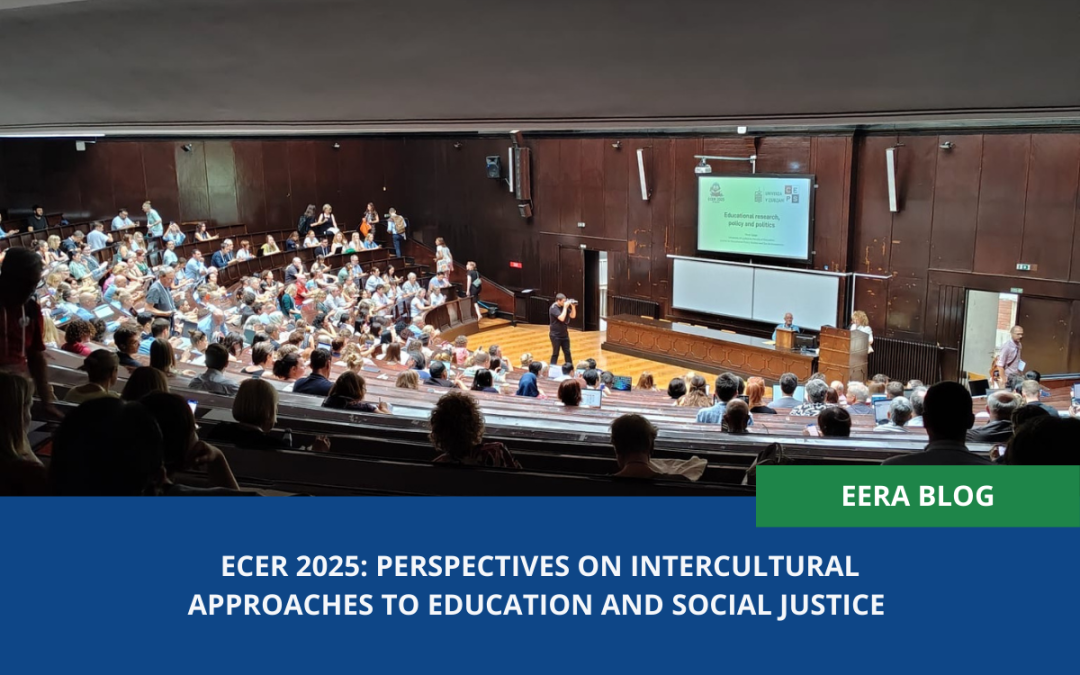
As a Ph.D. student at the beginning of my career, attending the European Conference on Educational Research in Belgrade was a valuable introduction to the global academic community. ECER was an essential opportunity for academics and emerging researchers to discuss topics at the forefront of educational research, alongside the Emerging Researchers’ Conference (ERC) that took place immediately before ECER.
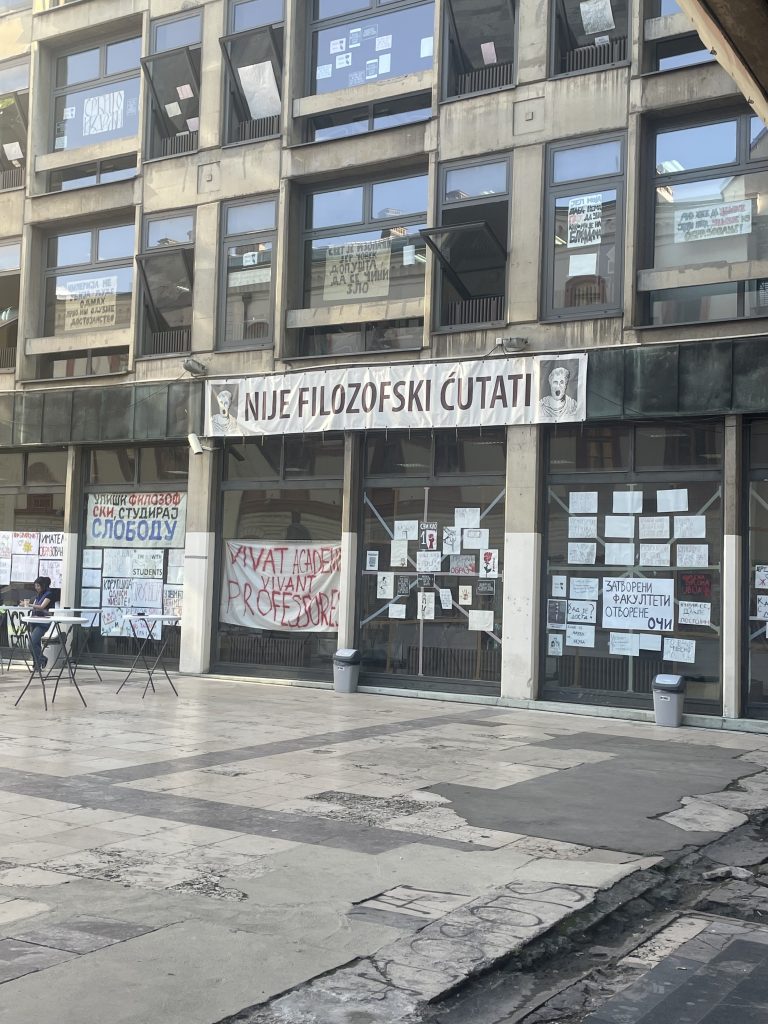
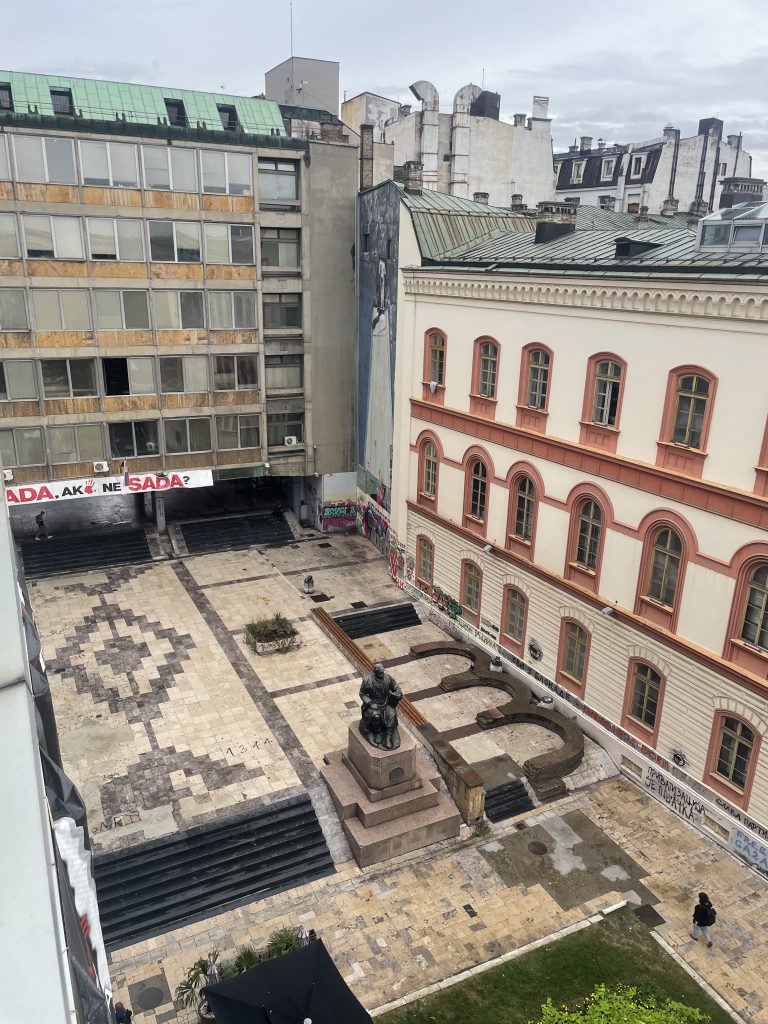
Overall, the annual event hosted 2,619 scholars, with 1,938 papers presented from 75 different countries, representing a genuinely international community and an amazing array of perspectives. This year’s conference took place amid students’ ongoing mobilisations, which have been continuing for many months already and were focused upon demanding transparency, accountability, and respect for fundamental rights whilst utilising a critical and engaged lens.
These student demonstrations and occupations hold not only an intrinsic political meaning but also an educational relevance. University public spaces have, indeed, been converted into a platform for dialogue and active and democratic participation. I was particularly caught by the slogan in Serbian language “Nije filozofski ćutati,” which stands for “it is not philosophical to be silent,” a catchphrase also quoted by Prof. Pavel Zgaga during his Keynote Speech on ‘educational research, policy and politics’.
Intercultural perspectives that emerged during ERC and ECER and how they might be useful for my educational researcher path
As a listen-only participant, I had the chance to attend several sessions on relevant topics for my research. The latter focuses on on the schooling experiences and integration processes of young people from migrant backgrounds in Italy.
Pertinent themes that emerged were related to students’ cultural and linguistic diversity, education in marginalized urban contexts, and intercultural early childhood education. Attending presentations on social justice and intercultural education – in which research results from different European contexts were highlighted – has certainly helped me broaden my perspective on various aspects of my research. I also believe it is crucial to attend sessions related to other networks to acquire fundamental notions of educational research, particularly linked to theoretical approaches and methodologies to be used. As such, I have also attended various presentations within networks 04 (Inclusive Education) and 14 (Communities, Families and Schooling in Educational Research).
The sessions I attended were marked by a positive exchange of ideas and opinions, with the purpose of finding strategies that can be implemented in educational and pedagogical practices. A feature that emerged from several presentations is that education also presents a sociopolitical dimension (Akkari & Radhouane, 2022). As part of the so-called ‘second generation of migrants in Italy’, I would even push myself to affirm that there is nothing more antithetical to education than neutrality, especially considering the subaltern position of migrant communities in Europe.
Insights from the ‘Social Justice and Intercultural Education’ Workshop
A key activity that has been very supportive for my first experience at an international conference on educational research is represented by the workshop “How to develop a decentralised way of doing research?” led by Professor Lisa Rosen.
A range of strategies for decentering dominant narratives and strengthening marginalised voices were mentioned. This activity, open to professionals at different stages of their careers and particularly to emerging researchers, was aimed at promoting decentralisation from exclusively Eurocentric models, creating socially and interculturally sensitive knowledge and to question our positions and prejudices as researchers.
Discussing the issue seems to me fundamental to avoid reinforcing power relations and tokenism by excluding (even inadvertently) marginalised groups. I believe that the positionality of the researcher in the areas of Social Justice and Intercultural Education could put us, as academic researchers, in a vulnerable position. As suggested during this session, it is appropriate to employ it when an analysis is implemented or an in-depth study is conducted. I would like to mention some key points on the positional statement that caught my attention and may be useful to early-career researchers:
– Be aware that identity, beliefs, and values may influence research work in different ways
– Consider biases, emotional responses, and transparency in your research efforts
– Do not ignore the relevant balances and imbalances of power, as well as the institutions involved and political implications
– Knowledge and analysis of the research context, through a critical approach, holds crucial importance
Reflections for the future
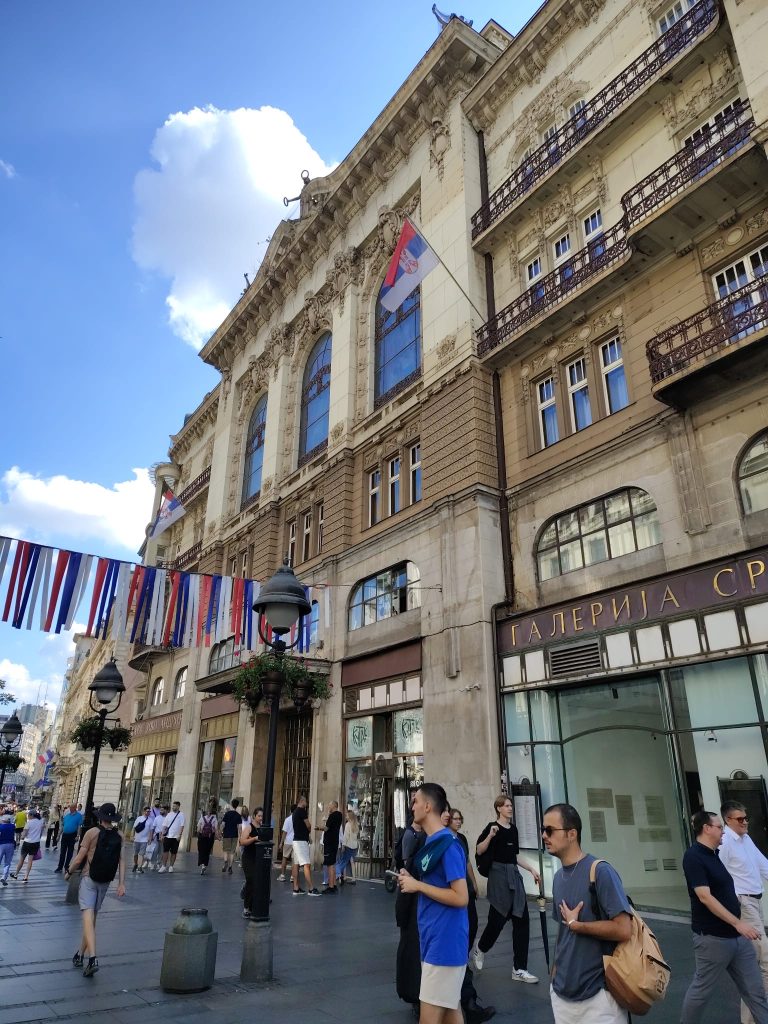
ECER provided me with an extraordinary opportunity to outline the prospects for educational research in the European context, particularly in my specific field of investigation.
My main challenge now is to build on what I have learned, the advice I have received, and the insights gained during the conference to foster dialogue with other emerging researchers and fuel gradual but steady academic growth. In a closing remark, I believe that fostering critical awareness of educational practices, promoting social purpose in research, and strengthening methodological commitment should be central to interculturalism, innovation, and social responsibility.
Key Messages
- International conferences accelerate early-career development – ECER/ERC offer essential exposure to global educational research perspectives and networking opportunities for emerging scholars.
- Education is inherently political, not neutral – Educational research must critically engage with power dynamics, especially when working with marginalised and migrant communities.
- Researcher positionality shapes research quality – Awareness of your own identity, biases, and values is essential to avoid reinforcing power imbalances in intercultural research.
- Decentre Eurocentric narratives – Decentralised research approaches that amplify marginalised voices create more socially sensitive and robust knowledge.
- Critical awareness drives meaningful research – Combining methodological rigour with social purpose is central to impactful intercultural and social justice education research.

Charaf El Bouhali
Università di Padova
Charaf El Bouhali: PhD student in Pedagogy, Education and Instructional at the University of Padua. His research focuses on the schooling experiences and integration processes of young people from migrant backgrounds in Italy.
Orcid: https://orcid.org/my-orcid?orcid=0009-0001-1663-3019 Linkedin: www.linkedin.com/in/charafel
Other blog posts on similar topics:
References and Further Reading
Akkari, A. and Radhouane, M. (2022). Intercultural Approaches to Education: From Theory to Practice, Springer, 2022. https://doi.org/10.1007/978-3-030-70825-2
Cabiles, Bonita S. (2025). Internalised deficit perspectives: positionality in culturally responsive pedagogical frameworks.Pedagogy, Culture & Society, 33(4), 1129-1146 https://doi.org/10.1080/14681366.2024.2326004
Conti, L. (2025). Intercultural education: recalibrating meanings, objectives, and practices. Intercultural Education, 36(4), 418–436.
https://doi.org/10.1080/14675986.2025.2484514
O’Neil, D. (2025). Complicated shadow: a discussion of positionality within educational research. Oxford Review of Education, 51(4), 579-594. https://doi.org/10.1080/03054985.2024.2351445