ERG Webinars: Tips for academic publishing and grant application for early career researchers

ERG Webinars: Tips for academic publishing and grant application for early career researchers

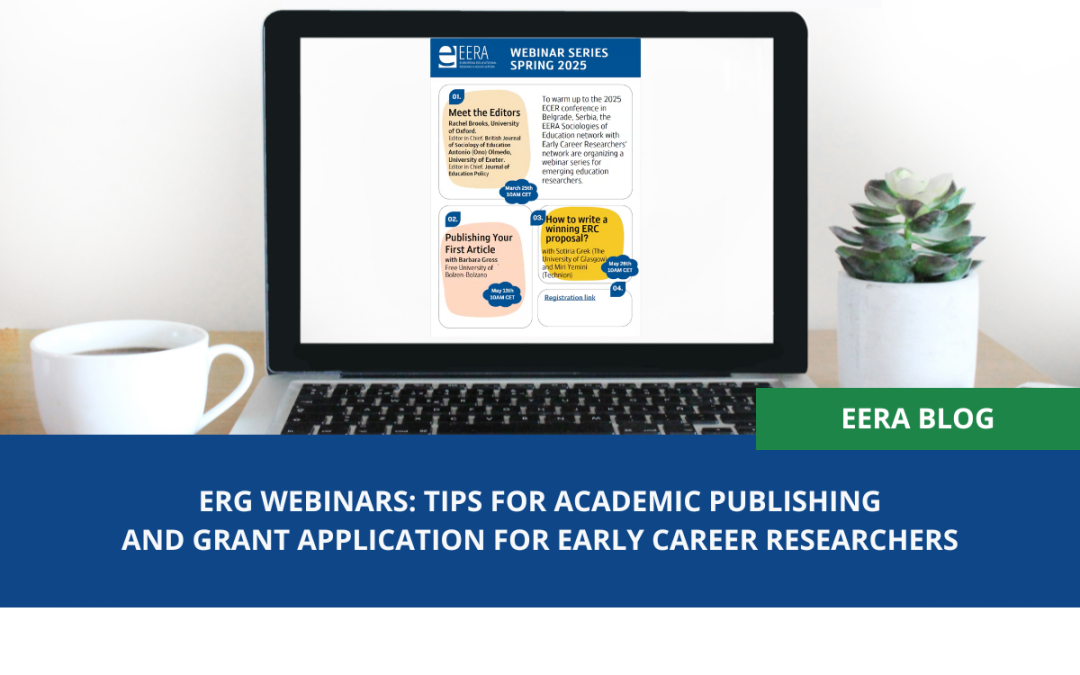
Between March and May 2025, EERA Sociology of Education Research Network and the Emerging Researchers’ Group, hosted a three-part webinar series aimed at supporting emerging scholars in navigating key stages of academic life. Each session opened a window into different aspects of early academic careers. Featuring tips on academic publishing and grant application writing, the webinars offered both practical strategies and personal reflections from experienced researchers.

Webinar 1: Meet the editors – Advice from journal editors on academic publishing

There’s a moment right after the PhD ends, when many early career researchers suddenly find themselves standing alone. No longer students, not yet fully established scholars, they’re now expected to publish, write grant applications, and shape an academic identity. But where do you learn how to do any of that? How do you figure out where to submit your article, or why one paper gets accepted while another is rejected? These are not just technical questions. For many of us, they’re questions about belonging, confidence, and finding our voice in a world that often assumes we already know the rules.

That’s why our recent “Meet the Editors” webinar felt so meaningful. It wasn’t just about insider tips on academic publishing, it was about opening the black box of publishing and hearing directly from those who sit on the other side. We had the privilege of hosting two generous and thoughtful editors, Prof. Rachel Brooks, University of Oxford, Editor-in-Chief of the British Journal of Sociology of Education and Prof. Antonio (Ono) Olmedo, University of Exeter, Editor-in-Chief of the Journal of Education Policy. They spoke about the differences between their journals, what kinds of scholarship each is looking for, and how editorial decisions are made.

Building on the spirit of the conversation, the webinar offered more than just practical tips, it opened a window into how experienced editors think about publishing, not only as gatekeepers but as mentors and scholars themselves. They reminded us that before submitting an article, it’s essential to read recent issues of the journal we’re aiming for. What topics are being discussed? What theoretical frameworks and styles of argumentation are common? A strong paper doesn’t just present something new; it actively engages with the existing conversation and signals why its contribution matters in that space and moment.

The editors also emphasized the importance of timing. Don’t rush to submit; ask yourself whether this is truly the best version of your paper, and whether you’re ready for it to be read critically. Too often, early-career researchers focus on showcasing their data or findings without thinking carefully enough about where the paper belongs and why now. Editors are not only looking for originality; they’re also looking for relevance: why this paper, in this journal, at this time?

More than anything, the conversation reminded us that finding your way into academic publishing isn’t just about following rules. It’s about developing a sense of voice, confidence, and connection. And that’s not something you have to figure out alone.

Webinar 2: Publishing your first journal article

This second webinar featured Barbara Gross from the Free University of Bolzano-Bozen, who shared reflections and practical tips on publishing a first academic article. With a particular focus on selecting an appropriate journal, the session offered insights drawn from Prof. Gross’s own experience as a researcher and author. Aimed at emerging researchers, the webinar provided concrete strategies to navigate the complexities of academic publishing and addressed key considerations involved in taking the first steps toward publication.

The session moved from big-picture ideas to practical steps, outlining different publishing options such as book chapters, conference proceedings, and most importantly, peer-reviewed journal articles. Participants explored the differences between national and international publishing cultures, the growing role of English for global visibility, and the ongoing value of publishing in national languages to reach local audiences.

A key focus was on selecting the right journal. Our guest lecturer explained how to evaluate a journal’s scope, audience, mission, and ranking – including impact factors and quartiles – and how to balance national and international outlets. She also touched on open access and the institutional support available to cover related costs.

When it came to writing, Prof. Gross highlighted the importance of identifying a clear research gap, building a well-structured article, and following journal guidelines closely. Ethics were stressed, from transparency in data use to participant privacy and disclosure of AI tools.

Prof. Gross then guided participants through the submission and peer-review process, noting that revisions are a normal and constructive part of publishing. She offered tips on responding to reviewer feedback, even when disagreeing, and reminded attendees to submit to only one journal at a time. Rejection, she said, can be an opportunity to improve and resubmit.

Finally, the webinar closed with strategies to increase the visibility and impact of published work, including conference presentations, networking on platforms, and tracking citations and metrics. By the end, participants had a clear sense of the steps involved in moving from research to publication, along with the confidence to start their own publishing journeys.

Webinar 3: Writing a successful ERC grant application

Our final webinar sought an insider view on how to write a successful European Research Council (ERC) grant application. While numerous webinars address the technical details of the application process, since education research is rather underrepresented amongst the successful applications, we were curious to invite colleagues who can speak from the particular perspective of education researchers.

To our great excitement, two distinguished scholars from the critical education field, Prof. Sotiria Grek and Prof. Miri Yemini accepted our invitation to share their reflections and experiences about the exceptionally competitive application process. Prof. Yemini is leading an ERC Consolidator Grant project exploring youth activism in diverse contexts, including climate crisis and human rights between 2023 and 2028 (See the project website here).

Prof. Grek led an ERC Starting Grant (2017-2022) on the ‘International Organisations and the Rise of a Global Metrological Field’ (METRO), researching the role of international organisations in the quantification of global governance, with a focus on the fields of education and sustainable development. Since 2024, she has been working on an ERC Consolidator Grant entitled ‘Art and Policy in the Global Contemporary: Examining the Role of the Arts in the Production of Public Policy’ (POLART, 2024-2029).

We had a rich and insightful conversation with the two scholars who shared details about their personal journey of developing the project proposal and their experiences about the interview phase in an informal yet right-to-the-point manner. The conversation had three key messages[1].

Grant proposal writing is a specific kind of writing
This can be learnt and should be practised. The best ideas need time and care to hatch. One needs to dedicate time to sit on them, talk about them, cook them, and dream about them.

Timing is key
This helps to successfully get the project together. One needs to block time to read and write, and to schedule a generous amount of time to receive feedback. A strong proposal gives the feeling to the reviewer that the idea is ‘timely’, and the time to do the research is now.

Balance and focus
Being centred and focused from the beginning to the end of the proposal leads to success. One needs to demonstrate a good balance between the project’s feasibility and ambition. From family and friends to mentors and colleagues; the more diverse audience the better. All of this provides a safety harness. Mock interviews with mentors and professional providers prove extremely helpful in the preparation for the interview, because they could accurately predict the reviewers’ questions and allow space to rehearse for them.

On a final note, both scholars emphasised that they realized how important the people they have been working with became for them. Project leadership is about building and valuing the team one creates and co-create researches with.

[1] The key points follow Prof. Grek’s presentation

Unfortunately, due to a technical issue, we do not have a recording of this webinar.

Together, these three webinars offered an insight into the journey of the challenges faced by early-career researchers. From finding one’s voice in publishing, to submitting that very first article, to preparing for ambitious grant applications, the series reflected our commitment as a community to supporting the next generation of scholars. We are grateful to all our speakers and participants, and we look forward to continuing the conversation.

Key Messages

  • Early-career researchers must learn to navigate academic publishing, journal selection, and grant writing to build their academic identity.
  • Engaging with journal editors provides essential insights into publishing expectations, peer review, and developing scholarly voice and confidence.
  • Selecting the right journal, understanding publishing cultures, and responding to feedback are vital steps in publishing your first article.
  • Successful grant writing requires dedicated time, clear focus, and learning from mentors, with strong project leadership and teamwork.
  • Community support, mentorship, and sharing experiences are crucial for emerging researchers facing the challenges of early academic careers.

Other blog posts on similar topics:

Serendipity in Action: Being a link convenor for the ERG was a vibrant thread in the vast tapestry of my academic life

Serendipity in Action: Being a link convenor for the ERG was a vibrant thread in the vast tapestry of my academic life

EERA is celebrating 30 years in 2024, and as part of our anniversary celebrations, we have invited people who have been at the heart of the association to share their memories and reflections. In a series of blog posts, which will run throughout 2024, we will share those precious memories, from the people who helped foster the global EERA community.

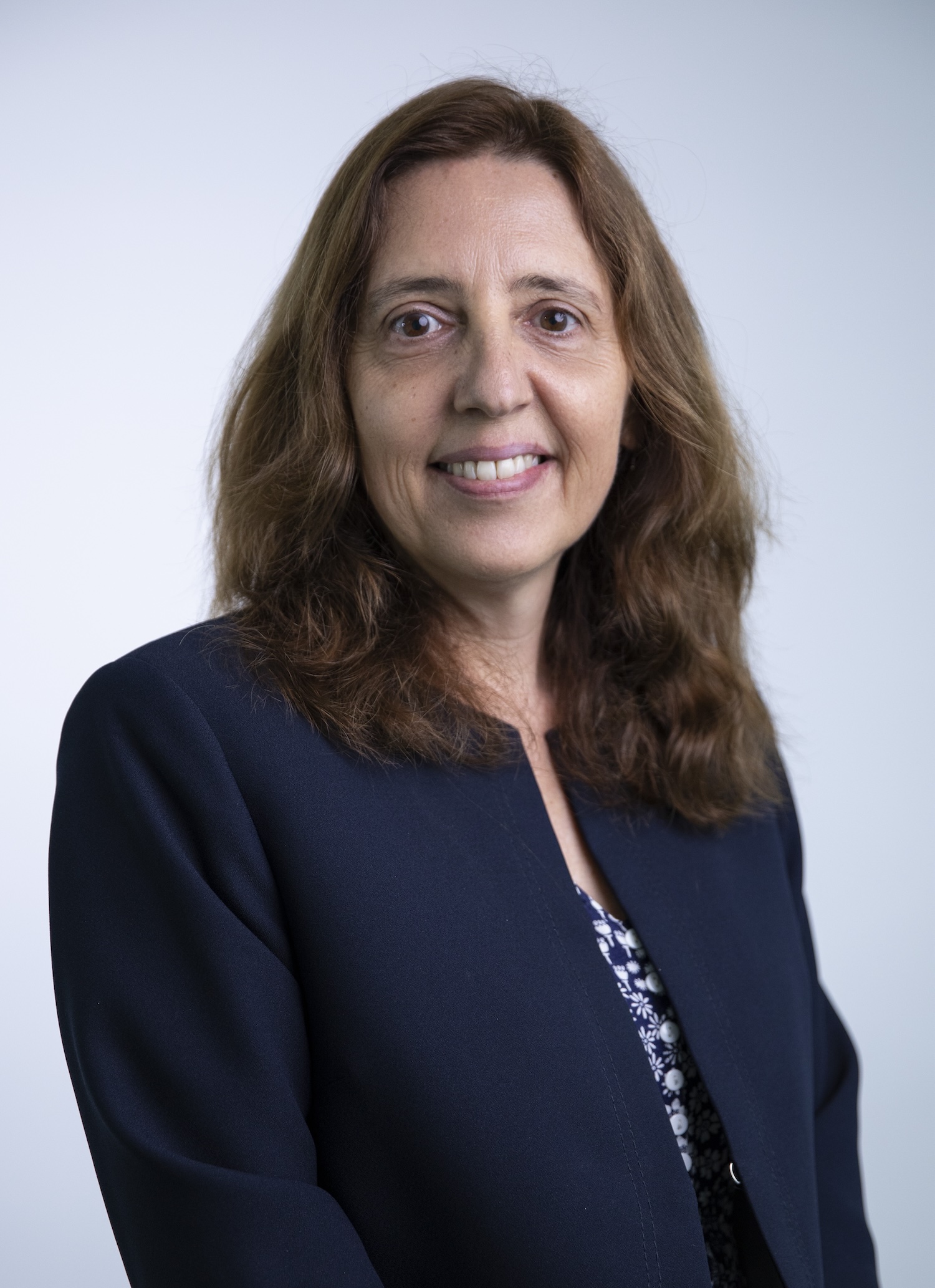
Dr Patricia Fidalgo reflects on her time as the Link Convenor of the Emerging Researchers’ Group between 2012 and 2016. Dr Fidalgo is an Associate Professor at the Emirates College for Advanced Education, UAE.

As I sit down to share my journey as the Link Convenor for the Emerging Researchers Group from 2012 to 2016, I can’t help but marvel at the serendipitous turn of events that led me to this fulfilling role. It all began in 2011 at the ECER conference in Berlin, where fate, chance, and a bit of luck intertwined to shape a remarkable chapter in my academic career.

In the vast landscape of academic conferences, the ECER gathering in Berlin in 2011 held a special place in my heart. Little did I know that this particular event would set the stage for a series of fortunate events that would change my professional life. During this conference, the European Educational Research Association was searching for a new Link Convenor for the Emerging Researchers Group.

I threw my hat into the ring by sheer chance, not fully comprehending the exciting journey that awaited me. To my surprise and delight, I was chosen for the role, beginning an incredible adventure.

Following my selection, I shadowed the outgoing Link Convenor, Fiona Hallet, for an entire year. This period of apprenticeship allowed me to gain valuable insights into the responsibilities, challenges, and joys associated with the position. As ECER 2012 concluded, I eagerly stepped into the shoes of the Link Convenor for the Emerging Researchers Group.

My tenure as the Link Convenor from ECER 2012 to 2016 was a time of immense learning and personal growth. Coordinating activities, facilitating communication among emerging researchers, and contributing to the vibrant academic community became integral aspects of my role. The exposure to diverse perspectives, methodologies, and research topics enriched my own scholarly journey.

The Emerging Researchers Group serves as a nurturing ground for budding scholars seeking to carve their niche in the vast landscape of educational research. Throughout my tenure as Link Convenor, I witnessed firsthand the countless opportunities the group and its associated conferences provided emerging scholars. These opportunities extended beyond the confines of traditional academic settings, offering a platform for participants to present their work, engage in meaningful discussions, and receive constructive feedback from peers and established researchers alike. The annual ECER conferences became a showcase of cutting-edge research and a dynamic space for networking and collaboration. Emerging scholars had the chance to interact with seasoned academics, attend workshops, and participate in panel discussions that broadened their perspectives.

One of the most rewarding aspects of my time as Link Convenor was meeting and collaborating with many engaging and passionate individuals. The role allowed me to connect with emerging researchers and established scholars, conference organizers, and professionals across the educational research landscape. The network I cultivated during these four years has proven to be an invaluable asset, both personally and professionally, and the friendships forged during this period continue to be a source of inspiration and support.

The role took me on a whirlwind of travels for European meetings and conferences. Each destination brought a unique flavor to the experience, from lively cities to charming college towns. These journeys expanded my horizons and allowed me to witness the diversity and richness of educational research in the European context.

Reflecting on my time as Link Convenor, I cannot help feeling some nostalgia. The camaraderie, the shared passion for research, and the sense of belonging to a more prominent academic family are aspects I deeply miss. The Emerging Researchers Group holds a special place in my heart, and the memories of those years continue to shape my approach to academia.

My serendipitous journey as Link Convenor for the Emerging Researchers Group stands out as a vibrant thread in the vast tapestry of academic life. The chance decision to apply, the unexpected selection, and the subsequent years of learning and growth have left an indelible mark on my professional identity. I carry with me the warmth of connections made, lessons learned, and the gratitude for the serendipity that guided my path. Cheers to the wonderful times, the incredible people, and the enduring spirit of EERA’s Emerging Researchers Group!

Dr Patricia Fidalgo

Dr Patricia Fidalgo

Associate Professor, Emirates College for Advanced Education, UAE

Patricia Fidalgo holds a Ph.D. in Sciences of Education from Nova’s University of Lisbon, Portugal. Fidalgo is an expert in Technology, Networks and Multimedia in Education and Training and has developed most of her research agenda in those subjects. For several years, she was responsible for the Emerging Researchers’ Group of the European Educational Research Association. She has over 20 years of teaching experience in Europe, Africa and Middle East.

She is currently living in UAE and is an Assistant Professor at the Emirates College for Advanced Education (ECAE), where she teaches in the field of educational technology. Dr. Patricia Fidalgo is also head of the Curriculum and Instruction Division at the ECAE.

The EERA Office – The view from within the spaceship

Angelika Wegscheider explains what it is like to steer the ‘spaceship’ of the EERA office, the changes she has seen over the years, and the lessons she’s learned from her time with the organisation.

A European Space for Educational Research and Dialogue

Past Secretary General of EERA, Professor Lisbeth Lundahl on the importance of EERA as an open and welcoming space for educational research and discourse.

20 Years a-going – Reflecting on two decades with EERA

Past President, Professor Joe O’Hara takes a walk down memory lane to celebrate EERA’s 30th anniversary, and reflects on the developments and achievements of the organisation.

Twenty years of participating in EERA’s 30 years

In this blog post, Professor Emeritus of Educational Sciences at Utrecht University in the Netherlands, and previous EERA president, Dr Theo Wubbels reflects on his involvement in EERA over the years, and where the organisation’s future lies.

My EERA story – from novice doctoral researcher to ERG Link Convenor

ERG Link Convenor Dr Saneeya Qureshi looks back on her journey, from her first conference, to her professional and personal growth with EERA, and the friendships made along the way.

Establishing Network 27 – and trends in didactics of learning and teaching over the past decades

Professor Emeritus Brian Hudson on the establishment and development of Network 27, and the associated trends in didactics of learning and teaching over the past few decades.

EERA’s unique buzz – and the lessons I’ve learned

Professor Emeritus Terri Seddon explains why the European Conference on Educational Research became her ‘first-choice’ academic conference, and worth the long-haul flights from her home in Melbourne. 

Experiences and benefits from collaborating in the international ethnography network

Four long-term Network 19 members, currently serving as network convenors, share their stories and insights into what the network means to them.

Developing an EERA Network Identity – NW 20 through the years

As part of our 30th anniversary celebration, Professor Raimonda Brunevičiūtė reflects on her EERA journey, and the development of Network 20, Research in Innovative Intercultural Learning Environment.

Growing (with) EERA Network 14

As part of our 30 years of EERA celebrations, Dr Joana Lúcio reflects on her time as Link Convenor of Network 14, and her professional and personal growth.

Pleasure, confusion, and friendship – 30 years of EERA

EERA’s first Secretary General and founding editor of the EERJ, Professor Martin Lawn, looks back at the sometimes rocky road of EERA, the developments into the organisation it is today, and considers where the journey should go next.

Improving the quality of education – EERA Network 11 through the years

To celebrate EERA’s 30th anniversary, Dr Gento takes a look at the activities of Network 11 to improve the quality of education, within EERA and in the wider educational research community.

Serendipity in Action: Being a link convenor for the ERG was a vibrant thread in the vast tapestry of my academic life

For the 30th anniversary celebrations of EERA, Dr Patricia Fidalgo reflects on her time as Link Convenor of the Emerging Researchers’ Group, and the joy this fulfilling role brought her.

A Transformative Journey: Nurturing Emerging Researchers at the European Conference for Educational Research.

In our blog series celebrating 30 years of EERA, Professor Fiona Hallett reflects on the sense of belonging within a supportive community of scholars.

The Hero’s Journey – What PhD Students can learn from storytellers

The Hero’s Journey – What PhD Students can learn from storytellers

Are you an early educational researcher struggling with the three monumental philosophical questions – where am I, where do I come from, and where am I headed – regarding your project? Nice to meet you. I wrote this post for you.

Having experience as an educational researcher, I was recently asked to share it with my peers, who are also pursuing a master’s degree in pedagogical supervision – the majority of whom are teachers, and for whom this is a first-time experience undertaking educational research.

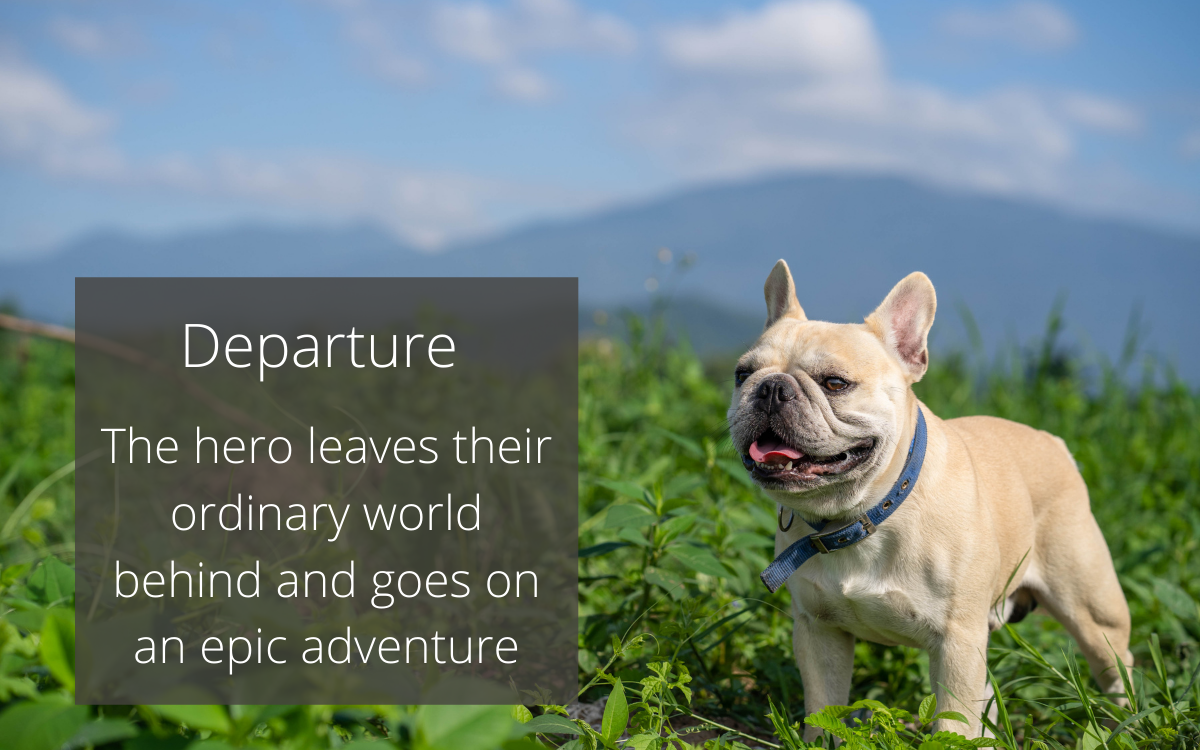
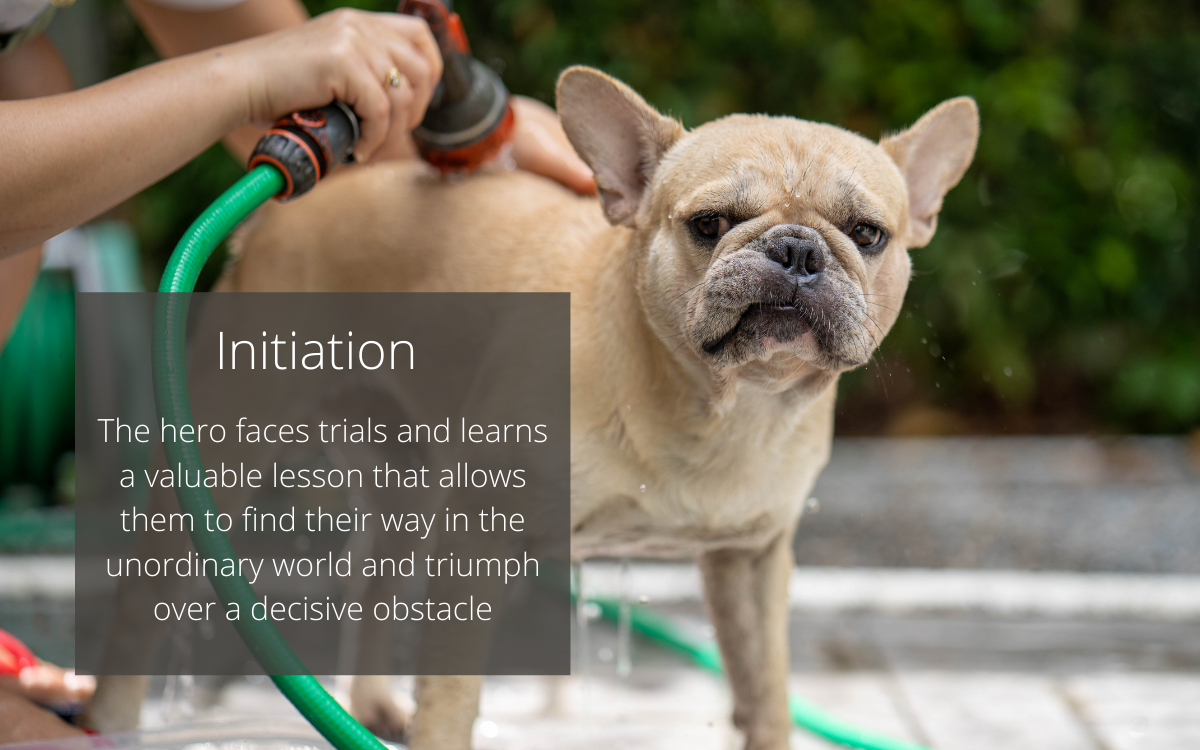
I revisited my PhD Hero’s Journey to share with them the joys and hardships of an educational research project. The hero’s journey refers to the mythological narrative archetype that has inspired storytellers throughout time and tale, and which can be summarized in three quintessential moments (Campbell, 1949):

Departure

Initiation

Return.

I hoped to acquaint my colleagues with some of the hero’s trials and troubles that are sure to come their way. I gathered ten lessons, which I also share with you, early educational researchers out there.

1. Be prepared for multitasking. Think of Camões, the 16th-century Portuguese poet, swimming for survival after a shipwreck while holding the manuscript of his epic poem, Os Lusíadas, above the waves, arm stretched out (legend says). While you’re trying to swim (for) your (personal, family, and professional) life, you will have an arm stretched out holding your opus.

2. Take care to conduct your research project and dissertation/thesis seriously, but without taking yourself too seriously. Despite all the swimming, your opus will not be perfect and will not change the (scientific and academic) world. Alas, the day after the public defense of your dissertation/thesis and after all your labors, the (scientific and academic) world will remain unaltered.

3. Learn to master the logistics. Get your tools together so you may: organize yourself; work daily on your research; write unabashedly (fear not the mystical blank page); avoid procrastination; and also, find your motto and put it to good use (remember that Rome wasn’t built in a day, so keep calm and breathe,because the journey is the reward).

4. Drop the baby analogy. Your research project and your dissertation/thesis are not a human being whose life is in your hands and with whom you are emotionally attached. It is an opus, which should and shall be open to questioning, discussion, and rebuttal.

5. Know when it is time to turn off your computer. If you struggle with this, ask a few good friends to be kind enough to ask you out for ice cream or a hike, and a good dose of ranting. Any excuse to make you get out of your sweatpants, comb your hair, and leave the house is more than welcome.

6. Create a support group. I am not referring to your “out-for-ice-cream-crew”, but to those who are making the same journey as you, and who understand what you are going through and what you are up against. Your mom, husband, kids, spiritual leader, and pets (the list goes on) are empathetic, and yet they cannot fully understand your hero’s journey. Reach out for your travel companions; this is a collaborative (not competitive) process.

7. Trust yourself. Your supervisor is in that rowboat alongside you, yet you are the one sculling in the first seat, the one responsible for steering the vessel; your supervisor’s job back in the stroke seat is to keep pace for the rowboat. If nobody rocks the boat, you both are rowing in the same direction, but you have better visibility and the duty-right to participate in the decision-making processes.

8. Cultivate positive attitudes – like curiosity, rigor, ethics, persistence, bravery, pride. You are making Science, so your point of arrival shall become the starting point of another researcher. Deliver a fine map. Instead of leaving the room as you found it, leave something beautiful behind. Contribute with something relevant.

9. Enjoy yourself. If you are too afraid to make mistakes or take steps back, you are missing out on the thrill of the adventure. Very often, in educational research, you will find the unpredicted. If your data differs from your hopes and dreams, it does not mean that you did something wrong; it means that you are doing it right.

10. Be ready to untangle the ball of thread and pass it on. You untangle as far as you can, and then you pass your ball of yarn on to another researcher, for them to unravel some more, and so on, in this craft that is to make Science. At the end of your research, you will have found some answers, and you will have found plenty of questions, and that is how it goes.

Each hero’s journey is unique, and while some of these lessons emerged for me, they may not save another hero’s life (metaphorically speaking). Perhaps conducting an educational research project is one of those things that you have to experience in order to fully understand the depths of its impact on you. Many factors influence an early researcher’s well-being and satisfaction during the research process (Levecque et al., 2017;Schmidt & Hansson, 2018; Sverdlik et al., 2018).

Regardless, early researchers out there on the heroic journey, with you, I share the one thing I know for sure regarding one’s trip down the educational research lane: at the end of the journey, the hero returns home. Wiser, tougher, smarter. More resilient, analytical, and courageous. Ready for another round. So, gather your tools, hold on tight, and just keep swimming.

Other blog posts on similar topics:

Dr. Amanda Franco

Dr. Amanda Franco

Postdoctoral Fulbright scholar at North Carolina State University, USA

Dr. Amanda Franco is currently a postdoctoral Fulbright scholar at NC State University (USA), and her research aims to analyze the perceptions of faculty who participated in TH!NK, a program on critical thinking and creative thinking held at NC State, in the frame of faculty development, and its impact on their teaching practices. Her doctorate (2016) and post-doctorate (2020), both in Science of Education, focused on critical thinking and its promotion in higher education. She is pursuing a master’s degree in pedagogical supervision at University Aberta (Portugal).

References and Further Reading

Campbell, J. (1949). The hero with a thousand faces. Bollingen Foundation.

Levecque, K., Anseel, F., De Beuckelaer, A., Van der Heyden, J., & Gisle, L. (2017). Work organization and mental health problems in PhD students. Research Policy, 46(4), 868-879. https://www.sciencedirect.com/science/article/abs/pii/S0048733317300422 

Schmidt, M., & Hansson, E. (2018). Doctoral students’ well-being: A literature review. International Journal of Qualitative Studies on Health and Well-being, 13(1), 1508171. https://www.tandfonline.com/doi/full/10.1080/17482631.2018.1508171 

Sverdlik, A., Hall, N. C., McAlpine, L., & Hubbard, K. (2018). Journeys of a PhD student and unaccompanied minors. International Journal of Doctoral Studies, 13, 361-388. http://ijds.org/Volume13/IJDSv13p361-388Sverdlik4134.pdf 

5 Tips for Emerging Researchers to get more involved with EERA and its Networks

5 Tips for Emerging Researchers to get more involved with EERA and its Networks

In this blog post, ERG Group Convenor, Dr Saneeya Qureshi addresses some of the frequently asked questions that she has received from EERA’s emerging researchers. A number of these have arisen from responses to the following question in the annual survey ‘What question(s) about the Emerging Researchers Group (ERG) or EERA still remain uppermost in your mind?’

Before we get to the responses, it is worth flagging the Emerging Researchers Group page, which links to various activities that are offered throughout the year.

“The early researchers are eager to learn beyond their field of research. For example, we would appreciate workshops or blog posts that would introduce us to research methods (so we can better understand, appreciate and link to the work others are doing). In addition, we are aware that we lack skills in presenting our work in a way that would be the most beneficial for our career progress. Where can we find information or resources for this?”


Answer: We know that early researchers are eager to learn beyond their field of research, to be introduced to research methods that would help them better appreciate and link their knowledge to the work others are doing. To address this need, we regularly share via the ERG mailing list information about workshops, seminars, summer schools, call for papers, and various other research-related opportunities are shared via the ERG mailing list. Join the mailing list by sending a blank message to erg-subscribe(at)lists.eera-ecer.de).

During the annual Emerging Researchers’ Conference (ERC), multiple capacity-building workshops and network workshops are also offered across the programme, in addition to the Annual EERA Summer Schools on Methodology.

Concurrently, the EERA Blog (to which anyone is welcome to subscribe at no cost) publishes regular posts on a diverse array of topics, ranging from research methods to educational engagement activities. The EERA Blog also provides tips on academic publication and conference attendance for emerging researchers. Further local opportunities for emerging researchers are available via the activities of their respective country’s National Associations.

Answer: There are a multitude of ways to get involved with EERA. You can do this via engagement with the ERG activities – including those highlighted above, the Best Poster Award, Best Paper Award, the ERG Mentorshipopportunities (access for which individuals must attend the ERG annual meeting at the ERC each year), or the respective EERA Network activities.

My advice would be to go through the EERA Networks, see which one(s) are most relevant to your research interests, and then join their mailing list. During the EERA Conference, attend their Network meetings to learn more about the senior academics who lead and engage with these networks and small communities, and build your own connections with them.  

It is worth noting here that Emerging Researchers and those who participate in the activities of the Emerging Researchers’ Group need to be members of their respective National Associations to qualify as members of EERA. Members of a national association that is a part of EERA can claim the lower fee for the annual conference, the ECER (European Conference on Educational Research). In addition, their associations can grant them free access to EERA’s scientific journal, the European Educational Research Journal (EERJ).

More information about being a member of EERA via one of its National Association members is available here.

Answer: Being involved with an EERA network does not require you to have any prior engagement with a specific network or Special Interest Group (SIG) that may or may not exist within your relevant national association. Your engagement with an EERA Network happens directly (see my tips in the answer above), without the need for pre-existing membership of a group, other than that of the main national association itself.

Answer: The answer to the first question in this blog covers information about networking opportunities between researchers at all career levels that are disseminated throughout the year via the ERG mailing list. The design of the wider ERG activities, and the ERC itself is purposefully done in a manner to afford emerging researchers the opportunities to meet and connect with researchers at all career levels, for instance, the exponentially successfully mentoring opportunities, as outlined above.

However, in a more focused approach to the issue raised in this question, the Annual ERC, when in-person, offers two lunchtime sessions dedicated entirely to a protected time and space for emerging researchers to engage and network with more experienced, senior academics, and EERA representatives. Since the onset of Covid and online events, the Annual ERG meeting has been combined with what would otherwise have been the first ERC lunchtime session on ‘Making the most of the ERC and Getting to know EERA’ session. It provides an opportunity for EERA’s emerging researchers, their supervisors, and research leaders to engage in interactive discussions which support:

    • broadening professional development opportunities and research dissemination experiences internationally;
    • exchanging experiences and ideas about research and researcher development;
    • actively participating in a European research community for Emerging Researchers.

All ERC participants are invited to this informal session which is jointly facilitated by experienced academics and the ERG co-conveners to enable those attending the ERC to understand the EERA structure and chart their way through the ECER conference program.


The following themes are covered during the session in the breakout groups, for informal discussions pertaining with the experienced academics and the ERG co-convenor teams:

Doing Educational Research:
The session included representation from the Editors of ‘Doing Educational Research: Overcoming Challenges in Practice’. This SAGE/EERA book was developed as a result of feedback from PhD students and addresses challenges researchers have encountered in their projects. In this session, we heard accounts of how experienced researchers handled entry into the research field, how they discussed and managed research results that posed problems when accounted back to the field, and how doing research in a second language, i.e., English, creates a complex set of challenges from interpretation to the communication of your research.

Networks, Networking, and Development Opportunities:
Discussions around how emerging researchers could connect with experts in their field by identifying their network and attending their programs. Also discussed were opportunities and strategies for building professional networks during ECER and beyond.

Converting a conference paper into a publication:
Participants were given insights into the unique opportunities available to them after the Emerging Researchers’ Conference, to maximise their publication success. Also discussed were the multitude of possibilities that the ERC offers for emerging researchers to receive feedback on their work, for example, during and after their conference presentations.

ERG co-convenors:
Meet the Emerging Researchers’ Group co-convenors who shared their recent experiences as Early Career Researchers and provided helpful tips for making the most of the conference experience.


Moving forward, we hope to return to face-to-face ERCs, in which case we will offer the following dedicated opportunities for emerging researchers to network with those at all career levels, backgrounds, disciplines, and experiences:

    • First day of the ERC lunchtime session: ‘Making the most of the ERC and Getting to know EERA’
    • First afternoon of the ERC: ERG meeting, which is attended by numerous PhD supervisors
    • First evening of the ERC: Dedicated social activity for key ERC stakeholders at all career levels
    • Second day of the ERC lunchtime session: ‘Lunchbreak with Local Academics’

As such, colleagues are advised to engage with upcoming ERCs to avail the opportunities of these dedicated networking events.

I would like more information about research design issues and the European perspective – it is obviously an important agenda to seek transnational European mutual understanding and try to team up on important educational issues. However, we also need to talk about differences. Schools are not alike all over Europe. So many little things such as teacher-pupil-relations etc. need to be explored. How to balance quality standards and innovations, which go beyond standards? How to maintain, cultivate and acknowledge cultural and linguistic diversity beyond the Anglo-Saxon mainstream and the one-dimensional notion of the ‘international’? How can I find the space and time for a relaxing and inspiring intellectual experience?


Answer: At EERA, we couldn’t agree more about the need for time and space to further educational research, debate, and discussion for the benefit of society! This is at the heart of who we are and what we do, and is why we provide the various opportunities as outlined in answer to the first question in this blog.

The flagship world-renowned Annual European Conference on Educational Research (ECER) attracts about 3000 participants from more than 70 countries. It is the primary forum to meet and engage with researchers from a broad field of academic traditions, themes, and cultural backgrounds – 1000+ sessions across EERA’s 33 Networks are facilitated over the course of one week, and include a mixture of oral, video, paper, and poster presentations, Ignite Talks, panel discussions, symposia, research workshops, network meetings, social events and more – all designed to facilitate and share cutting edge research designs, projects, effective practices, information, debate, and discussions on the whole spectrum of educational topics.

To learn more about the ERG, ERC, and ECER, visit the EERA website, which is updated regularly with information, news, guidance, and job opportunities related to educational research: https://eera-ecer.de/  

Dr Saneeya Qureshi

Dr Saneeya Qureshi

Head of Researcher Development and Culture at the University of Liverpool, UK

Dr Saneeya Qureshi was the Link Convenor of the Emerging Researchers Group for the European Educational Research Association (EERA) between 2015 - 2023. She is the Head of Researcher Development and Culture at the University of Liverpool, UK.

She is responsible for the University’s provision for researchers at all stages of their careers. She manages activities related to the University's European Commission's HR Excellence in Research Award, liaising with stakeholders regarding Liverpool's commitment to the development of its Early Career Researchers. She holds a PhD in Inclusive Education, and has over 15 years of experience in teaching and educational management in the UK and internationally.

Since 2015, Dr Qureshi has been a co-opted member of the EERA Council where she represents emerging researchers' interests. She leads an annual programme of EERA's developmental and capacity building activities for emerging researchers, including the annual Emerging Researchers Conference. She is also an Editorial Board member and a reviewer for several international educational journals. She can be found on Twitter @SaneeyaQ

Intercultural Translation through EERA and ERG

Intercultural Translation through EERA and ERG

María Angélica Mejía Cáceres first heard of EERA and ECER via a post on the web about the summer school: Doctoral Studies in Environmental and Sustainability Education: Contextualizing the Process at the University of Cambridge. It was the first event that María Angélica attended where she needed to speak English all the time so it was a bit of a challenge. María Angélica agreed to write about her experiences, both at the summer school and her further engagement with EERA at the European Conference on Educational Research (ECER) in 2019.

The Summer School in Cambridge

When I got to the Cambridge summer school, I was excited to meet recognized environmental education researchers from around the world, and I was glad to see other doctoral students who were interested in similar topics. As a consequence of this summer school, I did my visiting research in Canada in 2017 with one of the professors who led the summer school in Cambridge. These experiences generated my interest to participate in the European Conference on Educational Research, so I submitted to present two papers and to receive the bursary. And it happened! I was a bursary winner, and my papers were accepted.

The European Conference for Educational Research

The ERC and ECER moment was as I expected because it enabled me to have a dialogue with various researchers, acquiring knowledge, readings, experiences, and participating in debates, and activities.

In addition, participation in this conference was an opportunity for cultural exchange, and to recognize Latin representation with dignity because we want to have a voice in different spaces. 

In Latin America, we have discussions about how Europeans and North American countries made hierarchical impositions and colonization. In response, we have developed the epistemology of the south.

We have other realities, other problems, but we are generating knowledge too, from other local interests. I agree that sometimes certain communities, such as Latin people, and their research are considered inferior.

“The South is rather a metaphor for the human suffering caused by capitalism and colonialism on the global level, as well as for the resistance to overcoming or minimizing such suffering.”

– Santos Boaventura

I am glad that I was a bursary winner, alongside other people from the south. I interpreted it as a step to break discrimination and to be inclusive. And I don’t feel that this was just with the bursary.

I observed it during the whole event. I participated actively in the conference, workshops, network meeting, social events, and meeting others. I learned about education, but also about the cultures, and the similarities and differences between our realities.

I had high expectations about what I would find in the Conference, and I am glad to have found it to be a high level, in comparison with other events in which I have participated in the past. In the ERC, I listened to the interesting, critical, and constructive comments of the participants. It shows the commitment of EERA to emerging researchers.  

This congress helped me to create new connections with emerging researchers from Poland, India, Kenya, Germany, Spain (fellow bursary winners). I was also able to establish connections with professors who have distinguished trajectories.  I hope to consolidate more through collaborations in projects, writing papers, and more. That for me is awesome because as Santos Boaventura so fittingly put it:

“In order to bring together different knowledges without compromising their specificity, we need intercultural translation.”

– Santos Boaventura

The ERC and ECER permit the intercultural translation!

María Angélica Mejía-Cáceres

María Angélica Mejía-Cáceres

Doctor in Sciences and Health Education, Federal University of Rio de Janeiro

Maria Angélica Mejía-Cáceres is a doctor in Health and Sciences Education from the Federal University of Rio de Janeiro, Brazil.
She is a member of the research group Languages and Media in Science and Health Education at the university. She is also a member of the research group Science, Education and Diversity and the research group Science, Actions, and Greeting at the Universidad del Valle in Colombia.
Currently pos-doc at NUTES Science and Health Institute, Federal University of Rio de Janeiro, she is doing research about climate change education.