Conferences as catalysts for researcher development: Lessons from Post-Soviet contexts and reflections from ECER

Conferences as catalysts for researcher development: Lessons from Post-Soviet contexts and reflections from ECER

What does it truly mean to attend a conference? Is it merely about collecting certificates and adding lines to a CV, or does it represent a deeper professional journey? My experience at European Conference for Educational Research (ECER) and several other conferences I have attended since beginning my PhD in the United Kingdom have helped me answer these questions and reflect on the challenges faced by researchers in post-Soviet contexts.

Two journeys, two systems

When I first arrived in the UK to begin my PhD, I carried with me a clear formula for academic success: academic achievement = conferences + publications. That belief originated from my first PhD experience in Azerbaijan, where the rules were explicit, three conferences (one international) and five articles, or no degree. While there was comfort in that structure, it also brought pressure. Conferences were obligations, not opportunities.

Interestingly, my supervisors in the UK encouraged a different approach: “One meaningful conference is better than five rushed ones.” Initially, this lack of rigid targets and checklists left me uncertain about how to measure progress. However, over time, I came to understand the depth of their advice.

Predatory publishing and Soviet legacies

Recent scholarship on post-Soviet academic systems highlights the persistence of Soviet-era evaluation practices that prioritise quantitative output over research quality (Chankseliani, Lovakov & Pislyakov, 2021). This study examines how such legacies shape publishing behaviours and contribute to the growth of predatory publishing in post-Soviet educational research. How many conferences? How many articles? How many citations? This system rewards quantity rather than quality, perpetuating a cycle of superficial productivity.

Predatory publishers – organisations that charge fees for publishing work without proper peer review – and “fast-track” conferences thrive under such conditions. In Azerbaijan, Kazakhstan, Uzbekistan, and beyond, early-career researchers are often lured into prestigious-sounding “Global Innovations in Science” events hosted in Paris or Dubai, high fees, impressive certificates, but minimal academic substance (Hajiyeva, 2023). The pursuit of legitimacy can make researchers vulnerable to academic exploitation.

Scholars such as Kulczycki (2017) and Chankseliani et al. (2021) have demonstrated that bibliometric inflation is widespread across the region. Academic worth is frequently reduced to numbers, a lingering legacy of Soviet-era evaluation frameworks, where scientific labour was planned, counted, and reported for administrative purposes rather than genuine inquiry. Although policy language has evolved, institutional cultures often remain unchanged. Weak research infrastructure, limited funding, insufficient training in empirical methods, and minimal collaboration all contribute to a cycle of formality without substantive innovation (Kuzhabekova & Mukhamejanova, 2017; Ruziev & Mamasolieva, 2022).

Insights from ECER

Unlike the so-called “international” conferences I had previously encountered, often held in tourist capitals with grand titles but little academic value, ECER offered a genuine academic community. My presentation was peer-reviewed, the audience posed thoughtful questions, and the true value lay in the scholarly exchange rather than the certificate.

One notable aspect I observed, rarely discussed openly before, was the element of care. ECER made deliberate efforts to support researchers with children. Although childcare remained costly compared to my experience at the ESA 2024 conference in Porto, the recognition of this issue was an important step. Inclusion, I realised, is not merely a research topic; it must also be a lived academic practice.

Through these experiences, I learned that conference participation should not be treated as a numerical pursuit. It is a long-term dialogue, a slow process of building academic identity. Attending one or two high-quality conferences per year, combined with collaborative projects and research visits, can be far more valuable than accumulating numerous certificates.

My advice to early-career researchers, particularly those from post-Soviet contexts, is this: do not chase appearances, seek scholarly communities.

Conclusion

To truly support researcher development, academic systems should:

  • Shift evaluation criteria from quantity to depth.
  • Reward collaboration and intellectual contribution, not mere output.
  • Strengthen research literacy to resist predatory academic practices.

Until academic value is redefined in this way, research systems will continue to produce numbers instead of knowledge.

Conferences, when grounded in genuine scholarly exchange rather than numeric performance indicators, can serve as spaces of both personal and systemic transformation. For post-Soviet researchers, embracing this perspective may be crucial in redefining academic success and fostering authentic research cultures.

Key Messages

  • Conference participation is not just about certificates or CV lines—it is a meaningful journey of professional and personal growth.
  • Academic systems in post-Soviet countries often prioritise quantity over quality, which can lead to superficial productivity and vulnerability to predatory publishing and conferences.
  • Genuine scholarly communities, such as those fostered at ECER, offer opportunities for peer review, intellectual exchange, and inclusion—far beyond what “fast-track” conferences provide.
  • Researcher development benefits most from attending a few high-quality conferences, engaging in collaborative projects, and building authentic academic networks, rather than chasing appearances or numbers.
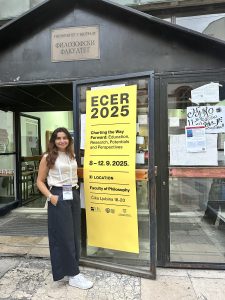
Turan Abdullayeva

Turan Abdullayeva

University of Sheffield

Turana Abdullayeva is a PhD researcher in Education at the University of Sheffield and an Associate Fellow of the Higher Education Academy (AFHEA). Her research focuses on inclusive education, decolonial disability studies, and teacher education in post-Soviet contexts, with a particular emphasis on Azerbaijan.

Alongside her doctoral work, Turana teaches and supervises postgraduate students, contributes to international research projects on accessibility and anti-ableist research cultures, and works in student support and inclusion. She has published in leading international journals, including Disability & Society and the International Journal of Inclusive Education, and regularly writes reflective blog posts on academia, access, and belonging.

Linkedn: www.linkedin.com/in/dr-turana-abdullayeva-9456961a1

Facebook: https://www.facebook.com/turush.abdullayeva

Other blog posts on similar topics:

References and Further Reading

Chankseliani, M., Lovakov, A., & Pislyakov, V. (2021). A big picture: bibliometric study of academic publications from post-Soviet countries. Scientometrics, 126(10), 8701-8730. https://www.researchgate.net/publication/353979277_A_big_picture_bibliometric_study_of_academic_publications_from_post-Soviet_countries  

Hajiyeva, N. U. (2025, August 31). Facebook post. Retrieved September 15, 2025, from https://www.facebook.com/share/p/1AAbrdwv68/?mibextid=wwXIfr

Kosaretsky, S., Mikayilova, U. And Ivanov, I. (2024). Soviet, Global and Local: Inclusion Policies in School Education in Azerbaijan And Russia. Revista Brasileira de Educação Especial, 30, p.e0103. https://www.researchgate.net/publication/384702057_Soviet_Global_and_Local_inclusion_Policies_in_School_education_in_Azerbaijan_and_Russia

Kulczycki, E. (2017). Assessing publications through a bibliometric indicator: The case of comprehensive evaluation of scientific units in Poland. Research Evaluation, 26(1), 41–52. https://doi.org/10.1093/reseval/rvw023

Kuzhabekova, A., & Mukhamejanova, D. (2017). Productive researchers in countries with limited research capacity: Researchers as agents in post-Soviet Kazakhstan. Studies in Graduate and Postdoctoral Education, 8(1), 30-47. https://doi.org/10.1108/SGPE-08-2016-0018

Mamerkhanova, Z., Sakayeva, A., Akhmetkarimova, K., Assakayeva, D., & Bobrova, V. (2025). Development of inclusive education in the Republic of Kazakhstan: An inside view (case of the Karaganda region). Frontiers in Education, 10, 1630225. https://doi.org/10.3389/feduc.2025.1630225

Ruziev, K., & Mamasolieva, M. (2022). Building university research capacity in Uzbekistan. In Building research capacity at universities: Insights from post-soviet countries (pp. 285-303). Cham: Springer International Publishing. https://link.springer.com/chapter/10.1007/978-3-031-12141-8_15 
ERC TAMPERE 2026 – upcoming submission deadline for emerging researchers’ conference in finland

ERC TAMPERE 2026 – upcoming submission deadline for emerging researchers’ conference in finland

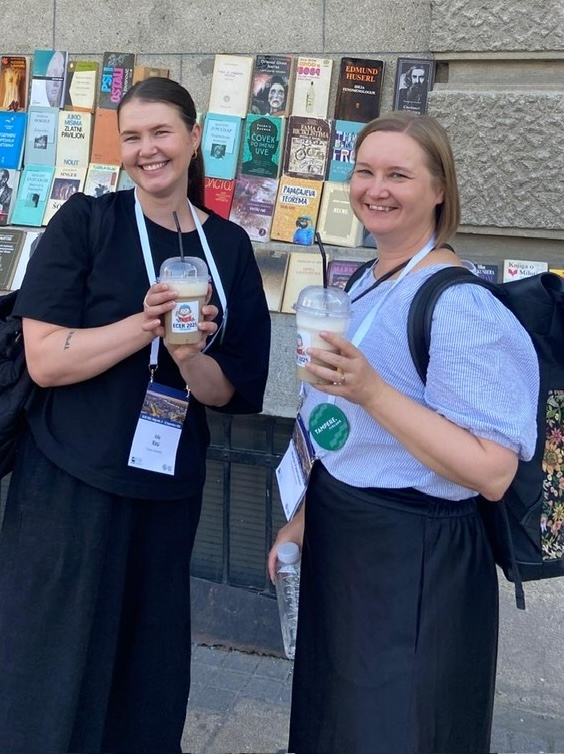
After the ECER conference in Belgrade, we – the organising committee of ECER 2026 in Tampere – found ourselves reflecting on what makes conferences so special. Although important, we guess that for most, it is not just the panels or the presentations. For us, it is also the atmosphere of intellectual generosity, meeting the friends we have made in the academic community, and making new ones.

In addition, what made the experience in Belgrade so special was that the place itself reminded us of the power of collective action. Walking through the city, hearing about the student protests driven by a deep concern for justice, transparency, and democracy, we couldn’t help but think about the questions of what it means to act on knowledge ethically, collectively, and with purpose. What does it mean for a research community to know in ways that matter? And how do we transform the knowing into action? These questions they stay with us as we look toward Tampere and our upcoming theme: “Knowing and Acting”.

ECER 2026

Collective knowing and acting requires a community. For EERA community it means creating spaces where emerging voices are heard and valued. That’s why the Emerging Researchers Conference feels so important for us as the organisers of ECER Tampere 2026. ERC is not only an event for junior members of an academic community, it’s EERA’s collective effort to build up a community that is welcoming, supportive, intellectually stimulating and rigorous, and ethical. We would like the ERC to be a place where early career scholars can connect, share ideas, and build friendships that sustain them in the often-challenging academic world. This is a prerequisite of collective knowing and acting. Thus, we warmly encourage the members of EERA community to support early career researchers’ participation in ERC in Tampere.

Emerging Researchers’ Conference 2026

The Emerging Researchers’ Conference programme consists of two days of conference activities. In various sessions, the ERC participants can engage with paper and poster presentations, ignite talks, posters, and workshops. The participants can also enjoy a keynote lecture by Richard Budd (Lancaster University) and an interactive session themed “For slow reading and criticality in accelerating academia” by Zsuzsa Millei (Tampere University) and Antti Saari (Tampere University). To network and discuss with colleagues further, ERC in Tampere has interactive lunch breaks and a City Reception Event.

Conference information

Read more about the programme of the Emerging Researcher Conference in Tampere and how to submit your proposal by 31 Jan 2026: Emerging Researchers’ Conference | EERA

We wish that ECER Tampere 2026 will bring us opportunities to imagine together what education research can be and do, and to act on that imagination.

Associate Professor Maiju Paananen

Associate Professor Maiju Paananen

Chair, Organising Committee, ECER Tampere 2026

Associate Professor Maiju Paananen is the chair of the Local organising committee of Emerging Researchers’ Conference in Tampere 2026. Paananen leads Child politics and Early Childhood research group at Tampere University, Faculty of Education and Culture.

Dr Iida Kiesi

Dr Iida Kiesi

Conference coordinator of ECER Tampere

Dr Iida Kiesi is the coordinator for the ECER 2026 in Tampere. Kiesi defended her doctoral thesis in 2024, in which she researched privatization of Education in Finland.

Other blog posts on similar topics:

ERG Webinars: Tips for academic publishing and grant application for early career researchers

ERG Webinars: Tips for academic publishing and grant application for early career researchers

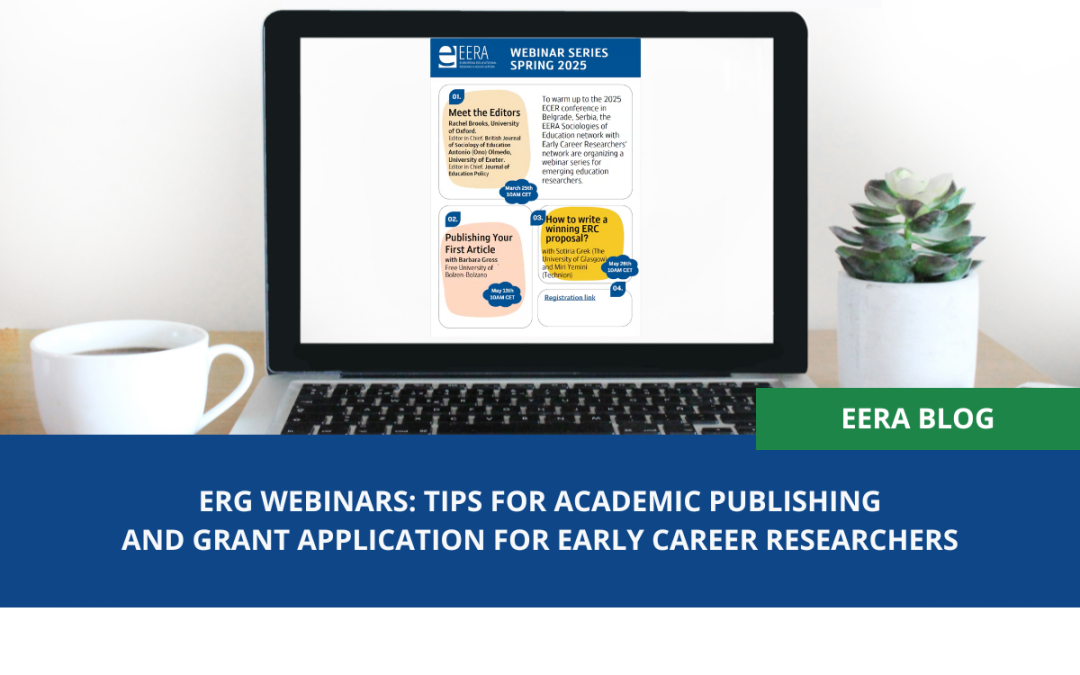
Between March and May 2025, EERA Sociology of Education Research Network and the Emerging Researchers’ Group, hosted a three-part webinar series aimed at supporting emerging scholars in navigating key stages of academic life. Each session opened a window into different aspects of early academic careers. Featuring tips on academic publishing and grant application writing, the webinars offered both practical strategies and personal reflections from experienced researchers.

Webinar 1: Meet the editors – Advice from journal editors on academic publishing

There’s a moment right after the PhD ends, when many early career researchers suddenly find themselves standing alone. No longer students, not yet fully established scholars, they’re now expected to publish, write grant applications, and shape an academic identity. But where do you learn how to do any of that? How do you figure out where to submit your article, or why one paper gets accepted while another is rejected? These are not just technical questions. For many of us, they’re questions about belonging, confidence, and finding our voice in a world that often assumes we already know the rules.

That’s why our recent “Meet the Editors” webinar felt so meaningful. It wasn’t just about insider tips on academic publishing, it was about opening the black box of publishing and hearing directly from those who sit on the other side. We had the privilege of hosting two generous and thoughtful editors, Prof. Rachel Brooks, University of Oxford, Editor-in-Chief of the British Journal of Sociology of Education and Prof. Antonio (Ono) Olmedo, University of Exeter, Editor-in-Chief of the Journal of Education Policy. They spoke about the differences between their journals, what kinds of scholarship each is looking for, and how editorial decisions are made.

Building on the spirit of the conversation, the webinar offered more than just practical tips, it opened a window into how experienced editors think about publishing, not only as gatekeepers but as mentors and scholars themselves. They reminded us that before submitting an article, it’s essential to read recent issues of the journal we’re aiming for. What topics are being discussed? What theoretical frameworks and styles of argumentation are common? A strong paper doesn’t just present something new; it actively engages with the existing conversation and signals why its contribution matters in that space and moment.

The editors also emphasized the importance of timing. Don’t rush to submit; ask yourself whether this is truly the best version of your paper, and whether you’re ready for it to be read critically. Too often, early-career researchers focus on showcasing their data or findings without thinking carefully enough about where the paper belongs and why now. Editors are not only looking for originality; they’re also looking for relevance: why this paper, in this journal, at this time?

More than anything, the conversation reminded us that finding your way into academic publishing isn’t just about following rules. It’s about developing a sense of voice, confidence, and connection. And that’s not something you have to figure out alone.

Webinar 2: Publishing your first journal article

This second webinar featured Barbara Gross from the Free University of Bolzano-Bozen, who shared reflections and practical tips on publishing a first academic article. With a particular focus on selecting an appropriate journal, the session offered insights drawn from Prof. Gross’s own experience as a researcher and author. Aimed at emerging researchers, the webinar provided concrete strategies to navigate the complexities of academic publishing and addressed key considerations involved in taking the first steps toward publication.

The session moved from big-picture ideas to practical steps, outlining different publishing options such as book chapters, conference proceedings, and most importantly, peer-reviewed journal articles. Participants explored the differences between national and international publishing cultures, the growing role of English for global visibility, and the ongoing value of publishing in national languages to reach local audiences.

A key focus was on selecting the right journal. Our guest lecturer explained how to evaluate a journal’s scope, audience, mission, and ranking – including impact factors and quartiles – and how to balance national and international outlets. She also touched on open access and the institutional support available to cover related costs.

When it came to writing, Prof. Gross highlighted the importance of identifying a clear research gap, building a well-structured article, and following journal guidelines closely. Ethics were stressed, from transparency in data use to participant privacy and disclosure of AI tools.

Prof. Gross then guided participants through the submission and peer-review process, noting that revisions are a normal and constructive part of publishing. She offered tips on responding to reviewer feedback, even when disagreeing, and reminded attendees to submit to only one journal at a time. Rejection, she said, can be an opportunity to improve and resubmit.

Finally, the webinar closed with strategies to increase the visibility and impact of published work, including conference presentations, networking on platforms, and tracking citations and metrics. By the end, participants had a clear sense of the steps involved in moving from research to publication, along with the confidence to start their own publishing journeys.

Webinar 3: Writing a successful ERC grant application

Our final webinar sought an insider view on how to write a successful European Research Council (ERC) grant application. While numerous webinars address the technical details of the application process, since education research is rather underrepresented amongst the successful applications, we were curious to invite colleagues who can speak from the particular perspective of education researchers.

To our great excitement, two distinguished scholars from the critical education field, Prof. Sotiria Grek and Prof. Miri Yemini accepted our invitation to share their reflections and experiences about the exceptionally competitive application process. Prof. Yemini is leading an ERC Consolidator Grant project exploring youth activism in diverse contexts, including climate crisis and human rights between 2023 and 2028 (See the project website here).

Prof. Grek led an ERC Starting Grant (2017-2022) on the ‘International Organisations and the Rise of a Global Metrological Field’ (METRO), researching the role of international organisations in the quantification of global governance, with a focus on the fields of education and sustainable development. Since 2024, she has been working on an ERC Consolidator Grant entitled ‘Art and Policy in the Global Contemporary: Examining the Role of the Arts in the Production of Public Policy’ (POLART, 2024-2029).

We had a rich and insightful conversation with the two scholars who shared details about their personal journey of developing the project proposal and their experiences about the interview phase in an informal yet right-to-the-point manner. The conversation had three key messages[1].

Grant proposal writing is a specific kind of writing
This can be learnt and should be practised. The best ideas need time and care to hatch. One needs to dedicate time to sit on them, talk about them, cook them, and dream about them.

Timing is key
This helps to successfully get the project together. One needs to block time to read and write, and to schedule a generous amount of time to receive feedback. A strong proposal gives the feeling to the reviewer that the idea is ‘timely’, and the time to do the research is now.

Balance and focus
Being centred and focused from the beginning to the end of the proposal leads to success. One needs to demonstrate a good balance between the project’s feasibility and ambition. From family and friends to mentors and colleagues; the more diverse audience the better. All of this provides a safety harness. Mock interviews with mentors and professional providers prove extremely helpful in the preparation for the interview, because they could accurately predict the reviewers’ questions and allow space to rehearse for them.

On a final note, both scholars emphasised that they realized how important the people they have been working with became for them. Project leadership is about building and valuing the team one creates and co-create researches with.

[1] The key points follow Prof. Grek’s presentation

Unfortunately, due to a technical issue, we do not have a recording of this webinar.

Together, these three webinars offered an insight into the journey of the challenges faced by early-career researchers. From finding one’s voice in publishing, to submitting that very first article, to preparing for ambitious grant applications, the series reflected our commitment as a community to supporting the next generation of scholars. We are grateful to all our speakers and participants, and we look forward to continuing the conversation.

Key Messages

  • Early-career researchers must learn to navigate academic publishing, journal selection, and grant writing to build their academic identity.
  • Engaging with journal editors provides essential insights into publishing expectations, peer review, and developing scholarly voice and confidence.
  • Selecting the right journal, understanding publishing cultures, and responding to feedback are vital steps in publishing your first article.
  • Successful grant writing requires dedicated time, clear focus, and learning from mentors, with strong project leadership and teamwork.
  • Community support, mentorship, and sharing experiences are crucial for emerging researchers facing the challenges of early academic careers.

Other blog posts on similar topics:

How an ERC bursary opened the door to a transformative research experience

How an ERC bursary opened the door to a transformative research experience

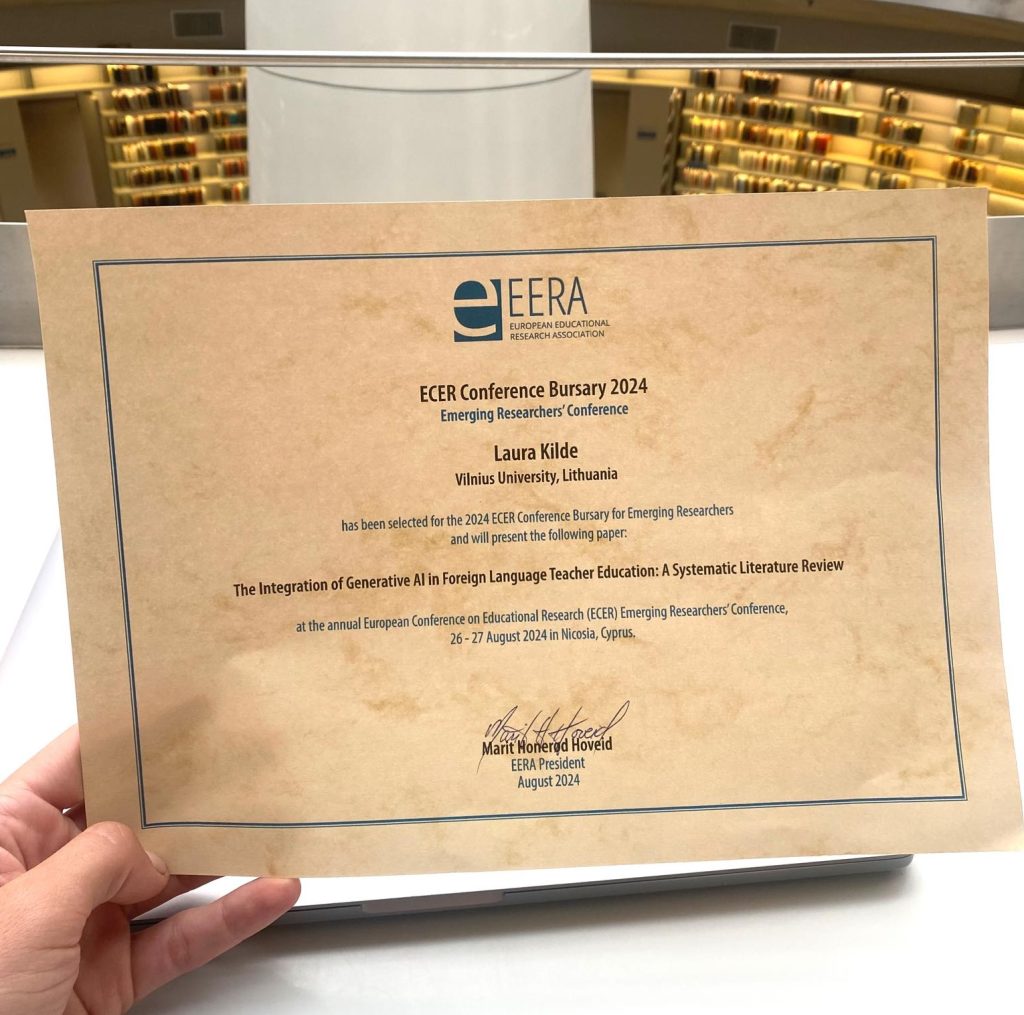
When I received the email confirming that I had been awarded an Emerging Researchers’ Conference (ERC) bursary, I became excited and, at the same time, slightly nervous. As a first-year PhD student in Educational Sciences, I was just beginning to look for my footing in the world of academic research. Indeed, the bursary provided me with the opportunity to attend the Emerging Researcher’s Conference (ERC) and the European Conference on Educational Research (ECER) in August 2024 in Nicosia, Cyprus—an experience that would have been out of reach without this support.

Why this experience mattered

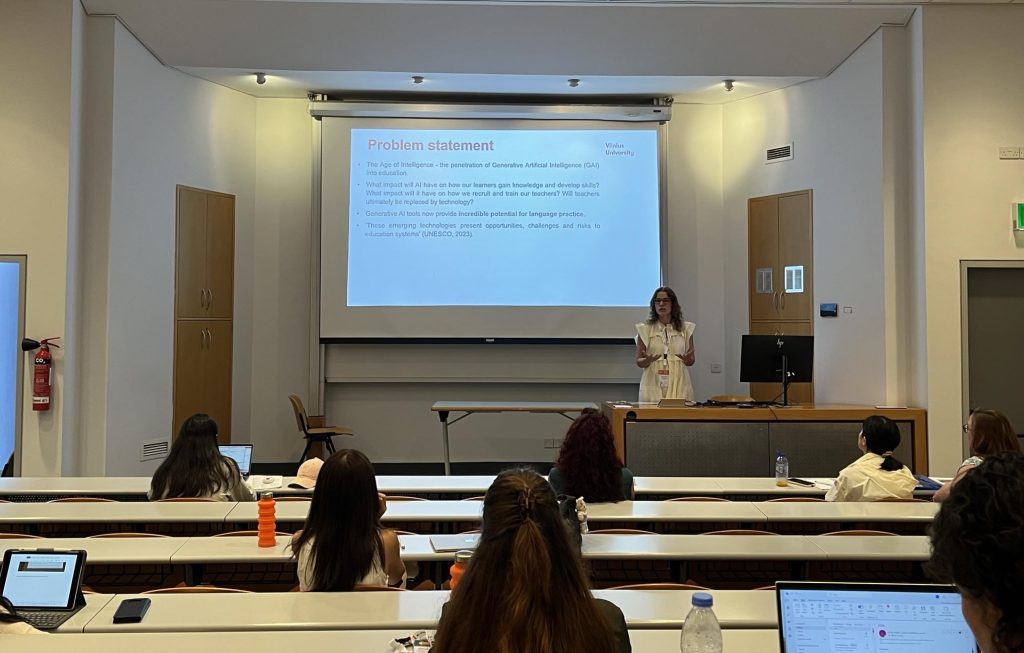
Presenting at a major international conference so early in my PhD journey was both empowering and challenging.  I was working intensively on preparing a systematic literature review in order to gain a comprehensive understanding of the existing research in my field. As a result, I delivered my presentation “The Integration of Generative AI in Foreign Language Teacher Education: A Systematic Literature Reviewduring one of the Emerging Researchers’ sessions. This was my first time presenting my research in such a large and diverse setting. Receiving an abundance of questions made me reflect more deeply on the work I had done and inspired me to make meaningful improvements accordingly.

At the same time, what stood out most was not just the opportunity to speak—but to listen as well. The conference brought together researchers, educators, and professionals from all over Europe and beyond. I had the opportunity to choose freely from a wide range of sessions, where each offered unique insights into different areas of educational research. This diversity introduced me not only to new and unique ideas, but also to different contexts.

Growth beyond the conference room

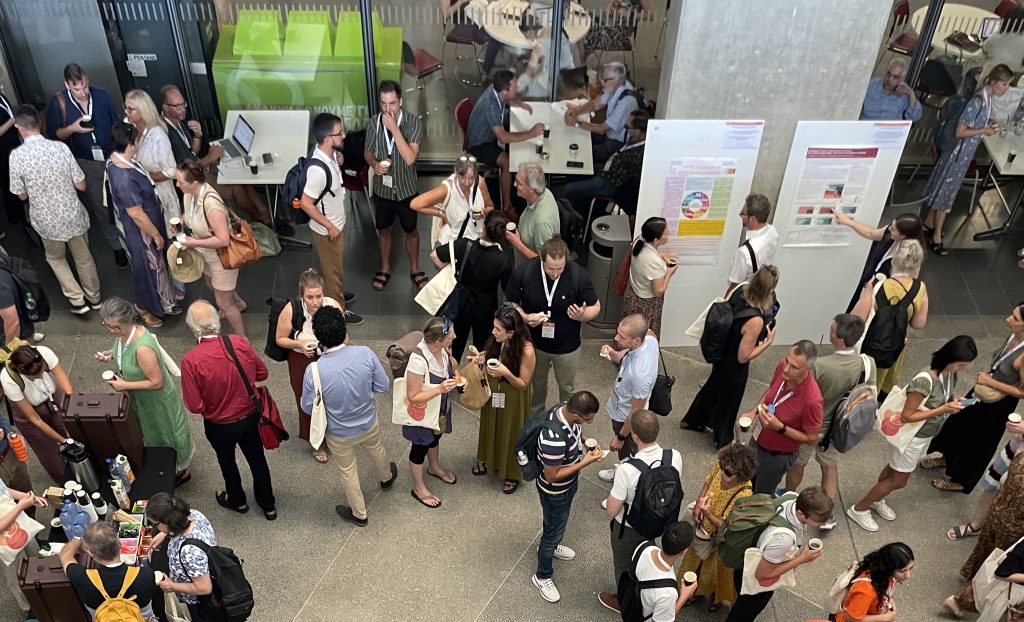
Moreover, I was able to fully immerse myself in the event. I met fellow PhD students, early-career researchers, and experienced academics. We spoke about everything from research methodology to the emotional highs and lows of academic life.

These conversations—whether in formal sessions or over coffee—helped me reflect on my own research. Some discussions sparked new professional and personal interests, while others helped me realise what I did not want to pursue in my work. This growing sense of clarity was just as valuable as discovering new directions. I left Cyprus with a head full of questions, fresh ideas, and a renewed sense of purpose. I realised that some of the most important learning happens in the spaces between presentations: in informal chats, shared doubts, and collective curiosity.

Reimagining my research focus

Back in Lithuania, I continued the conversations I had started at the conference—with my PhD supervisor, university professors, and peers. One key realisation came into focus: I had spent significant time in Rwanda and Kenya, gaining both personal and professional experience, yet this perspective was not reflected in my research.

Listening to presentations and discussions under the ECER 2024 theme “Education in an Age of Uncertainty: Memory and Hope for the Future” made me reflect on how deeply education is shaped by historical, social, and geopolitical contexts. The theme encouraged me not only to acknowledge the complexities and uncertainties of the present but also to draw from past experiences to imagine more hopeful futures. In this light, I recognised the importance of including my African experience—not just as background, but as a meaningful lens through which to explore and reframe my research. It was a powerful reminder that educational research must remain open to multiple narratives, histories, and hopes – especially in a globalised and interconnected world.

With support from my academic community, I revised my original doctoral topicEducationalTechnology Enhanced Self-Directed Learning in Foreign Language Teacher Education”, which initially focused on how digital tools can enhance self-directed learning within the context of foreign language teacher training. However, with support from my academic community, I reshaped the topic to incorporate a broader and more critical perspective. The revised focus—Self-Directed Learning of Future Lithuanian and Kenyan Foreign Language Teachers in the AI Era—still centers on digital technologies but, at the same time, expands to include a comparative, global dimension. This new direction combines my interest in digital technologies with a deeper and a more global understanding of teacher education.

Indeed, the experience at ERC and ECER, including all the variety of presentations, networking, and critical feedback encouraged me to move beyond a Eurocentric perspective and toward a more comparative, interdisciplinary, and globally relevant dissertation topic.

The real impact of the bursary

The ERC bursary made all of this possible. It was not just some financial support—it was a vote of confidence. It allowed me to:

  • Present and test my ideas in a professional setting
  • Connect with researchers from around the world
  • Discover how international education challenges intersect with my own
  • Gain the courage to rethink and refine my research direction

Why this matters to others

Whether you are a fellow researcher, an educator, or someone interested in how education is changing, these kinds of international experiences are incredibly valuable. They help us build bridges between ideas, cultures, and communities. They show us that education is never one-size-fits-all, and that our work benefits from being shaped by many voices.

Final thoughts

Research can often feel like a solitary path, especially in the early stages. But my experience in Cyprus reminded me that academic work is a shared journey. With the support of initiatives like the ERC bursary, young researchers like me get the chance to become a part of something bigger—to contribute, to learn, and to even be transformed in the process.

Key Messages

  • Receiving an ERC bursary enabled me to attend and present at ERC/ ECER 2024 in Nicosia, Cyprus—an eye-opening international research experience early in my PhD journey.
  • Presenting my first systematic literature review on AI in language teacher education sparked valuable feedback and reflection.
  • Conversations with global researchers reshaped my research focus to include my African experiences and explore self-directed learning in Lithuania and Kenya.
  • The ERC bursary was more than financial support—it was a transformative boost in confidence, connection, and clarity.
Laura Kildė

Laura Kildė

PhD candidate, Vilnius University

Laura Kildė is a university lecturer, book author, and founder of foreign language schools. Her research interests include language education, educational technologies with a focus on generative AI, teacher training, self-directed learning, and postcolonial studies. She has worked internationally in France, Spain, Rwanda, Kenya, the UK, and the USA across various roles in education and research.

ResearchGate: https://www.researchgate.net/profile/LauraKilde?ev=hdr_xprf

LinkedIn: https://www.linkedin.com/in/laura-kildė-14826277/

Other blog posts on similar topics:

ECER Belgrade 2025

Since the first ECER in 1992, the conference has grown into one of the largest annual educational research conferences in Europe. In 2025, the EERA family heads to Serbia for ECER and ERC.

08 – 09 September 2025 – Emerging Researchers’ Conference
09 – 12 September 2025 – European Conference on Educational Research

Find out about fees and registration here.

Since the first ECER in 1992, the conference has grown into one of the largest annual educational research conferences in Europe. In 2025, the EERA family heads to Serbia for ECER and ERC.

In Belgrade, the conference theme is Charting the Way Forward: Education, Research, Potentials and Perspectives

No doubt that education has a central role in society, but what it is destined to do is contested politically as well as scientifically. Yet more debate is had concerning the question of the way in which educational research should shape the future of educational practice. The important, but sensitive role educational research occupies in that regard should be the promotion of a better understanding of the contemporary and future world of education, as is expressed in EERA’s aim.

Emerging Researchers’ Conference – Belgrade 2025

The Emerging Researchers’ Conference (ERC) precedes ECER and is organised by EERA’s Emerging Researchers’ Group. Emerging researchers are uniquely supported to discuss and debate topical and thought-provoking research projects in relation to the ECER themes, trends and current practices in educational research year after year. The high-quality academic presentations during the ERC are evidence of the significant participation and contributions of emerging researchers to the European educational research community.

By participating in the ERC, emerging researchers have the opportunity to engage with world class educational research and to learn the priorities and developments from notable regional and international researchers and academics. The ERC is purposefully organised to include special activities and workshops that provide emerging researchers varied opportunities for networking, creating global connections and knowledge exchange, sharing the latest groundbreaking insights on topics of their interest. Submissions to the ERC are handed in via the standard submission procedure.

Prepare yourself to be challenged, excited and inspired.

ECER Belgrade 2025

Since the first ECER in 1992, the conference has grown into one of the largest annual educational research conferences in Europe. In 2025, the EERA family heads to Serbia for ECER and ERC.

08 - 09 September 2025 - Emerging Researchers' Conference
09 - 12 September 2025 - European Conference on Educational Research

Find out about fees and registration here.

Since the first ECER in 1992, the conference has grown into one of the largest annual educational research conferences in Europe. In 2025, the EERA family heads to Serbia for ECER and ERC.

In Belgrade, the conference theme is Charting the Way Forward: Education, Research, Potentials and Perspectives

No doubt that education has a central role in society, but what it is destined to do is contested politically as well as scientifically. Yet more debate is had concerning the question of the way in which educational research should shape the future of educational practice. The important, but sensitive role educational research occupies in that regard should be the promotion of a better understanding of the contemporary and future world of education, as is expressed in EERA’s aim.

Towards reconnecting within and beyond the educational research community in Serbia

Towards reconnecting within and beyond the educational research community in Serbia

Serbia is a country nestled in the Balkans, Southeast Europe, which evokes a multitude of associations depending on one’s generational perspective. From Ottoman rule and the Battle of Kosovo, legendary scientist Nikola Tesla, historical figures like Gavrilo Princip, Nobel Prize winner Ivo Andrić, to the memories of Yugoslavia, the 1990s wars, the NATO bombing in 1999, the country’s prowess in collective sports such as basketball, and the tennis player Novak Đoković – Serbia’s narrative always provokes dilemmas.

But why delve into this historical labyrinth when discussing educational research in Serbia?

Serbia has always been a place where different cultures mix, leading to both understanding and conflict, requiring multiperspective approaches and fine interweaving of the joint narratives. The role of education and educational research’ in interpreting socio-cultural events, building collective narratives and bridging diverse perspectives is irreplaceable.

Due to the fragmentation of this region and the division of a multinational state into smaller, ethnically homogeneous entities, the term “balkanisation” itself was coined. The fragmentation of this geographical and political area corresponded with a divide within the research community. Moreover, international sanctions imposed on Serbia led to its educational research community being isolated from the global scientific network. However, this adversity paradoxically served as a unifying force within the local research community and its cohesive influence was reflected in the mobilization of existing resources in researching how education adapts and how education could help citizens to adapt to the uninterrupted crisis. The challenge of this task becomes even more noticeable when we take into account the limited resources and resistance on the side of decision-makers, often resulting in educational research being perceived as a form of quiet activism, encompassing ‘little acts’ that are both collectively and politically significant.

To overcome these hurdles, the Educational Research Association of Serbia (ERAS) was created in 2013, aiming to affiliate with the European Educational Research Association (EERA). ERAS stands out for its advocacy of interdisciplinary collaboration, welcoming experts from diverse fields interested in educational research. We wonder whether, together with EERA, we can rewrite the narrative of ‘balkanisation’, turning it from a tale of fragmentation into one of collaboration and reconnection. Hence, the theme of the ECER 2025 is Charting the Way Forward. We are looking forward to welcoming you in Belgrade!

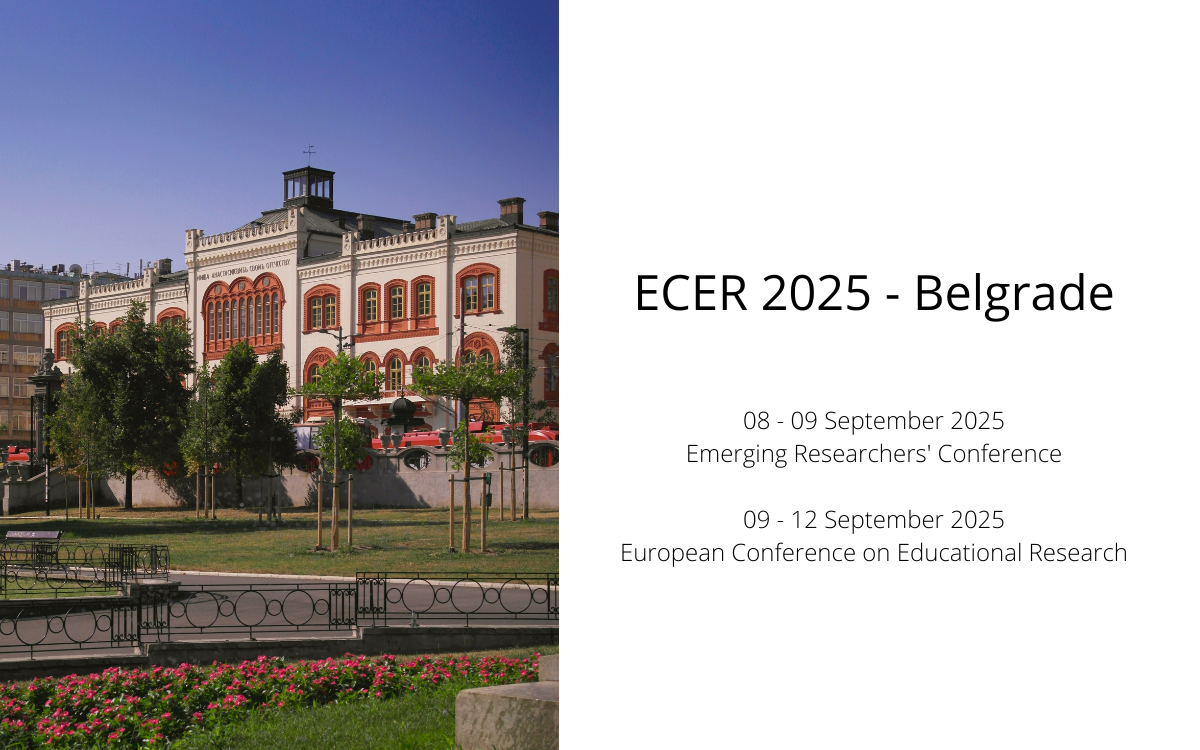
Image of the University of Belgrade and the information: 08 - 09 September 2025 - Emerging Researchers' Conference
09 - 12 September 2025 - European Conference on Educational Research

ECER 2025 goes to Belgrade, Serbia.

Find out more about ECER 2025 in Belgrade, the keynote speakers, and how to submit a proposal, and the deadlines for submission and registration on the EERA website

Olja Jovanović

Olja Jovanović

Assistant Professor, University of Belgrade

Olja Jovanović is an Assistant Professor at the University of Belgrade’s Center for Teacher Education and Department of Psychology, specializing in inclusive education. With a diverse background spanning schools, NGOs, international organizations, and higher education, her research focuses on how education systems affect marginalized children and youth. She has expertise in developing frameworks to monitor inclusive education and exploring the connection between integrity and inclusive education in Eastern Europe and Central Asia. Olja is a member of convener group of the European Educational Research Association’s network on inclusive education and serves on the editorial team of the European Journal of Inclusive Education.

.

Dr Dragica Pavlović Babić

Dr Dragica Pavlović Babić

Associate Professor, Department of Psychology, University of Belgrade

Dragica Pavlović Babić, PhD, is an Associate Professor at the Department of Psychology, University of Belgrade and Faculty of Mathematics University of Belgrade, teaching courses on educational psychology, educational policy and assessment. She coordinated OECD/PISA study in Serbia for 5 cycles. She has worked in developing assessment systems in Serbia, Montenegro and Central Asia (Tajikistan). Member of several scientific organizations and bodies:  EERA Council;  Board for Psychology in Education of European Federation of Psychologists’ Associations (EFPA); Educational Research Assosiation of Serbia – president; Petnica Science Centre’ Council – president; ISCAR – International Society for Cultural and Activity Research.

Dejana Mutavdžin

Dejana Mutavdžin

PhD candidate, University of Belgrade

Dejana Mutavdžin is a PhD psychology candidate at the Faculty of Philosophy, University of Belgrade, where she has completed her BA and MA studies. She is affiliated as a Teaching Assistant of Psychology at the Faculty of Music, University of Arts in Belgrade. Her research interest is the relationship between different types of abilities, emotional inteligence, giftedness in non-academic domains, and opportunities for their acknowledgement in the educational process.

Other blog posts on similar topics: