Empowering racialised women in European academia: Collaboration across borders
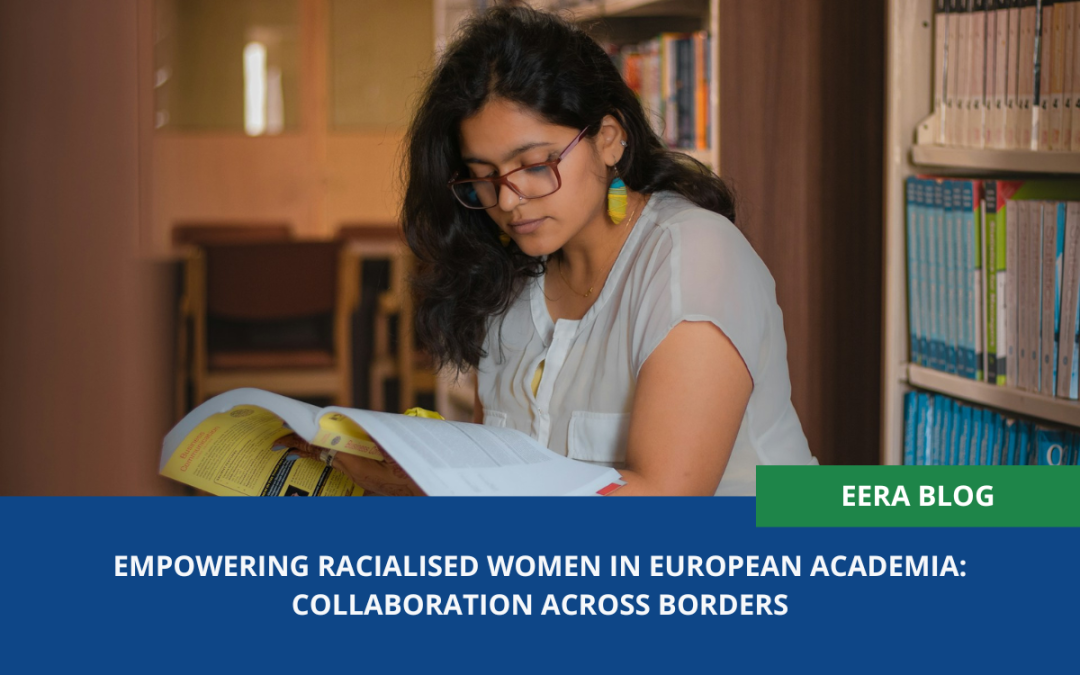
Foto de Shantanu Kumar en Unsplash
Across Europe, the persistent underrepresentation of racialised women in academia — understood as women positioned within racial categories through historical and social processes of racialisation that produce symbolic and material hierarchies shaping their experiences — reflects deep-seated structural inequalities rooted in colonial histories, racial hierarchies, and gendered exclusions. The project “Exploring Wellbeing and Progression Experiences among Racialised Women in Postgraduate Education” investigates how early-career researchers (ECRs) who identify as racialised women navigate these complexities within higher education institutions in England, France, Portugal, and Spain.
The project Exploring Wellbeing and Progression Experiences among Racialised Women in Postgraduate Education is supported by EERA Network 33: Gender and Education. It grew out of two related initiatives: the COST Action VOICES (CA20137, Making young researchers’ voices heard for gender equality), and the UCL-funded Global Engagement project examining the lived experiences of Black women in postgraduate education in England and France through an intersectional lens.
Building on these foundations, our project set out not only to analyse these racialised women’s experiences in academia, but also to build capacity among racialised women researchers by creating transnational spaces of exchange, reflection, and empowerment.
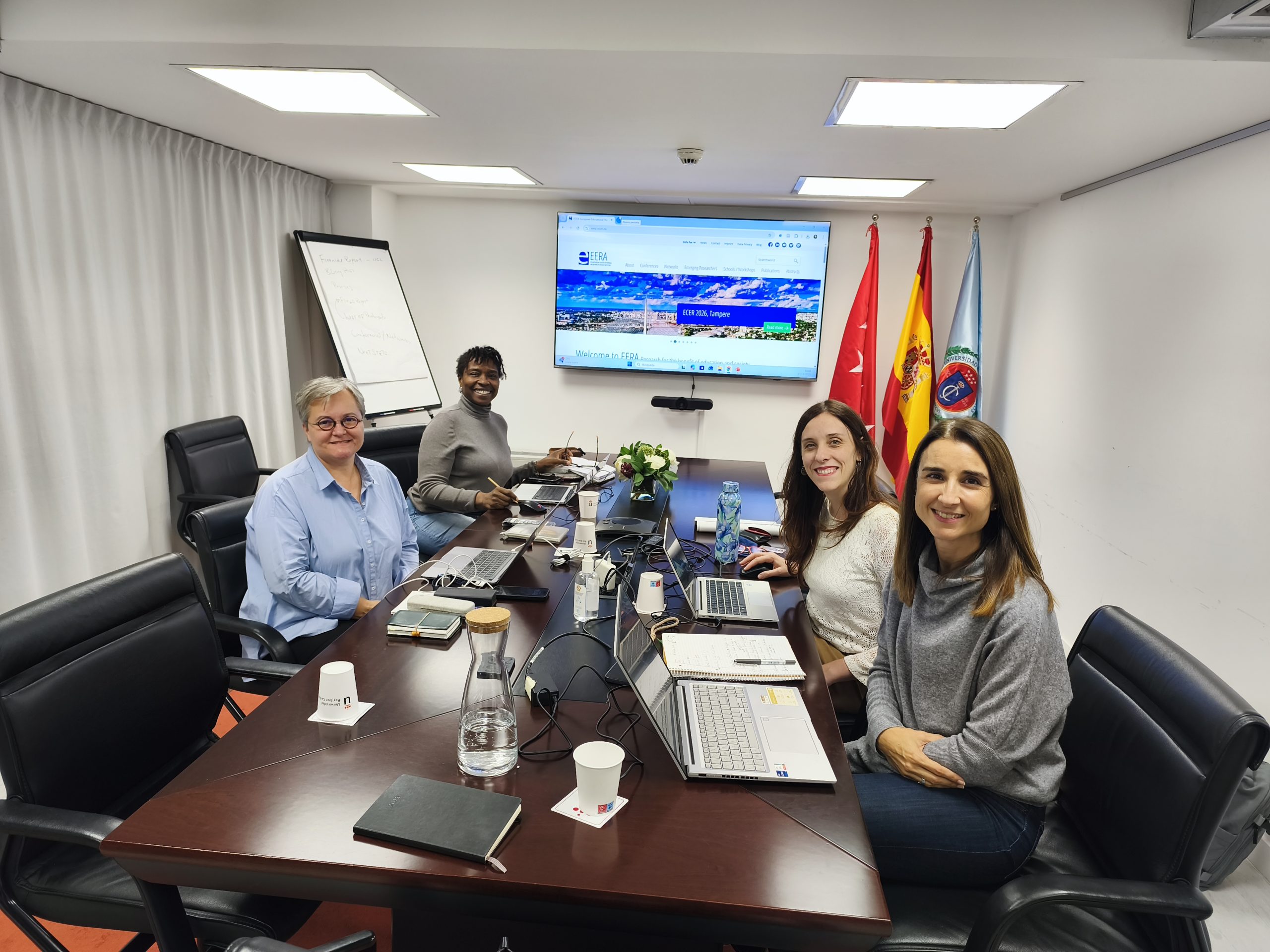
The project was carried out by a multidisciplinary and transnational research team, bringing together scholars with extensive expertise in gender, race, and higher education.
- Professor Victoria Showunmi of University College London, UK (Team Lead)
- Dr Anne-Sophie Godfroy of École Normale Supérieure – PSL, France
- Dr Edna Falorca da Costa of University of Minho, Portugal
- Dr Marian Blanco Ruiz of Rey Juan Carlos University, Spain.
Their collaboration exemplifies the project’s commitment to cross-border learning and to fostering inclusive research practices within European academia.
Politics, power, and post-colonial past
The project is situated within a critical political moment. Across Europe, right-wing populist movements continue to gain ground, often combining anti-gender rhetoric with nativist and xenophobic ideologies. Within this climate, racialised women scholars from former colonies face overlapping challenges – negotiating academic careers while contending with the residual power of colonial structures and the cultural expectations of “belonging” in European higher education.
“The transnational comparison across very different national contexts, more or less sensitive to reflexivity on racial inequalities, allows common patterns of exclusion and shared strategies of resistance to emerge”.
By drawing comparisons across four post-imperial national contexts, the study explores how histories of empire continue to shape institutional cultures. Taking inspiration from Fradera’s (2018) work on the ongoing relationship between former empires and colonies, the project examines how racialised women ECRs relate to colonial/decolonial culture and how they interpret their academic identities through it.
Rethinking identity – Intersectionality as a starting point
Rather than treating race as an afterthought to gender, the study asks: how is gender itself constructed through the lived experiences of racialised women? Intersectionality — understood as an analytic framework that elucidates how multiple dimensions of identity, including but not limited to gender, race, social class, sexual orientation, and disability, intersect and mutually constitute one another — serves as the project’s principal analytical lens, drawing upon Black feminist and postcolonial theoretical traditions.
This sentiment encapsulates the project’s central aim of linking personal experience with structural analysis.
The project’s theoretical foundation combines Crenshaw’s concept of intersectionality, hooks’ Black feminist critique of representation, and Mohanty’s decolonial analysis of feminism (2003), highlighting how race, gender, and history intersect in academic life. These ideas are placed in dialogue with European reflections on universalism and citizenship by Balibar (1997),Diagne (2013), and Fassa, Lepinard, and Roca Escoda (2016). This exchange exposes the gap between Europe’s universal ideals and institutional realities, where “sophisticated racism” (Showunmi & Tomlin, 2022) persists beneath claims of neutrality and meritocracy.
Voice as method – Listening, trust, and shared space
At the heart of the research were focus groups held in each country throughout 2025, bringing together 24 postgraduate participants. These sessions were designed to create safe, reflective spaces where participants could articulate their experiences and develop new ways of discussing race and discrimination. A carousel approach was adopted, where researchers travelled between the four countries and observed how national contexts shaped both academic life and the language of inclusion.
The focus groups encouraged participants to move beyond isolation and build a shared sense of solidarity. Common themes emerged: the burden of “representing diversity,” the invisibility of racialised women in leadership, and the emotional labour of navigating majority-white academic environments. Yet there was also a strong thread of resilience – participants described finding strength through community, mentorship, and shared purpose.
Collaboration as capacity building
One of the project’s most significant achievements lies in its collaborative methodology. The transnational partnership between universities in England, France, Portugal, and Spain created a dynamic platform for knowledge exchange. Each team brought distinct disciplinary perspectives and cultural insights, ensuring that the research was both locally grounded and globally relevant.
This collaborative design became a form of capacity building in itself, as the discussion sessions brought together racialised ECR women who shared a common feeling and space, highlighting their expertise and visibility within their institutions. The script had an iterative design, meaning that interesting findings from one discussion group were implemented in the next, thus developing a model that illustrates how inclusive research practices can foster personal development while promoting collective understanding.
By empowering racialised women ECRs and their allies, the project helped participants develop new tools for addressing racial and gender-based inequalities. These included:
- Strategies for self-advocacy
- Ways of confronting microaggressions
- Approaches to mentoring that centre on empathy and inclusion.
Participants reported that these skills translated into stronger engagement in their academic and professional environments.
Strengthening the European research community
The project’s outcomes extend beyond its participants. By incorporating the lived experiences of racialised ECRs, it enriches the European research landscape with perspectives that have often been marginalised. It challenges established narratives about who “belongs” in academia and what counts as legitimate knowledge.
Moreover, the collaboration strengthens EERA’s Gender Network by expanding its focus to include racial and postcolonial dimensions of gender inequality. Through links with initiatives such as COST Action CA20137 VOICES, the project connects individual empowerment with institutional change. This alignment fosters greater coherence across European research networks committed to diversity and inclusion.
The project also offers valuable insights for policymakers and institutions. By understanding how exclusion operates differently across contexts, universities can design more effective equity measures—ensuring that diversity initiatives move beyond symbolic gestures to produce tangible outcomes.
From research to reflection
This project demonstrates how research can serve as both analysis and intervention. The collaborative process not only generated empirical findings but also built networks of trust, understanding, and shared purpose among scholars across Europe. In doing so, it illustrates how capacity building can begin with listening: by valuing the lived experiences of those at the margins, research becomes a means of collective empowerment.
The findings will continue to inform ongoing dialogue within EERA’s Gender Network and beyond. Plans are underway to develop future projects that build on this foundation, fostering intersectional and transnational approaches to inclusion in European academia.
Ultimately, this study reminds us that collaboration across borders –and across difference – is not just a research strategy, but a necessary step towards transforming academia itself.
Key Messages
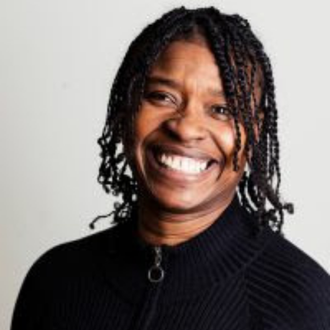
Prof. Victoria Showunmi
Institute of Education, University College London, UK
Prof. Victoria Showunmi is Professor of Interdisciplinary Studies in Gender, Race and Identity at the Institute of Education (IOE), University College London (UCL). Her interests are gender, identity, and race through the lens of intersectionality, focusing on leadership and the lived experience of Black women and girls.
She develops fresh conceptual frameworks focusing on equity and social justice, especially the interplay between people and the sophistication of behaviours which lead to disengagement with the promotion of equality. Her work shows how culture and cultural background have the potential to disrupt power structures and lead to transformational change. She has an international profile based on the dissemination of her research through publication and teaching and was the recipient of BERA’s inaugural Academic Citizen of the Year award in 2023. This new award was created to honour a member of the wider academic community who has gone above and beyond in supporting colleagues and contributing to the wider discipline.
Prof. Showunmi is a member of the Gender and Education Executive, Past Chair of the British Educational Leadership Management and Administration Society, Chair of the International Studies Special Interest Group (SIG) of the American Educational Research Association and co-convenor of the Gender Network of the European Educational Research Association.
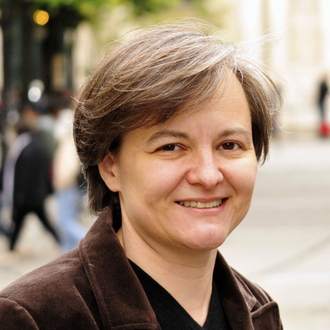
Dr. Anne-Sophie Godfroy
University of Paris-Est Créteil, France
Anne-Sophie Godfroy is an Associate Professor of Philosophy at the University of Paris-Est Créteil in France. Her research interests include knowledge production and circulation, the role of science in society, responsible research and innovation, the relationship between gender and science, international comparisons, and the epistemology and methodology of multidisciplinary contexts.
Over the past decade, she has participated in several European-funded research projects on science and society, including the HORIZON structural change projects GEnderTime and ACT.
From 2021 to 2025, she chaired the COST Action VOICES, ‘Making Young Researchers’ Voices Heard for Gender Equality’. She is currently chairing the COST Innovator Grant Next Gender, which aims to build the capacity of the next generation of researchers and evaluators to engage in inclusive sex and gender research.
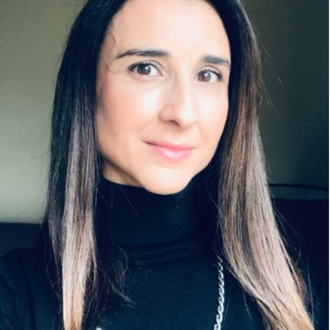
Dr. Edna Costa
University of Minho, Portugal
Orcid: https://orcid.org/0000-0003-2341-6482
Linkedin: www.linkedin.com/in/edna-falorca-da-costa-b5457630

Dr. Marian Blanco-Ruiz
Rey Juan Carlos University, Spain
Orcid: https://orcid.org/0000-0002-7920-5978
Linkedin: https://www.linkedin.com/in/marianblancoruiz/
Other blog posts on similar topics:
Balibar, É. (1997). Racisme et universalisme. Raison Présente, 122, 63–77. https://www.persee.fr/doc/raipr_0033-9075_1997_num_122_1_3401
Crenshaw, K. (1991). Mapping the Margins: Intersectionality, Identity Politics, and Violence against Women of Color. Stanford Law Review, 43(6), 1241-1299. https://doi.org/10.2307/1229039
Diagne, S. B. (2013). On the Postcolonial and the Universal? Rue Descartes, 78(2), 7–18. https://www.researchgate.net/publication/275877851_On_the_Postcolonial_and_the_Universal
Fassa, F., Lepinard, E., & Roca Escoda, M. (2016). L’intersectionnalité: enjeux théoriques et politiques. La Dispute. https://www.researchgate.net/publication/311577224_Intersectionnalite_enjeux_theoriques_et_politiques
Fradera, J. (2018). The Imperial Nation. Princeton University Press. https://press.princeton.edu/books/hardcover/9780691167459/the-imperial-nation?srsltid=AfmBOopzeD1qDM_CvZu4YYz6yoii8HUGk1d4scxfn559XtdjxgBndK0K
hooks, b. (1981). Ain’t I a Woman: Black Women and Feminism. Cambridge, MA: South End Press. https://doi.org/10.4324/9781315743264
Mohanty, C. T. (2003). Feminism without Borders: Decolonizing Theory, Practicing Solidarity. Duke University Press. https://doi.org/10.2307/j.ctv11smp7t
Showunmi, V. & Tomlin, C. (2022). Understanding and Managing Sophisticated and Everyday Racism. Rowman & Littlefield.https://www.researchgate.net/publication/382720644_Understanding_and_Managing_Sophisticated_and_Everyday_Racism_Implications_for_Education_and_Work