Are we pretend thinking – Why scholarly communities still matter in an AI world

Are we pretend thinking – Why scholarly communities still matter in an AI world

During a coffee break at a recent academic gathering, a colleague mentioned they needed to ‘”double-check a theory with Sara”. Only later did I realize that “Sara” was not a co-author, but a customized AI bot.

Cristina

Is the real AI revolution happening not only in our labs – but also in our minds? Beyond functioning as a tool, artificial intelligence is becoming an active participant in how we think. This fluid reality directs to something deeper than the usual concerns about AI in academia. The central question is no longer whether AI helps or harms research. The more difficult question is what happens to researchers when we begin to think with AI systems on a daily basis.

Insights from the EERA NW01 Spring School
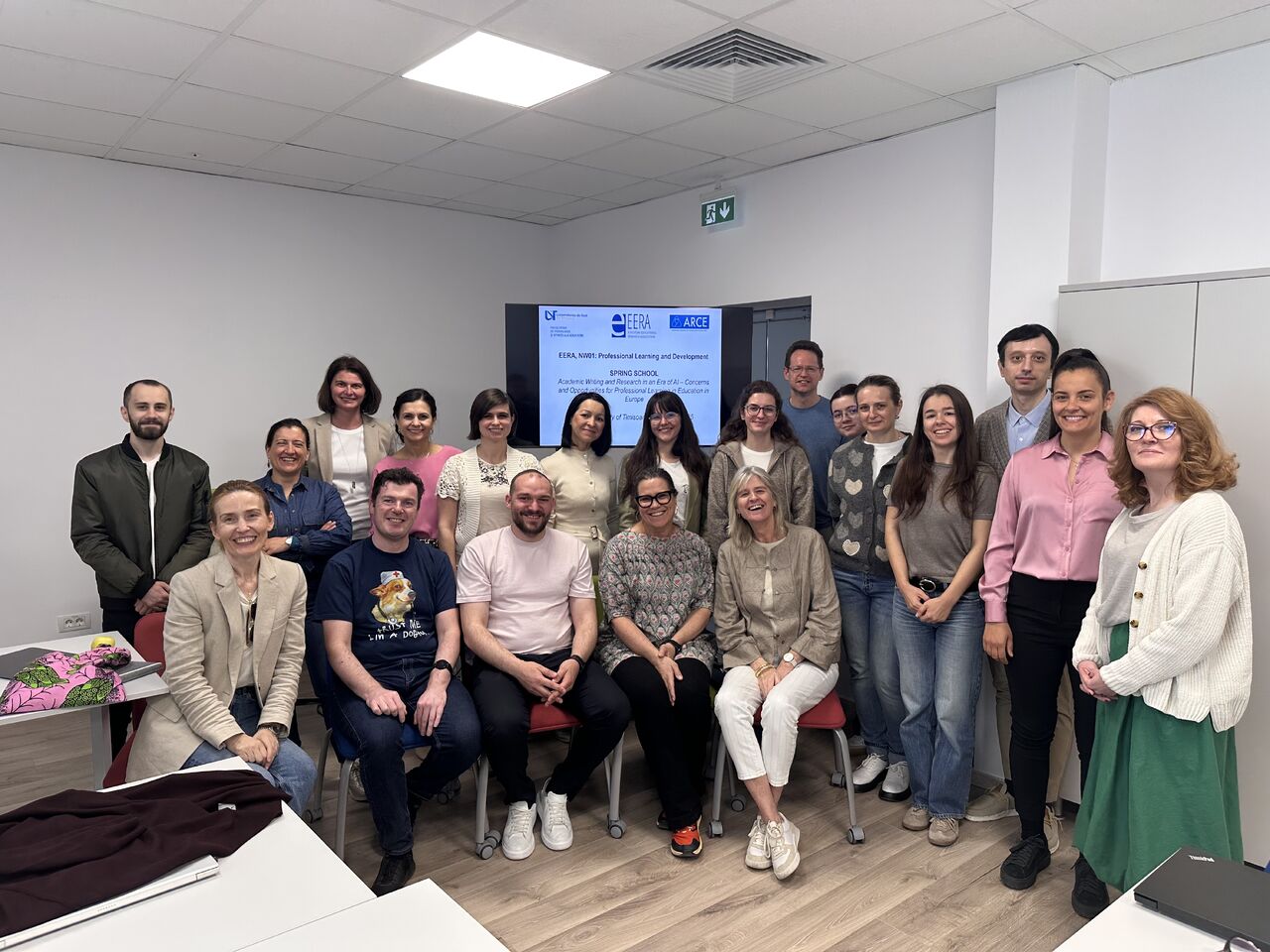
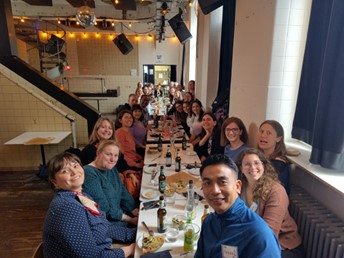
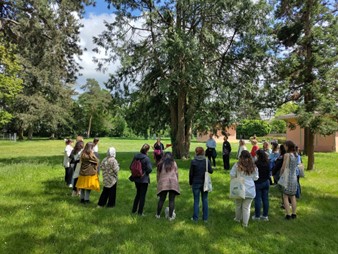
The attendees of the EERA Spring School

This question became increasingly present during the EERA NW01 Spring School at West Universty of Timișoara, where discussions moved past technical debates about academic writing and turned instead to researcher identity, responsibility, and professional learning. The event was very productive, bringing together emerging scholars from diverse countries and contexts, at different stages of their academic journeys. The collaborative and collegial atmosphere that emerged allowed for the kind of honest, plural dialogue that questions about AI in research genuinely demand.

A recurring tension surfaced across many of the conversations:  AI offers real practical advantages, as it accelerates literature searches, organises information, supports multilingual writing, explains complex concepts, helps structure arguments, and assists with coding and data analysis. These tools can feel close to indispensable and their use in academia is, of course, not new especially for researchers working under constant pressure to publish, teach, apply for funding, and manage international demands.

Yet, a quieter transformation lies beneath this efficiency. The concern is not so much that AI may produce hallucinated references or inaccurate interpretations, also because researchers are already learning to carefully verify outputs.

The deeper challenge is subtler – AI changes the conditions under which thinking itself takes place.

Shared authorship – or pretend thinking?

In this context, having three days for sustained discussion, reflection, and hands-on engagement-including working with AI tools and drafting AI statements proved invaluable for helping emerging scholars develop the confidence to navigate what responsible academic practice now demands.

While the researcher remains responsible for the final work, parts of the thinking process become increasingly externalised and negotiated through interactions with AI systems. In practice, authorship is no longer only about who writes the text, it is about who validates, questions, verifies, and assumes responsibility for the knowledge being produced. Authorship is now, in some sense, shared with a digital “assistant”, one that some already address by a human name, few want to openly acknowledge, and many feel they cannot survive without.

When you hear colleagues say, “I’ll check with Sara,” consider that this Sara might be their AI confidant.

This transformation becomes particularly visible in moments of overreliance. When the difficult work of methodological and conceptual reasoning is handed over to AI, learning risks becoming more surface than substance – what me might call “pretend thinking”.

As discussed during the Spring School, one of the significant risks for early-career researchers is in fact surrendering too much intellectual agency to technology. The apparent fluency of AI-generated outputs can create an illusion of competence before real understanding has fully developed. In this sense, AI is not replacing researchers; it is reshaping what being a researcher means.

So how do we, as emerging educational researchers, navigate our careers in this new landscape?

Epistemic literacy: Questioning what AI leaves out

The challenge, then, is not simply technical literacy. AI literacy in academia must involve epistemic literacy: the capacity to question outputs, recognise limitations, understand how knowledge is being mediated, and keep attentive to questions of power, authorship, and intellectual responsibility. This is especially relevant in educational research and multilingual contexts.

AI tools are predominantly trained in English and shaped by dominant epistemological frameworks, raising uncomfortable questions about voice, linguistic diversity, and the future of knowledge production. When we place uncritical trust in systems shaped by dominant cultural datasets, we may be marginalising local perspectives, minoritised languages, and alternative epistemologies. This may be revealing how fragile and partial our thinking remains.

And this is where Sara becomes more than a curiosity. If we consult her daily, it is worth asking:

  • Where does Sara’s knowledge come from?
  • Whose frameworks shaped her answers?
  • What did she leave out and what did we stop questioning, because she replied so quickly and so confidently?

Recognising that Sara might be biased is not a reason to stop using her. It is, however, a reason to remain alert. Researchers who can articulate both why they rely on AI and why that reliance troubles them are not researchers without a position. In fact, they are researchers whose position is still being built, carefully and with awareness of its own limits. Epistemic ambivalence, in this sense, is not paralysis – it is a sign that reflection is genuinely underway.

Why scholarly communities matter more than ever
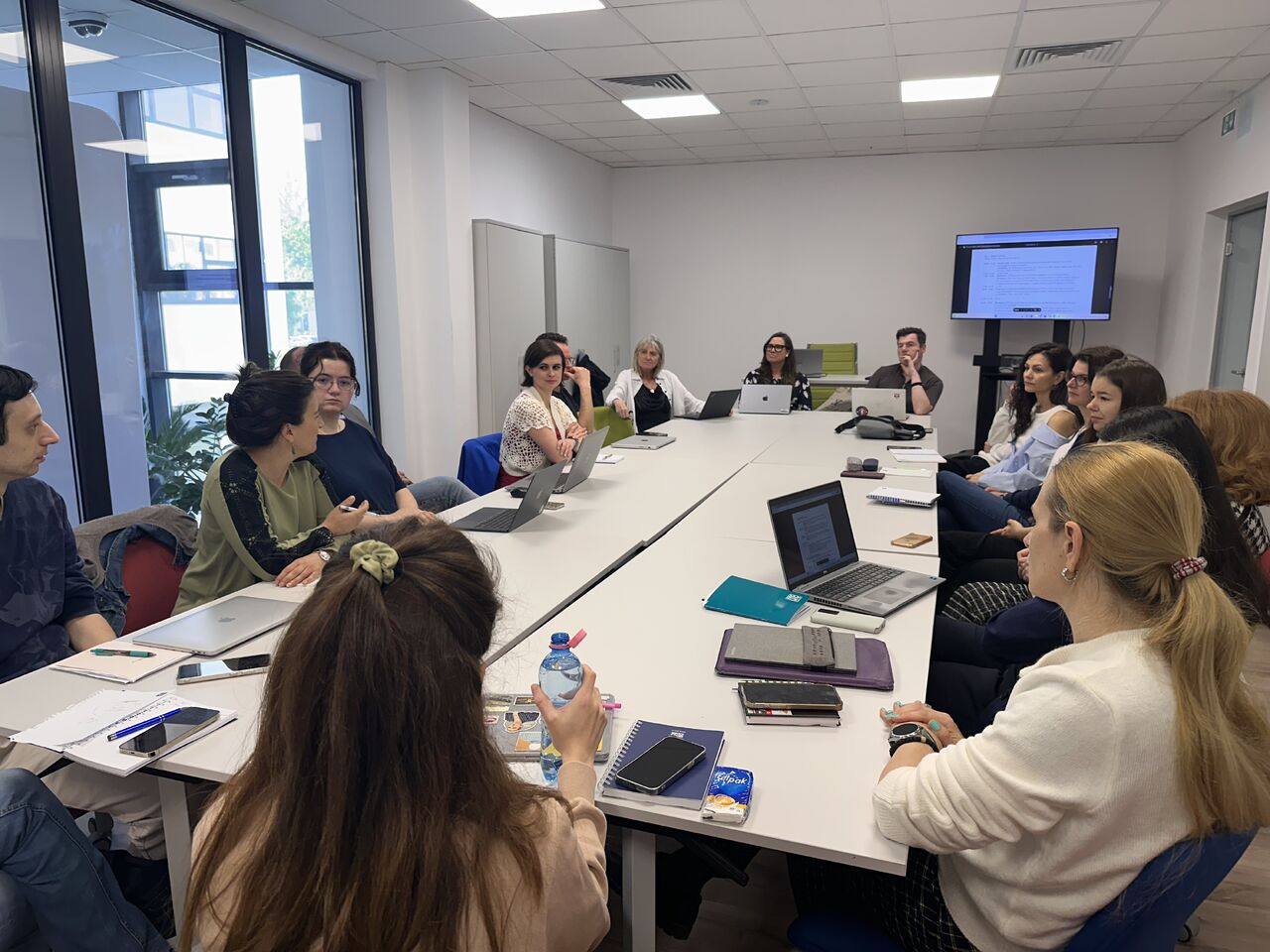
Having had the experience of attending the Spring School, I appreciate the importance of scholarly communities so much more, for helping us navigate the future of academia, work, and learning with integrity and confidence.
Emily

There is also a more insidious risk: AI may encourage a false sense of self-sufficiency, suggesting that we no longer need to seek each other out or work in genuine proximity.

While it is often faster to get an answer through AI, efficiency does not equal long-term quality. Perhaps this is the real challenge now facing researchers – not learning how to write with AI but learning how to remain intellectually present while doing so. This is precisely why preserving human engagement through supportive scholarly communities remains essential.

Because some questions, the ones that matter most, still need to be checked with a person from your scholarly community, not a ‘Sara’.

Key Messages

  • One of the significant risks for early-career researchers is surrendering too much intellectual agency to technology.
  • Epistemic literacy is mandatory in an AI word: the capacity to question outputs, recognise limitations, understand knowledge mediation, and even identify power imbalance and authorship questions.
  • Intellectual responsibility is crucial to support scholarly integrity in the world of AI.
  • Preserving human engagement through supportive scholarly communities remains essential in an AI world.

Emily Dobrich

Emily Dobrich

Western University, Canada
Emily Dobrich is a Postdoctoral Associate at Western University, where she is involved in health, education and community development research with refugee and immigrant populations. She holds a PhD in Adult Education and Community Development from the Ontario Institute for Studies in Education at the University of Toronto. Her doctoral thesis explored how embodied learning approaches can be implemented to create more equitable, generative and restorative adult immigrant learning and community building experiences through a relational understanding and connection to place. Emily’s current research and teaching interests include adult education and lifelong learning; embodied and relational teaching and learning approaches; comparative, international and development education.


Cristina Domingues

Cristina Domingues

University of Aveiro, Portugal

Cristina Domingues, M.A., is a doctoral researcher in Education at the University of Aveiro and an FCT fellow at the Research Centre on Didactics and Technology in the Education of Trainers (CIDTFF), where she investigates linguistic empowerment and the co-construction of knowledge with adult migrants. Her participatory research, based on Future Workshops, is carried out in partnership with the Municipality of Fundão, a UNESCO Learning City. She is a language teacher and certified teacher trainer with 27 years of experience, and her research interests include plurilingual education, participatory methodologies, intercultural education and critical AI literacy.

ORCID: https://orcid.org/0000-0002-9076-8093
LinkedIn: www.linkedin.com/in/cibdomingues
Other blog posts on similar topics:

A collective becoming of emerging environmental and sustainability education researchers

A collective becoming of emerging environmental and sustainability education researchers

 It is not surprising that a group of individuals interested in Environmental and Sustainability Education (ESE) would share values and common interests. Yet, it would perhaps be surprising if a meeting of such individuals resulted in the creation of an almost ‘ready-made’ community. And that this community – of people who work in very different fields, with diverse backgrounds and life experiences – would willingly forgo the competitive nature of performative academic events, but rather adopt an openness that disarmed from the outset.
“One of the most important experiences on the PhD journey.” 

This may seem like a hyperbolic description of the four days of Transformative Learning in Sustainability: a pluriversal approach Seasonal School in Karlsruhe, funded by EERA’s NW 30 and Karlsruhe Institute of Technology (KIT), but the event enabled interactions that have influenced and informed our lives as Early Career Researchers (ECRs).

To express and perhaps explain the experience, we offer five aspects of researcher identity emergent at the Seasonal School: place and becoming, embodied, connected, brave, and hopeful. We want to share our collective experience to show the importance of participating in in-person Seasonal Schools as ECRs to network, find/create community and engage in exchange through the lens of transformative learning.

We have written collectively and used ‘we’ in most instances. Our individual voices have also been included as ‘I’. The use of ‘we’ refers to the six co-authors – we appreciate the experiences of other participants and mentors may differ.

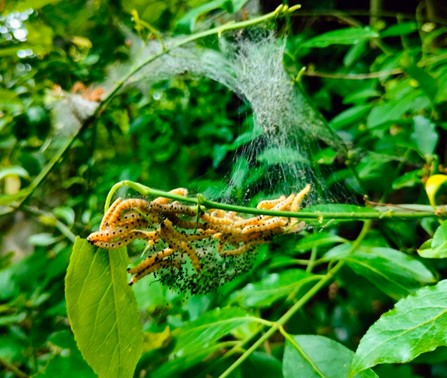
Caterpillars on a verdant bush

Image Description: A picture of something symbolising our research from a walk in the Schlossgarten as we got to know the surroundings. This one symbolises emotions one may feel when encountering something new, such as disgust, fear, hope, and joy. Credit: Emma Heikkilä. 

Place and becoming

“In less than a week, I felt more at home in Karlsruhe than I do in the town where I was born and raised.”

The fan-shaped city of Karlsruhe was central to our experience. With the embodied experience of journeying to Germany’s early summer, one could not but smile. The trees were already green, people were spending time in the park, and one could easily sit in a Biergarten. There was something homely about Karlsruhe, a peaceful atmosphere – no wonder the name Karlsruhe translates from German to “Karl’s peace”. 

Most of us were surprised by how much time we spent outside the formal settings of KIT, having experienced conferences where connection with the surroundings is optional. The first activity was to silently walk in the Schlossgarten. Later, we felt warmly welcomed at Kulturküche – an experimental public space for art and culture- for our first dinner. Another evening, we were led on a beautifully curated ‘sustainable city walking tour’, where we encountered a permanent high-top circus tent, community gardens, and eastern Karlsruhe, which turned our attention to the residents’ lives.

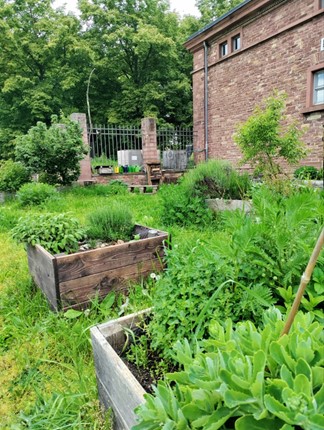
Raised planting beds in a communal garden filled with vegetables and herbs
Image Description: Karlsruhe Community Gardens, May 2024. Credit: Eleftheria Iakovidou

Embodied

“I cannot describe the affective relation to Karlsruhe in other words than “I fell in love with Karlsruhe.”

Often, we find ourselves as minds in front of a computer, but in Karlsruhe, we were learning, participating, and researching in an embodied way. The long, immersive days surrounded us with like-minded individuals as we collectively sought deeper understandings of ESE research and practice. 

Beginning with a programme of workshops and talks, including a world café event, we had opportunities to connect, deepened by sharing our vegetarian meals. The programme kept us moving; we took our whole selves outside, made maps, walked, chatted, and wrote. We had moved into a liminal space, set apart from our usual routine and places and were invited into this new space, to think with new objects, people, and ideas.

More uncomfortable learning spaces were those that challenged us, invited us to consider other methodological perspectives, and learn from contextual circumstances in different countries. They also showed us the value of coming together as a diverse group of ECRs. Through conversations with others, with clay, and with ourselves in our diaries, we could sit with feelings of discomfort – physical, emotional and mental –  that were raised during the Seasonal School. Slowly, the discomfort faded.

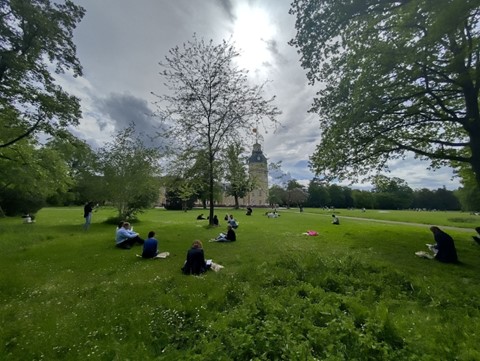
A group of people sit in a park, surrounded by trees

Image Description: Participants writing in their diaries while sitting in Schlossgarten, close to KIT. Credit: Julia Skilton.

Connected

“I will remember Karlsruhe as a defining aspect of my PhD – deepening my thinking, feeling and connections.”

During those four days, we experienced a dual connection between ourselves and with the environment. What started with an outdoor getting-to-know-you activity slowly developed into a sense of community. The variety of structured and unstructured activities created spaces for us to connect over shared use of theoretical frameworks, links between our projects, mutual personal interests and shared ideas. Experiential learning activities in diverse settings, such as the university park, allowed us to connect with the environment. In conversations with clay, we realised the ways we affected the clay and how it affected us; learning to listen to its voice, experiment, and explore creative avenues.

This allowed us to connect with the more-than-human world through embodied experiences, and engage in collective discussions and collaboration. The notion of a network driven by more than impact and outcomes was important to our discussions throughout the four days and in our plans to collaborate in the future. Karlsruhe has been a significant part of our journey of connecting with others and the environment, and ‘becoming’ sustainable education researchers.

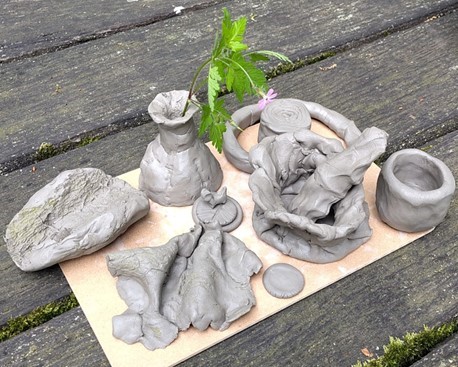
Image Description: Selected clay artefacts from our “Conversations with Clay” Session. Credit: Sarah Strachan.

Brave

“Sustainability isn’t all beauty and loveliness – it means facing up to challenging uncomfortable situations and working forward with it.” 

As ECRs, there is pressure to present our work. Often before we are comfortable with it ourselves, we share our work with others who usually want to critique (or criticise) our ideas and methods. Despite our shared motivation to build research careers, during the Seasonal School, there was a lack of competition that is often present at similar events. In presenting our research through a poster and small group discussion, we shared concerns and ideas about things that excited us, which we felt would inform each other’s work.

Through activities where no one was an expert, we gained confidence in the support available. In accepting our vulnerability, we were made brave. Our differences enabled us to stand apart together and share without fear. Together, we embraced being in a liminal space on our shared PhD journeys, a place where we set aside our egos without even realising it.

Image Description: Statue of ‘Der Denker’ made by Karl-Heinz Krause in Schlossgarten. Credit: Emma Heikkilä.

Hopeful

What initially connected us is our ESE research, which is entangled with the horrors of climate change, environmental disasters, and gross exploitation. Simultaneously, we are learning to navigate complex and unsustainable structures of academia (continuous competition for resources, high pressure on publishing, and efficiency requirements). Finding ourselves in the midst of working with emotionally challenging topics, we may feel alone and exhausted under the burden of the “publish or perish” mentality. We shared our thoughts on this in a dedicated fishbowl discussion.

We addressed hope and hopelessness, and many agreed that we cannot accept hopelessness. However, it often seems as if the work is left to the individual to not give up. Where do we find hope? Can we research if we are hopeless? Maybe hope should not be seen as a stable, binary matter. Hopelessness may also elucidate valuable insights of what to prioritise, and how to (re)gain hope.

Hope can be found in connections to others – finding a sense of belonging, being with each other and reaching the person behind the professional. Sharing our messy ideas, half-baked thoughts, and insecurities requires courage and vulnerability, but in the community formed, this became possible. 

We met like-minded colleagues, and those with different ideas from our own, which deepened our perspectives. We were able to think and be active in embodied, emotional and spiritual ways. This reminds us that we are vulnerable embodied beings, and helps us to embrace that. We realised that we are already part of the ESER community of practice, and that this opens up opportunities for collaboration on future ESE research and beyond.

A group of people sitting at a restaurant table

Image Description: Group of participants sitting at a long table having dinner in a former slaughterhouse now restaurant ‘Fettschmelze’. Credit: Olivia Wohlfart.

Concluding thoughts

To build on this young ESE PhD network formed in four days, we created an online group to keep in touch. The idea of writing and sharing our collective experiences emerged. Putting our thoughts into words – together – has not only helped make our reflections more concrete but has also been a way for us to nurture the connections formed in Karlsruhe. Education is so much more than measurable, tangible ‘outputs’. We didn’t leave the Seasonal School having ticked the boxes of certain learning outcomes. Rather, the process became part of us, and we bring it with us on our evolving paths. We reflect whether the experience will continue to influence us as researchers, educators, and citizens, and if so – how?

The Seasonal School shaped our identity as researchers through place-based, embodied and collective experiences. Being part of a supportive ECR community helped us realise that through collaboration, we can better negotiate the unknown future, whether this relates to our PhD journeys, or sustainability issues generally. 

We hope that our reflections inspire future ECRs to experience Seasonal Schools and highlight the enormous value in organising in-person events which bring ECRs from diverse countries, disciplines and backgrounds together.

Key Messages

  • Sharing our ECR experience, we highlight the value of participating in in-person opportunities to find community and engage in exchange.
  • Embodied experiences relating with people and place are fundamental to Environmental and Sustainability Education.
  • Our reflections exemplify the possibility of transformative learning experiences in academia.
  • Environmental and Sustainability Education is more than measurable outcomes.
Authors

Authors

Penelope Williams, University of Bristol, UK https://orcid.org/0009-0002-0511-400X 

Julia Römer, Glasgow School of Art, UK https://orcid.org/0009-0000-5986-8478 

Julia Skilton, University of Edinburgh, UK https://orcid.org/0009-0002-0292-244X 

Caroline Kocel, Anglia Ruskin University, UK https://orcid.org/0009-0004-0740-7783 

Emma Heikkilä, University of Helsinki, Finland https://orcid.org/0000-0002-4422-575X 

Eleftheria Iakovidou, University of Gloucestershire, UK https://orcid.org/0009-0006-1699-6123

Other blog posts on similar topics: