The well of resilience is running dry, but universities keep drawing from it

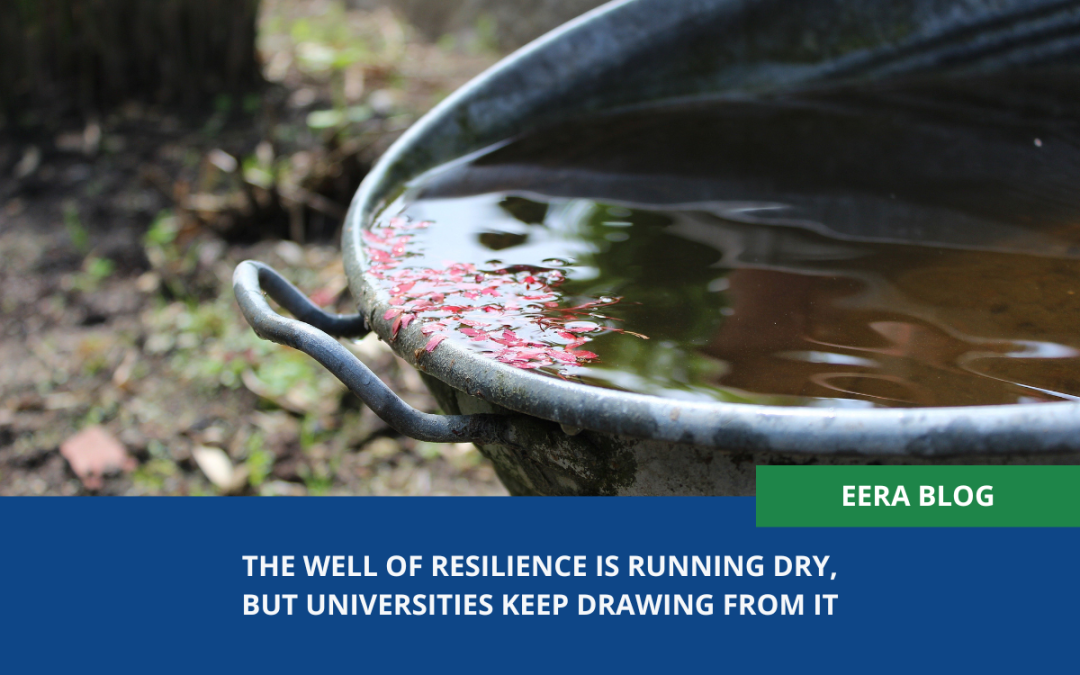
The well of resilience is running dry, but universities keep drawing from it

Resilience is usually treated as a good thing. It is the quality we admire in people who keep going when work becomes difficult. The people who adapt under pressure, put their heads down and carry on when demands keep growing. In universities, as in many other professions and sectors, resilience is often treated as part of being professional.

What doesn’t kill you makes you stronger

However, there is a point at which resilience stops being a personal strength and becomes something the job quietly depends on. My recent research with teacher educators in Ireland and the UK suggests that this is increasingly the case in higher education. Teacher educators are not simply academics who ‘just’ teach and research. They also mentor student teachers, support them during school placement, respond to pastoral issues, and manage the effects of repeated policy, accreditation, and inspection demands (for example, Ofsted inspections in England). Much of this work is time-consuming, emotionally demanding, and only partly visible in the ways universities usually account for academic labour.

Keep calm and carry on

One participant in my study captured the culture in a single phrase: “Just plough on and pretend it’s not happening.” The phrase points to something beyond individual frustration; in work built around care and public service, people often keep things going by absorbing pressures that should not really be carried by individuals alone. They answer emails late into the evening, take on extra work, manage other people’s distress, and fill gaps when formal support is missing. Over time, what is praised as resilience can become one of the ways chronic strain is normalised.

Participants in my study described their academic roles as feeling like “three separate jobs” at once:

“No matter how hard or how efficiently we work, there is always a mountain of endless tasks to be completed.”

Another described how work had spread into every corner of their life:

“I never have true rest periods, working on annual leave, weekends and evenings. Never being ‘finished’, no matter how many hours or how little rest time, you are never on top of everything.”

None of this is to say that resilience has no value. It clearly does; it can help people deal with uncertainty and see them through periods of pressure. But it has limits. Namely, it cannot make an excessive workload reasonable, nor can it make an unsupported role more sustainable.

Soldier On

Yet public discussion of workplace pressure often slips too quickly into the language of coping. Are you setting boundaries? How are you managing your stress? Are you looking after yourself properly? Are you being adaptable enough? Have you attended the wellbeing workshop on offer? The problem is that those questions often obscure a harder one: why is so much of this strain being dealt with at the level of the individual in the first place?

Resilience as scar tissue

This is where Suslovic and Lett’s critique of resilience is useful. They argue that resilience is too often treated as “an individual-level solution to a structural toxin”. More strikingly, they suggest that resilience may be better understood as “scar tissue”. It is a powerful metaphor because it shifts resilience away from the reassuring language of inner strength and towards something else: the mark left by repeated injury.

The idea of scar tissue helps make sense of what many academics in my study described. Their accounts were not simply about the ordinary demands of their work. They were about prolonged accommodation to conditions that had become excessive and normalised. They repeatedly pointed to pressures that were structural rather than personal: competing demands across teaching, research, service, mentoring and placement work; administrative burdens linked to accountability systems; and a sense that the most demanding parts of their role were poorly understood, or indeed invisible.

As one participant put it:

“All of this work is pretty much irrelevant (under a performance metrics lens), so while I’m trusted to do my job, there isn’t really anyone who understands the stress involved in these elements.”

Moving beyond ‘Chin Up’

In recent years, work-related stress has increasingly been recognised not just as a private issue but also as an organisational one. For example, in December 2025, Britain’s Health and Safety Executive (HSE) found that the University of Birmingham did not have appropriate arrangements in place to manage work-related stress and could not demonstrate that it was managing the risks associated with excessive workload. The significance of that case lies in the framing. The question was not whether staff were coping well enough. It was whether the institution was identifying and effectively managing foreseeable risk, as is an employer’s legal responsibility.

There is a similar legal imperative in Ireland. The Health and Safety Authority (HSA) treats work-related stress as a workplace hazard to be assessed and prevented by employers. That matters because it shifts the focus from systems of work that generate stress to whether workers can keep adapting indefinitely.

This is significant since wellbeing language now circulates widely across universities in Ireland and the UK. That veneer of well-being can sit easily alongside overload if the organisation of work itself does not change. Workshops and wellbeing campaigns may have some value, but if academic staff do not have the time or energy to benefit from them, they can feel more like another way of returning responsibility to the individual. The real question, then, is not how much more resilience university staff can produce, but why universities have built conditions that depend so heavily on it.

Key Messages

Resilience needs to be viewed as a structural requirement, not a personal strength. Universities increasingly depend on academics’ abilitiy to absorb excessive workloads rather than addressing unsustainable working conditions

Teacher educators face invisible, emotionally demanding labour. Beyond teaching and research, they mentor students, manage pastoral care, and navigate constant policy changes – work that is time-consuming yet largely unrecognised.

Resilience may be better understood as ‘scar tissue’. Rather than inner strength, resilience can represent the accumulated damage from repeated exposure to structural workplace toxins.

Wellbeing initiatives can obscure systemic problems. Workshops and self-care campaigns place the responsibility on the individual, while leaving the organisation of work unchanged.
Dr Sabrina Fitzsimons

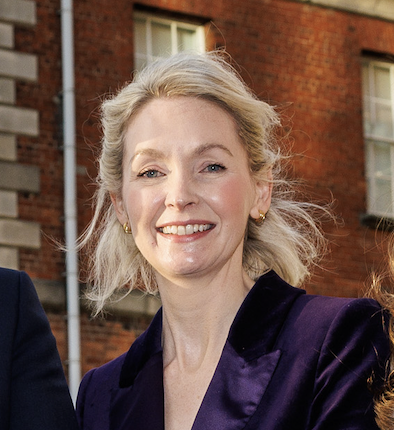
Dr Sabrina Fitzsimons

DCU CREATE—The Centre for Collaborative Research Across Teacher Education at Dublin City University, Ireland.

Sabrina Fitzsimons is a lecturer in Initial Teacher Education and Co-Director of DCU CREATE—The Centre for Collaborative Research Across Teacher Education at Dublin City University, Ireland. Her research focuses on the occupational well-being and flourishing of educators, including higher education-based teacher educators, academics, school-based teachers, student teachers and other educators. She is a graduate member of the Psychological Society of Ireland and a Senior Fellow of the Advance HE.

Other blog posts on similar topics:

References and Further Reading

Birmingham UCU. (2025, December 13). HSE confirms material breaches at the University of Birmingham following union safety concerns. https://birminghamucu.org/2025/12/13/hse-confirms-material-breaches-at-university-of-birmingham-following-union-safety-concerns/

British Safety Council. (n.d.). The Health and Safety at Work Act explained. Retrieved April 29, 2026, from https://www.britsafe.org/training-and-learning/informational-resources/the-health-and-safety-at-work-act-explained

 Fitzsimons, S., & Smith, D. S. (2025). “Just plough on and pretend it’s not happening”: Understanding burnout in teacher educators in Ireland and the United Kingdom. International Journal of Educational Research Open9, 100491. https://doi.org/10.1016/j.ijedro.2025.100491

Fitzsimons, S., Boag, L. & Smith, D.S. (2025) Understanding Teacher Educators’ Quality of Life: Insights from the PERMA Model. Applied Research Quality Lifehttps://doi.org/10.1007/s11482-025-10435-z

Fitzsimons, S., & Smith, D. S. (2025). ‘Don’t do anything special for us coming’: the mental health impact of Ofsted inspections on teacher educators in England. Cambridge Journal of Education, 1–19. https://doi.org/10.1080/0305764X.2025.2451280

Furlong, C., Fitzsimons, S., & O’Farrell, P. (2026). Protective factors for teacher wellbeing in Ireland through the PERMA lens. Pastoral Care in Education, 1–18. https://doi.org/10.1080/02643944.2026.2646149

Health and Safety Authority. (n.d.). Safety, Health and Welfare at Work Act 2005. Retrieved April 29, 2026, from h https://www.hsa.ie/eng/topics/managing_health_and_safety/safety-_health_and_welfare_at_work_act_2005/

 Health and Safety Authority. (n.d.). Causes of work-related stress. Retrieved April 29, 2026, from https://www.hsa.ie/eng/workplace_health/workplace_stress/workplace-stress-overview/causes-of-work-related-stress/ 

Suslovic, B., & Lett, E. (2024). Resilience is an Adverse Event: A Critical Discussion of Resilience Theory in Health Services Research and Public Health. Community health equity research & policy44(3), 339–343. https://doi.org/10.1177/2752535X231159721 

School Uniform Policy in Scottish schools: Control and Consent

School Uniform Policy in Scottish schools: Control and Consent

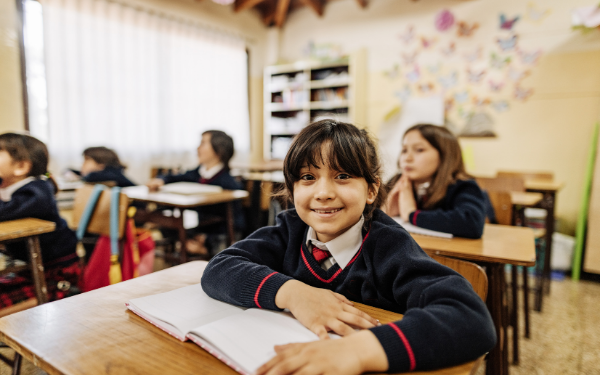
A topic that is of continued interest to educational researchers – but also to teachers, pupils, and their parents – is school uniforms. As you may know, there is a marked difference between what pupils wear in school in the UK (England, Scotland, Wales and Northern Ireland), Ireland and the rest of Europe (recently Malta changed from formal uniforms to tracksuits). We set out to look into the reasons that schools give for having school uniforms.

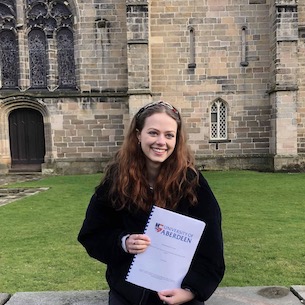
I conducted the research with thirteen students from across the University of Aberdeen. A week-long course was designed to teach the qualitative data analysis software NVivo while taking part in an authentic research project. This was to provide undergraduates both research skills and experience.

I chose to analyse secondary school uniform policies because the policies are publicly available on school websites and do not involve confidential or sensitive information. We began our work with the identification of school uniform policies, school handbooks, and other information related to uniforms on each school’s website. After uploading the files, we read and coded the materials where we saw the reasons that were given for having a school uniform. Over the week, I benefited from over 300 hours of research assistance while the students learnt NVivo and applied this learning in the project.

Key Findings

Together we identified the different reasons that schools gave for requiring a school uniform. These included:

  • ethos, identity, pride, sense of belonging
  • safety, security/reduce truancy
  • preventing competition/discrimination
  • discipline and reduce bullying
  • employability
  • the reputation of the school
  • financial benefits
  • attitude to learning/improving standards of work

Students noticed more areas of interest, including the formality of the compulsory uniform from informal (no blazer or tie), mixed (blazer or tie) to formal (blazer and tie).

Of the 357 publicly funded secondary schools in Scotland we discovered:

  • 343 schools (96%) require a uniform and just 14 schools do not
  • 320 schools mandate the wearing of a school tie by both girls and boys
  • 235 schools require a blazer to be worn
  • 200 schools ban jeans

Three students have continued to analyse the data in areas of interest they identified, and we are close to submitting journal manuscripts. The students have also been involved in teaching doctoral students and university staff how to analyse qualitative research data using NVivo.

I asked the students to provide a summary of the analysis conducted so far and some of the questions or issues that arose from the research.

Uniform Policies & Gender – by Kirsten Phelps

Our analysis of school uniform policies regarding gender found that there were generally more rules and prescriptive policies for girls. Many policies mentioned the length of girls’ skirts using language that centred on the idea of decency or modesty. This suggests a placing of normative categories on girls and young women using school uniform policies, with those that follow the rules seen as moral/good and those who break them immoral/bad. Most schools in Scotland include ties as a mandatory part of their uniform for both boys and girls. This is notable as ties are not something usually worn in the workplace, or otherwise by women, yet they remain an entrenched part of the British school uniform.

School uniforms and employability discourse – by Annabelle Olsson


One specific justification for the uniform, employability, was analysed through the lens of governmentality. ‘Employability’ (Fotiadou, 2020; Moreau and Leathwood, 2006) is a concept referring to the ‘human capital’ – i.e., the skills, knowledge, and personal attributes – that makes an individual more likely to gain employment. Such discourses of employability generally overlook structural causes of unemployment, instead of placing the responsibility on the individual to continuously develop their skills and adapt to a precarious and competitive job market. In the policy documents, we discovered a rationale for the uniform based on such discourses. Fifty-three schools (15%) made linkages between the uniform and the world of work, illustrating a semi-hidden curriculum that implies that pupils should be presentable and employment-ready, conforming to the market and the workplace as well as their subordinate role within it.

Power and control in schools– by Jasper Friedrich

There appeared to be a tension between the practice of enforcing strict uniform policies and the way these practices are justified. While almost all policies include highly detailed regulations (some go as far as specifying the minimum length of girls’ skirts) and strict enforcement measures, justifications tend to focus on ‘soft’ values such as creating a sense of belonging and giving pupils self-confidence. We found it useful to analyse this in terms of Michel Foucault’s theorisation of different historical modes of power . When school uniforms were first introduced in the early modern period, they were what Foucault terms a technique of disciplinary power: one that ‘compares, differentiates, hierarchizes, homogenizes, excludes’. We still very much see this in how the policies homogenize dress while differentiating between girls and boys, creating hierarchies (prefects often wear special uniforms) and excluding those who do not conform.

In contrast, the justifications for these strict uniform policies are often cast in terms of what Foucault would call ‘governmentality’, a type of power that seeks to manage people with their consent instead of controlling them. The emphasis here is on how students will feel more included and improve their ‘human capital’ as a result of wearing uniforms – the uniform is justified not as a convenient tool of administration and control, but rather as a valuable part of the ‘product’ schools can offer parents.

Next Steps

Further analysis of the data set includes looking at the affordability of school uniforms, to what extent religious/philosophical beliefs are taken into account in the policies, and what is in place for pupils who identify as non-binary or who are in the process of transitioning gender. I hope to conduct research in schools that have involved pupils in decisions around uniforms.

I also hope to collaborate with researchers in other countries on school uniforms, dress codes, and appearance policies, so please get in touch if this interests you.

Finally, this project showed how it is possible to combine the teaching of qualitative data analysis software such as NVivo with actual data analysis providing a win-win for the academic and the students involved.

References and Further Reading 

Maria Fotiadou (2020) Denaturalising the discourse of competition in the graduate job market and the notion of employability: a corpus-based study of UK university websites, Critical Discourse Studies, 17:3, 260-291, DOI: 10.1080/17405904.2018.1546606

Marie‐Pierre Moreau & Carole Leathwood (2006) Graduates’ employment and the discourse of employability: a critical analysis, Journal of Education and Work, 19:4, 305-324, DOI: 10.1080/13639080600867083

The Power Thinker – Why Foucault’s work on power is more important than ever

School sends pupils home for wearing unpolishable shoes, no blazer and old footwear – Metro UK

Affordability of secondary school uniform in Scotland – University of Aberdeen (PDF).

Authors

Dr Rachel Shanks

Dr Rachel Shanks

Senior lecturer in the School of Education at the University of Aberdeen in Scotland

Dr Rachel Shanks is a senior lecturer in the School of Education at the University of Aberdeen in Scotland. She sits on the Executive Committee of the Scottish Educational Research Association (SERA) and is the link person with the Educational Studies Association of Ireland (ESAI). She is a co-convenor of EERA Network 6: Open Learning: Media, Environments and Cultures. Rachel is the Programme Director of the BA in Professional Development at the University of Aberdeen and regularly runs workshops on how to use NVivo. Her research interests fall into three main categories: professional learning and mentoring; digital technologies in education; and school uniform/dress code policies. Rachel is also a member of the British Educational Research Association (BERA) and is currently conducting research funded by BERA on teacher preparation and new teachers’ responses to teaching during the COVID-19 pandemic.

Kirsten Phelps

Kirsten Phelps

Graduate Student, St Andrews University

Kirsten is a graduate student studying Middle East, Caucasus, and Central Asian Security at St Andrews University. Her interests include social movements and post-conflict transitions.

Annabelle Olsson

Annabelle Olsson

Graduate Student, University College London

Annabelle is a graduate student in Health Humanities at UCL. Her interests include emancipatory education and student wellbeing, social and anthropological perspectives on mental health, and interdisciplinary research methods. 

Jasper Friedrich

Jasper Friedrich

Graduate Student, University of Oxford

Jasper Friedrich is a graduate student at the Department of Politics and International Relations at the University of Oxford. He is interested in social and political theory, especially critical approaches and theories of power.